More Protein = Less Fat: Additional(!) Whey, But Not Soy, Induces Slight Body Fat Decrease in Obese Individuals Without Conscious Dietary Intervention(s)
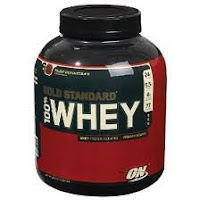 |
| Image 1: Whey proteins are cheap, many are tasty and as this study shows, effective not only for increases in lean, but also for reductions in fat mass. |
David J. Baer and his colleagues from the Human Nutrition Research Center in Beltsville (note: this institute is financed by the USDA) instructed the participants of the study to add 56g of a supplement containing either whey (WP), soy protein (SP) or carbohydrate (CHO) to their regular diets for 23 weeks - other than that participants were not provided any dietary advice and were supposed to continue to consume their free-choice diets.
The supplements were supposed to be taken in divided doses with breakfast and dinner, respectively. Most subjects chose to consume their protein either before of with those meals (breakfast: 80%; dinner: 72%). Yet other than one would have suspected...
[t]he dietary treatments did not affect hunger (P = 0.11), desire to eat (P = 0.11), prospective consumption (P = 0.38), or stomach fullness (P = 0.62).Unfortunately, the study is lacking objective information about the effective macronutrient intake of the individuals. Based on the very subjective visual analogue scale (VAS) questionnaire that was used to 'measure' satiety it is however impossible to exclude the possibility that the subjects just (over-)compensated for the additional 417kcal they consumed in form of supplements. This holds especially true in view of the fact that over a time course of 23 weeks, even a minimal reduction of 42.5-52.5 kcal/day should (assuming the flawed calories in vs. calories out hypothesis were true) have facilitated the exact same weight reductions.
The lack of information about the overall caloric value and macronutrient composition of the subjects' diets is thus a very unfortunate shortcoming of the study, you should keep in mind, when looking at the changes in body composition, which as a closer look at the data in figure 1 shows were marginal [0.1% fat mass lost per week is not really impressive, is it?], anyway.
 |
| Figure 1: Changes in body composition and waist circumference relative to baseline in obese individuals supplemented with carbohydrate, whey or soy protein beverage over the course of 23 weeks (data calculated on the basis of Baer. 2011) |
 |
| Figure 2: Serum markers of the three groups after 23 weeks of supplemental carbohydrate, whey or soy protein (data adapted from Baer. 2011) |
Edit: My buddy Sean from CasePerformance reminded me of a study by Hartman et al. (Hartman. 2007) from the McMaster University Medical Center in Hamilton, ON, Canada from 2007. Despite being published in the "Pre-SuppVersity Ages" some of you may remember this study, as it triggered a series of reports that brought milk back to the radar as a potent post-workout supplement. The study showed that compared to a soy formula a milk-derived post-workout shake (17.5 g protein, 25.7 g carbohydrate, 0.4 g fat) facilitated greater increases in type II muscle size and lean mass while reducing fat gain at roughly equal overall body weight gains. Sean also points out that - other than in the study at hand - Hartman et al. also recorded total caloric intake and found no statistical significant differences between the two groups, whether or not this allows for any inferences on the actual caloric intake of the obese subjects in the Baer study is questionable, however. After all, you ought to be hungry after a workout and you probably know that no matter how large your post-workout drink may be, you're going to be hungry again about 1h after...


