Creatine for Type II Diabetics? 5g/Day Augment Exercise Induced Improvements in Glucose Disposal and Reduce Hb1Ac Levels by Increasing AMPK and GLUT-4 Expression
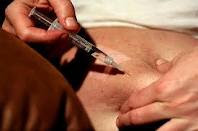 |
| Image 1: A reasonable carb intake, regular exercise and, interestingly, creatine will help you not to become insulin resistant in the first place. |
A teaspoon of creatine a day keeps metformin away!
In the latest issue of the journal Amino Acids Christiano Robles Rodrigues Alves and his colleagues from the School of Physical Education and Sports at the University of Sao Paulo in (guess where ;-) Sao Paulo, Brazil, present the results of a double-blind randomized controlled trial involving "25 non-vegetarian type 2 diabetic patients", who received either 5g/day creatine monohydrate or placebo for 12 weeks. In addition, the obese (BMI: 32.5kg/m²) men and women had to take part in a twice-weekly exercise regimen, of which I assume that it revolved around relatively light cardiovascular type of exercises, because otherwise the scientists would probably have provided some more details on what exactly the subjects did.
 |
| Figure 1: Macronutrient composition (in g) of the (ad-libitum) diets of the study participants at the beginning and end of the 12-week creatine/placebo + exercise intervention (data adapted from Alves. 2012) |
 |
| Figure 2: Changes in AMPK-alpha expression (left) and changes in Hb1Ac expressed as a function of changes in AMPK-alpha in the creatine group (right; data adapted from Alves. 2012) |
Hah? Doesn't creatine increase energy stores? How come it does increase AMPK, then?
As a diligent student of the SuppVersity you will have read about the creatine-induced increases in AMPK-alpha expression before (cf. "A Glimpse on Other AMPK Modulators"). Some of you may also have read the Bernado's question, how creatine, a supplement that is marketed for its ability to raise intra-cellular energy stores decreases AMPK, when the latter is the energy sensor of the cell. And in fact, this does sound somewhat counterintuitive at first, but if you think about "how" exactly creatine works, it makes perfect sense.
Note: It is somewhat unfortunate that the scientists did control which of the two AMPK-alpha isoforms (alpha-1 or alpha-2, cf. "AMPK Isoforms") were elevated in response to the creatine (+ "exercise") intervention. In view of the fact that the alpha-2 isoform appears to prevail in skeletal muscle, we may yet assume that those elevations in AMPK did probably not exert any direct negative effects on mTOR and subsequently the protein synthetic response to exercise - the fact that both AKT and MAPK expression were identical in both groups would support this notion.
Supplemental creatine (as monohydrate or whatever other form) has to be "phosphorylated" (bound to a phosphor molecule) by the creatine kinase enzyme to form the rapidly mobilizable energy reserve, of which you all know that it can help you to lift heavier and think faster (don't disregard the importance of creatine for bain health, cf. "Creatine for Brain Health")! The energy that is necessary to convert the unphosphorylated supplemental creatine molecules, as well as the phosphates that are necessary to "recycle" the used PCr (now likewise unphosphorylated creatine molecules) is derived from intramuscular ATP. This leaves us with a bunch of newly "energized" phosphocreatine (PCr) molecules and a similar amount of adenosine-di-phospate (ADP) molecules, the presence of which in the muscle has been identified as the main factor, which protects AMPK from dephosphorylation (= being active) and thusly facilitates all the beneficial down-stream effects on glucose uptake (most prominently an increased expression and translocation of the GLUT-4 glucose transporters on the cell membrane), the medical orthodoxy still believes to be an exclusive prerogative of biguanide based diabetes drugs such as metformin (Glucophage).Wait! Does creatine hamper my gains then?
With AMPK being the opponent of the "muscle-building" mTOR complex, these results could suggest that taking creatine may actually blunt protein synthesis. Now, while that may be the case, if you let your muscles starve for glucose, the opposite will be the case when, there is enough muscle glycogen to replenish both, the ATP as well as the PCr stores, since more PCr will translate into increased workloads and those will in turn provide a more pronounced growth stimulus, which will then result in creatine's well-established multiplicative effects of creatine on exercise-induced skeletal muscle hypertrophy (Hespel. 2007).


