Posts

Showing posts with the label glycemic index

Popular topics

Show more

Endurance Athletes May Benefit From High-GI Meals Before Competition: 18% Increased Endurance During Time Trial

Image
Hillariously sweet, super cheap, and surprisingly effective: glucose! While most of you will probably already have discarded the notion that you can only lose weight if you eat a diet with an extremely low GI (on a side note: Taubes' own study falsified his "insulin theory of obesity", recently ), the notion that the ingestion of high glycemic index foods before exercise could ruin your performance, because your glucose levels, after an initial spike, will plummet and you will crash, still looms large. With that being said, athletes around the world have, somewhat paradoxically, stuck to complex carbs before competition only to then fuel their performance with extremely sugary intraworkout bars, gels and drinks. Are you a workout junkie? Try bicarbonate or other pH-buffers Caffeine & Bicarb = Perfect Match Build Bigger Legs W/ Bicarbonate HIIT it Hard W/ NaCHO3 Creatine + BA = Perfect Match Bicarb Buffers Creatine Instant 14% HIIT Boost W...

Weight Loss, 'Metabolic Damage' and the Magic of Carbs? Human Study Probes Effects of Carbohydrate Content, GL & GI on Diet-Induced Suppression of Resting Metabolic Rate

Image
Will slimming down from a 120 cm to a 60 cm waist always ruin your metabolic rate and set you up for weight regain or can high GI protect you from yoyoing? Broscience tells us: "Carb up to preserve your resting metabolic rate." And in fact, there is some scientific evidence that suggests a link between high(er) carbohydrate intakes and increased thyroid function. The same amount of T3 will trigger a sign. higher stimulation of lipolysis and fat oxidation, for example, on high vs. low carb diets (Mariash. 1980). Low carb diets, on the other hand, lead to significant reductions of the active thyroid hormone and increases in the 'thyroid receptor inhibitor' rT3 - even in healthy individuals and if the energy intake is standardizes (Serog. 1982; Ullrich. 1985). So, is broscience right? Well, overfeeding studies show a similar increase in T3 in response to protein, fat and carbohydrates (Danforth Jr. 1979). So refeeds should work, irrespective of their carbohydrate con...

Chicken, Rice, Veggies & Oil and How Their Effects on Your Insulin & Glucose Levels Are 50% Off Those You'd Expect Based on the Calculated Glycemic Index of This Meal

Image
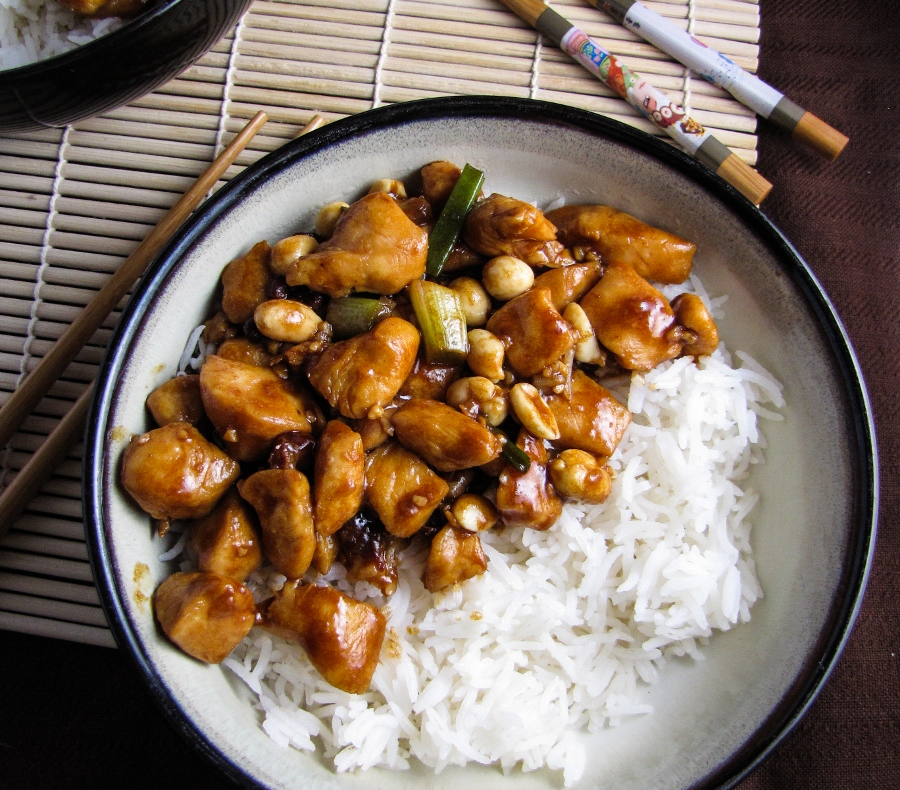
The power of GI calculations is limited and even with meals as simple as the one in the picture, the calculated glycemic index can be ~50% off! As a SuppVersity reader you've repeatedly read about macronutrient interactions, such as the insulin boosting effects of whey protein or dietary fat , studies that investigate the effects of the individual ingredients of a complete meal on the glycemic response healthy men and women, however, are scarce. Against that background the results of a recent study from the Clinical Nutrition Research Centre at the Singapore Institute for Clinical Sciences are of particular interest. After all, the Lijun Sun et al. (2014) determined the effect of co-ingesting a high-protein food (breast chicken), a fat (ground nut oil), a leafy vegetable or all three on the glycaemic and insulinaemic responses of white rice in healthy adults and did thus produce results that could be practically relevant for all of us - more relevant than inaccurately calc...

Macro Ratios & Glucose Management: Eating Lower GI Carbs and Higher Protein Alone is Less Effective in Blood Sugar Normalization Than You May Have Thought

Image
Macronutrient ratios matters, but food quality does, too. And so do exercise, laziness, sleep, .... the list is endless, so can we be surprised that modulating GI and protein is not helping much? We all "know" that going low(er) carb is good for your blood glucose management, right? Nice! So, we probably don't need studies like the Marleen A. van Baak's conducted only recently, right? I mean, carbs are bad! So why would we even be interested to hear how much the subjects of the Diogenes Study lost on one of four different diets with varying protein content and glycemic index? Or who would want to know what the subjects' 24-h glucose profiles on one out of four diets differing in carbohydrate content by 10 energy % and glycemic index by 20 units during three days. No one would like to know that, right!? In view of the fact that you're still there, I suppose that I was wrong and you are interested in the effects of different marconutrient ratios and type...

Sex-Dependent Low GI Advantage(s) & Vasodilating Effects of Insulin. Diet-Dependant Effects of Active Vitamin D on Glucose Metabolism. Plus: Supplemental Flaxseed Oil?

Image
It seems as if the glycemic index of her diet during puberty could determine on which side of this photoshopped divide a will end, when she's a young woman. Intriguingly, the association between high GI diets and high waist circumferences and obesity risk was not observed in the boys whose 5-year follow up data the researchers analyzed. "145mm" that's the SuppVersity figure of the Week and the number of additional millimeters the waist circumference of a 12-year old girl is going to increase until she's 17 for each 1-SD increase in dietary GL. In conjunction with the observation that each 1-SD increase in dietary fiber intake was associated with a concurrent 0.44 kg/m² decrease in mean BMI, in girls and a 145mm lower increase in waist circumference, in boys, these results from a soon-to-be-published paper clearly support the notion of the fattening high GI carbs for girls (Gopinath. 2013). The data does yet also raise the question, whether a higher activi...
Disclaimer:The information provided on this website is for informational purposes only. It is by no means intended as professional medical advice. Do not use any of the agents or freely available dietary supplements mentioned on this website without further consultation with your medical practitioner.