Posts

Showing posts with the label carbohydrates

Popular topics

Show more

Sitting or Lying, Not Walking Ups CrossFit Performance and Inter-Set Recovery | Nitrate Shot Allows for "One More Rep" | Electric Brain Stimulation Turns You into Hulk & More

Image
I have to admit: This is an awkward collection of studies, but this is what happens if you (cherry) pick and discuss only those of the papers in the latest issue of the Journal of Strength and Conditio-ning Research  which I personally found interesting / most interesting. Some of you have probably already been missing it. The short science round-ups with the latest scientific evidence from exercise and nutrition science all around the world. Studies such as Mosher's nitrate supplementation study that shows significant increases in the maximal number of reps during strength training. Studies such as Ouelette's study that refutes the notion that walking on a treadmill in-between sets is beneficial for trainees who are working out in the strength-conditioning range (crossfitters). Studies such as Wilson's review of the usefulness of CHO supplements with an unambiguous result in favor of CHO supplements. And studies like Lattari's who tested the effects of transcrani...

Scientists Probe the Interaction Between Saturated and Unsaturated High Fat Diets and Their Corresponding Carbohydrate Sources (Cornstarch vs. Fructose)

Image
This add is a perfect example of how saturated fat, in this case lard has always been blamed for the "lard" on ones hips. Any hypothesis that tries to blame for our "fat misery" on a single nutrient is short-sighted. After years of fat-bashing, carbophobia and fructose hating in the course of which the situation progressively, we are now seeing the first studies which investigate what the Polish researchers, Adam JurgoÅ„ski, Jerzy JuÅ›kiewicz and Zenon ZduÅ„czyk from the Institute of Animal Reproduction and Food Research at the Polish Academy of  Sciences call the "biological interactions among these dietary factors" in their latest paper in the peer-reviewed open-source journal Nutrients (JurgoÅ„ski. 2014). With the publication of the data of a their latest rodent study, the scientists have already taken the first step to a new, an "interactionist" perspective on the obesogenic effects of saturated vs.unsaturated and simple vs.complex ca...

A Bomb Calorimeter You Are Not! And That's Why Even the "Adjusted" Energy Values on Food Labels Are 5% Off

Image
How productive are you? A couple of you will probably remember the SuppVersity news from ~1 year ago in which I discussed the revelation that nuts (pistachios and almonds) effectively deliver much less energy (-25%) than the "label" or databases on the Internet will tell you. In other words, while these healthy snacks are still extremely calorie dense, our bodies are not exactly as well equipped as a bomb calorimeter to use that energy.... "bomb calorimeter"? That reminds me of a study I read about a week ago and remembered, today, when I was thinking about writing an article on a topic that is not the 10214124x study on how aerobic exercise is good for elderly obese diabetics, or how extract XYZ from whatever TCM medicine ameliorates the weight gain in obese rodents. The study, I was thinking of was conducted at the Department of Nutrition and Dietetics , VU University Medical Centre in Amsterdam (Wierdsma. 2013) and with it investigating the practically h...

Complete Meals & GI (Non-)Sense, Glutamine & GLP-1, Low Thyroid & High Trigs, N-3 vs. N-6 Interactions, Optimal DHA Dosage in Kids W/ NAFLD, Selenium vs. Aluminum Toxicity

Image
While this is not the exact combination of chicken breast, mashed potatoes and salad in the first one of today's news items, it's more than likely that the predicted GI (and thus probably what you would find if you looked it up in a table) overestimates the postprandial glucose response to this meal by ~50% and says absolutely nothing about the insulin response. It looks like complex meals and over-simplified theories, don't mix well, at all ;-) 78% that's the SuppVersity Figure of the Week and actually part of the additional information I provided on one of today's On Short Notice items. It's the increase in coronary heart disease risk women with subclinical hypothyroidism have compared to their peers with spot on TSH levels of 0.5-1.5mU/L (Asvold. 2012). In conjunction with other more or less recent studies, such as Mitchel's, Hsu's and Sahai's paper confirming the previously often talked about but not well-established 2-fold increase in con...

Natural Resistant Starch Reduces Body Fat & Weight Gain in Obesity Prone & Lean Rodents. 8% RS2 Necessary for Weight Loss Effect, Only 4% for Increases in GLP-1 and PYY

Image
Potatoes! I don't suggest you eat them raw, but if you did they would make a good source of resistant starch. You don't eat potatoes at all? Read the Potato Manifesto and learn why regular potatoes are not as black as they are portrait! I guess, you will remember my post on WM-HDP from back in the day. As usual you, as a SuppVersity reader were in the know, way before the ThermiCarbs and its identical clones hit the supplement market. It has however gotten relatively quiet around these purported super starches, which bypass enzymatic breakdown in the small intestine and get converted to short-chain fatty acids (SFCA) in the colon. Why? Well, my best bet is that people expected some sweet junk of which they could eat as much as they wanted with the only side effect being increased muscularity and decreased body fat levels. I am well aware that you knew better than that, but you know how people are: Always on the look-out for the magc pill... or in this case, the magic star...

Meal Timing, Glycemic Index & Load: Human Study Probes Whether "Hitting Your Macros" Really is All That Counts

Image
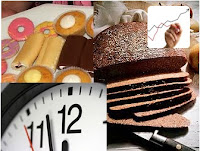
High or low GI, carbs in the morning or in the evning, cookies and dingdongs or all bran. So many questions and way too many answers from rodent studies or studies in obese diabetics... but what are Mr. and Mrs. Healthy Average Joe supposed to do? In a recently published paper, Linda M. Morgan, JiangWen Shi, Shelagh M. Hampton and Gary Frost take yet another look on a concept that has lost much of the momentum it had only a decade ago: The GI and / or GL paradigm (GI: glycemic index (abstract unit); GL: glycemic load, i.e. GI / actual amount of food) and combines another paradigm, which is still gathering momentum within the medical science community - the issue of nutrient timing, in order to answer the following questions: Will a large evening energy and carbohydrate load cause an increase in postprandial glucose that is comparable to the same amount of energy and carbohydrates in the morning? Will a high glycaemic excursions in the evening be ameliorated by decreasing the ...
Disclaimer:The information provided on this website is for informational purposes only. It is by no means intended as professional medical advice. Do not use any of the agents or freely available dietary supplements mentioned on this website without further consultation with your medical practitioner.