Posts

Showing posts with the label tocotrienol

Popular topics

Show more

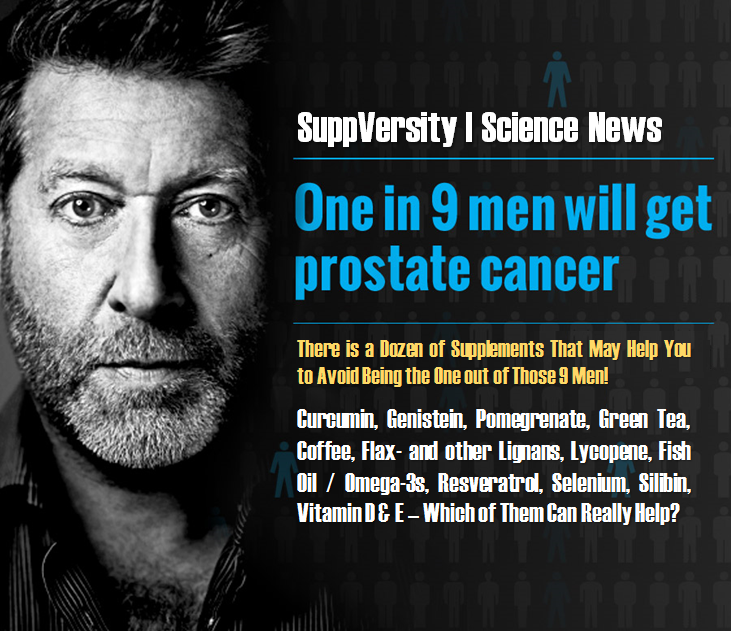
Curcumin, Genistein, Pomegranate & Co. - A Dirty Dozen of Supplements & Foods to Keep Your Prostate Cancer Free
Image
Which of the dirty dozen of supplements and foodstuffs in today's SuppVersity review can really help you to make sure, you're not the one out of those nine men who develops prostate cancer? Supplements that are supposed to protect you from developing prostate cancer and/or agents that may help patients with existing prostate issues are - obviously - in high demand. And as W. Merkle points out in a recent article in the German science journal Urologe using them - even if they may not be as effective as some patients may believe - makes sense: from a psychological perspective, alone (Merkle. 2014). Taking a pill with selenium, for example, has been shown to alleviate some of the side effects of chemotherapy. General protective effects against prostate cancer, on the other hand, have not been established. In fact, the most recent studies rather suggest that "supplementation did not benefit men with low selenium status but increased the risk of high-grade PCa among men ...

Vitamin A, D, E & K - How Much and What Type of Fat Do You Need to Absorb These Fat Soluble Vitamins?

Image
Some butter on top of the broccoli would allow for the assimilation of the absorption of the 101.6μg vitamin K 623IU vitamin A (various). There are a handful of very basic questions in nutrition science, no one appears to have an answer to. One of these questions, which is directly related to the  well-known fact that the vitamins A, D, E & K are "lipid soluble". This means that they are "solved" and thus made absorbable by fats and oils. The general assumption is thus that the vitamins A, i.e. the retinol and carotenoids, all forms of vitamin D, the tocopherols and -trienols (vitamin s E) and the two major forms of vitamin K, i.e. phylloquinone (K1) and menaquinone (K2) will only be absorbed, if you consume them with a sufficient amount of dietary fat. Now, the questions obviously are (a) is this correct and (b) how much is sufficient . Is there a rule of thumb? Well, I guess if there was one, it would be to consume 5-10g of low PUFA fats with every mea...

The Vitamins E & Glucose Control | Part X of the "There is More To Glucose Control Than Low Carb" | Plus: Alpha-, Gamma-, Delta-Vitamins E, Where Can You Find Them?

Image
All nuts are good tocopherol (T) sources, but α- T is predominantly found in peanuts, almonds and sunflower seeds, while γ-T is the major vitamin E in walnuts, pecans and pistachios. Over the past week I've been questioning the potency of various supplement superstars with respect to their ability to improve your, my or any one else's glucose metabolism. We've dealt with protein, peptides, fats, vitamin D, calcium, a whole host of B-vitamins and even the underrated vitamin A (go back and review all of them ). Today I am going to take a look at a "fallen star", vitamin E, once thought of as a panacea and universal protector of your cells, it has, at the latest with publication of the disappointing, if not shocking results of the SELECT trial in 2013 and the mass-media reverberations about increased prostate cancer risk, become the centerpiece (literally) of every anti-vitamin supplement rant. You can learn more about this topic at the SuppVersity Pr...

The Oiling of the Liver: The Good & Bad Short- & Long-Term Effects of Tocotrienol + Carotenoid Laden Red Palm Olein, Regular Palm-, Corn- and Refined Coconut Oil

Image
I would not expect "red palm olein wonders", but more RPO and less corn oil in the American diet may at least buffer the liver disease burden in the US (the figure is based on data provided by the American Liver Foundation) On Turesday, November 19, 2013, you've learned from a study by Subermaniam et al. about the "anti-rust" effects of coconut oil (if you missed that, you can catch up here ), today, we are going back to Malaysia and the Universiti Kebangsaan Malaysia and the results of another team of researchers to learn about the effects the various oils have on the "oiling of the liver" (Dauqan. 2013). I guess most of you will remember my previous comments about the critical role of the liver (and its health or disease) in the development of the metabolic syndrome ( read it up ). It is thus by no means irrelevant, whether the chronic ingestion of a certain type of oil will result in MDA levels of 92µmol/g or  27.3µmol/g. Boring!? No, rathe...

Frying Does not Just Oxidize Oils, It will Also Decimate the Tocopherol & Tocotrienol Content of the Oils and Can Thus More Than Double the Oxidative Burden on Your Body

Image
Fried butter on a stick - I bet there are more peroxides in the crust than in the butter beneath it. Yesterday we have taken a look at the saturated fat content of the diet and its effects on body composition, insulin resistance and inflammatory markers (see " Study Shows Doubling Saturated Fats Would Yield More Benefits Than Halving Them "). Today, we are going to look at the effects of a way not just Americans, but more or less half of the globe likes to process their foods on the oils and subsequent health of someone who would consume these oils on a regular basis. By now, you will probably already know into which direction this post is heading. Right, we are talking about frying, about lipid oxidation and about the health effects of oxidized soy bean and palm oil the #1 "choices" in processed foods. Oxidized frying oils and their effects on our health The paper by Jaarin and Kamisah, two researchers from the Department of Pharmacology at the Universiti...
Disclaimer:The information provided on this website is for informational purposes only. It is by no means intended as professional medical advice. Do not use any of the agents or freely available dietary supplements mentioned on this website without further consultation with your medical practitioner.