Posts

Showing posts with the label sweet potato

Popular topics

Show more

The Potato Manifesto - Part 2/2: The Sweet Potato, Is It More Than Just the "En Vogue Tuber of the Year"?
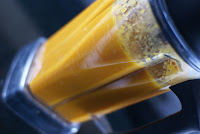
Image
Image 1: A mixer like this would be one of the best choices to turn your healthy low-GI sweet (or regular) potato into a high GI "nightmare". If you've read yesterday's first part of the Potato Manifesto , you should by now be aware that the common notion of the pro-diabetic high-glycemic regular potato is another of the numerous black-or-white nutrition myths that do not become right, no matter how many bloggers and forum posters reiterate them. In today's second part of the series I will try to elucidate, whether the sweet potato, of which I would venture to say that she is the "en vogue tuber of the year", is not still the "safer starch alternative" . So bear with me while I am using my scientific peeling knife to check whether there is a bitter truth hidden beneath skin of the sweet potatoes ;-) Come on sweety, show me what's beneath your skin! Now, if we take a look at the literature, a review of the glycemic index of 33 commo...

The Potato Manifesto - Part 1/2: A (Re-)Evaluation of the Contemporary Discrimination of "the" Ordinary Potato

Image
Image 1: The grunty regular (left) and the cute sweet potato (left), which one would you commit your health to? (img. menshealth.co.uk ) This is a blogpost, which eventually turned out to be the first part of a series, is a post with a history, a rather complex one, to be precise. It is rooted (not tubered ;-) in my amazement over the contemporary craving for sweet potatoes within the ever-growing neo-paleolithic community on the Internet and was sparked by the recent publication of a study on sweet potatoes, I stumbled upon on my daily tours of the most recent scientific literature. To make long story short, instead of immediately summarizing the data, drawing some graphs and commenting on the real-world implications of this study, I decided to use the holiday to descend into the archives and take a closer look at what science has to say on the bitter truth about the grunty regula r and the starchy promises of cute sweet potato (cf. image 1 ;-)... When wheat was devils excre...

New Results From the "Test Tubers": Paleolithic Men Could Have Been Healthier Had They Microwaved Their Potatoes.

Image
Image 1: Potato roasting caveman-style - probably not the best way to "cook" your potatoes As a non-native-speaker, I must admit that the first time I heard someone talk about "tubers" was on Robb Wolf's famous podcast, back in the day, when I was "listener #6" (or seven ;-). Contrary to common (foreign) belief, not all Germans subsist on potatoes and sauerkraut and, what's more, even those who do, don't really care that a potato is a "tuber", i.e. a "Knolle" in German - I suppose the idea that it grows in the dirt is not too appealing to some, while the large majority probably just doesn't care as long as those "tubers" make a good addition to their Schweinebraten... yet, whatever the reasons may be, my first encounter with "tubers" has ingrained the link of these "underground structure[s] consisting of a solid thickened portion or outgrowth of a stem or rhizome, of a more or less rounde...

Metformin & Sweet Potatoes - What Do They Have in Common? Both Reduce Blood Glucose & Increase Insulin Response, Decrease Total Cholesterol & Increase HDL

Image
Image 1: Leaves of wild sweet patatoes from the Phillipines (photo by Obsidian Soul ) "Nature knows best!" Who would have thought that this motto of mine applies to the #1 paleo-pasta-replacement, the sweet potato, as well? While the tuberous roots do of course contain many of those nasty carbohydrates, which, in reminiscence of the fat-phobia of the closing 20th century, could be called the "bad fats of the early 21st century", the whole plant also comes with a whopping dose of a Metformin-esque anti-diabetes drug that would undo potential damage secondary to carbohydrate overload., uf... yes if we consumed its heart-shaped or palmately lobed leaves (they are edible and non-toxic!) In the VNU Journal of Science, Natural Sciences and Technology , Do Ngoc Lien and his Vietnamese colleagues published some very interesting data on the effects an ethyl acetate extract from the leaves Ipomoea batatas (L) Lam (sweet potato). had on glucose, insulin and ...
Disclaimer:The information provided on this website is for informational purposes only. It is by no means intended as professional medical advice. Do not use any of the agents or freely available dietary supplements mentioned on this website without further consultation with your medical practitioner.