Posts

Showing posts with the label supplementation

Popular topics

Show more

Krill vs. Fish: Krill Oil Still More Rapidly Absorbed, but Does it Matter in the Long-Run? Plus: Krill Research Update 2018

Image
Bio-advantage of krill may not be relevant in the long run | Plus: What we learned about krill oil in 2018 I've previously written about the question whether krill oil is, in fact, as the proper Latin name of the small critters it is made of, i.e.  Euphausia superba , would suggest "superba", ahh... I mean better than fish oil when it comes to its effects plasma and organ DHA and EPA. A large number of previous trials - almost all short-term, by the way - verify the commonly held belief that the largely (35-65%) phospholipid-bound krill oil (KO)  has a bioavailability advantage over the exclusively   triglyceride-bound fish oil (FO)  Di Marzo 2010 ;  Konagai 2013 ;  Ramprasath 2013 ). Another "K" you should have plenty of in your diet is  potassium (K)  (in German it's Kalium)! Potassium vs. Diet-Inducded Insulin Resis. In the Lime Light: The Ill Effects of Low K Intakes Bad News: Most Americans are Sign. K Deficient Lean...

Transdermal Magnesium - Finally a Human Study Suggests That Low-Dose Mg2+ Cream Works, at Least in Non-Athletes

Image
Supplement producers have built their business on the (unwarranted) premise that you cannot get enough magnesium from your diet, alone. Unlike the effectiveness of oral magnesium supplementation for the treatment of magnesium deficiency, which has been studied in detail, the ever more popular transdermal magnesium preparations are a "scientifically not yet proven form of magnesium application" (Gröber 2017)... that was true earlier this year when Gröber and colleagues from the Akademie für Mikronährstoffmedizin and the  IPEV Institute for Prevention and Nutrition in Germany was written. With the recent publication of a study from the  University of Hertfordshire (Kass 2017), there's finally a single-blind, parallel designed pilot study that deserves the title "study". Mineral water contains Mg, a lot of other minerals and bicarbonate you don't want to miss: Hydrogen Rich Water = Quackery? Glass of Water Before Meals as Diet Tool Every Sip...

Vitamin D -- Replacing D3 W/ Calcifediol in Fortified Foods May Cut D-ficiency Epidemic | Plus: High/Low Vit-D Jobs

Image
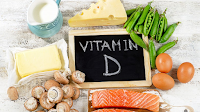
Many of these foods contain significant amounts of calcifediol (25OHD). It's thus not as if we would be exposing us to an unknown research chemical, bros. With vitamin D it is as with all the hype-research subjects: Now that everybody and his mama have published a paper discussing how awesome and important vitamin D is (mostly in the absence of experimental evidence from controlled human trials that would clearly support this "awesomeness", by the way), the number of studies on vitamin D starts to decline, while their quality (at least in parts) increases. In this Vitamin D Research Update , I will address two of these post-hype studies. Both with practical relevance in terms of the prevention and resolution of vitamin D deficiencies: Learn more about vitamin D at the SuppVersity How Much Vitamin D Shall You Take? Leucine, Insulin, Vitamin D and Your Gainz Vitamin D Speeds Up Exercise Recovery One Svg of Fish or Eggs Satisfy Your Needs? Vitamin D...

Creatine Non-Responder? Age+Meat Intake - Determinants of Creatine's Effect on PCr (±200%) + Probably Performance

Image
Vegetarian strength athletes belong to the group of people who will probably benefit most from creatine supplementation. Their young, meat-eating peers, on the other hand, may well turn out to be non-responders, because they see highly individual, but overall only non-significant increases in phosphocreatine. It has been a while since I published the last creatine article ("Dubious Effects of Creatine on Markers of CNS Adaptation and Heart Health in "Bodybuilders" - Reason to Be Afraid?" | read it ); the last time that I addressed the issue of "creatine non-responders", i.e. reasons why people simply don't seem to benefit from creatine supplementation has been published in 2014, already, when I presented the results of a study suggesting that it's not a high dietary creatine intake from meat that makes the difference ( learn more ). Needless to say, meat still made it on the list of possible determinants of the individual performance increase...

100% Increase in Exercise-Induced Collagen Synthesis With Cheap, Yet Effective 15g Gelatin + 200mg Vitamin C Stack

Image
If you premix it with vitamin C, I would guess that this dosage form of gelatin will work just as well as the mix the scientists used in the study at hand. And if it contains 15g + of gelatin, consuming this stuff before a workout could indeed make a significant difference for your tendon health and stability/resilience. The deterioration of collagen is at the bottom of many musculoskeletal injuries. More than 50% of all injuries in sports can be classified as sprains, strains, ruptures, or breaks of musculoskeletal tissues. As the authors of a new paper in the American Journal of Clinical Nutrition  point out, there's hope that "[n]utritional and/or exercise interventions that increase collagen synthesis and strengthen these tissues could have an important effect on injury rates" (Shaw. 2016). Gelatin has long been touted as the "protein of choice" to provide your body with the raw material for collagen resynthesis. Moreover, findings from engineered tiss...
Disclaimer:The information provided on this website is for informational purposes only. It is by no means intended as professional medical advice. Do not use any of the agents or freely available dietary supplements mentioned on this website without further consultation with your medical practitioner.