Showing posts with label IgG. Show all posts

Monday, January 25, 2016

Elimination Diet Kickstarts Fatloss in "People Who Cannot Lose Weight" - 16% Body Fat Reduction in 6 Months, But...

Many of these foods contain supposed allergens and have thus to be eliminated from your diet... is it any wonder that this triggers weight loss? Hardly...
While I have to admit that I am a bit skeptical about the reliability of the results of a recent study from the Sifa University, Faculty of Health Sciences in Turkey, I cannot ignore that Meltem Yaman Onmus, Elif Cakirca Avcu, and Ali Saklamaz claim that "people who cannot lose weight by low-calorie diet can lose weight and fat with elimination diet according to the results of FI [food intolerance] test. FIED [FI elimination diet] is also significantly effective in triglyceride levels" (Onmus. 2016). I know that sounds as if it was taken from the latest unreferenced blogpost on a dubious website, but let's not judge prematurely and instead take a closer look at the design and results of the study.
Unlike elimination diets, fasting must be considered a scientifically proven weight loss trick

Breakfast and Circadian Rhythm

Does Meal Timing Matter?

Habits Determine Effects of Fasting

Fasting Works for Obese, Too!?

Does the Break- Fast-Myth Break?

Breakfast? (Un?) Biased Review
82 patients (24 male, 58 female) were included in the study. The mean age was 42.04±11.81 (18-65 years). All of them were "unable to lose weight", i.e. patients who said of themselves that they couldn’t lose weight by diet programs and who had a positive reaction to at least one nutrient in food intolerance test and a BMI value ≥ 25kg/m² - in other words: the subjects were the average Internet bullet-in board dwellers searching for the "magic key" to weight loss.

This is obviously an important fact, because it increases the significance of the study for said group of subjects. Whether the results are significant for anyone else, though, is questionable, since patients who had no food reaction in food intolerance test were excluded from the study. The same goes for subjects who had chronic diseases like diabetes mellitus, coronary heart disease, renal diseases, etc., or individuals who use(d) weight loss drugs and who had allergy to any drug or food and who overuse medications or have pure menstrual migraine or headache that associated a disorder.
No health benefits from "eliminating" foods: Interestingly, the food intolerance elimination diet failed to do what its proponents say it's actually doing: Improve the subjects health. With the exception of a statistically significant decrease in triglyceride levels, there was no improvement in health markers (fasting blood glucose, A1C, total cholesterol, HDL-cholesterol, LDL-cholesterol, AST, and ALT) the scientists didn't observe in the control group, too.
As you can see in Figure 1, this particular group of subjects saw significant benefits from following a diet that did not allow the subjects to consume any of the foods to which they showed an IgG response in the previously conducted food intolerance test for 6 months. Otherwise, the diets of the elimination diet (ED) and control diet were personalized diets with "identical" (according to the size, weight, physical activity, dietary habits and socioeconomic status) energy content.
Figure 1: Pre- and post-intervention weight, body fat, lean body mass, and waist / hip ratio (x10); * indicates significant inter-group difference, this means that everything, but the effect on lean mass was sign. more pronounced in the ED group.
Against that background it is unquestionably striking that the subjects in the elimination diet group lost 16% body fat, while the control group didn't lose either significant amounts of fat or weight. Now, the obvious question is: "Which foods were eliminated?" Unfortunately, this question is neither answered in the study at hand, nor in previous studies showing that elimination diets reduce also reflux disease, chronic fatigue syndrome, and headaches (Selvin. 2007; Akmal. 2009).
Unlike Onmus et al., Akmal et al. publish-ed a list of allergens their IgG test could supposedly identify. A list eliminated foods is yet missing from study, too.
Why's it a problem that we don't know which foods were eliminated? Actually, the answer to this question should be obvious. Let's assume you're "allergic" to sugar, alcohol and high omega-6 vegetable oils like soybean oil. Would you be surprised if you lost significant amounts of body fat if you dropped all sugary and pro-inflammatory high omega-6 foods and stopped drinking alcohol? I, for my part, wouldn't and I guess you wouldn't and you certainly shouldn't be surprised either.

Accordingly, the study at hand does unfortunately not provide enough information to decide whether it provides convincing evidence of using IgG-tests to guide you when you're designing diets for yourself or your clients. Hopefully future research will do just that | Comment!
References:
  • Akmal, Mohammed, Saeed Ahmed Khan, and Abdul Qayyum Khan. "The Effect of the ALCAT Test diet therapy for food sensitivity in patient’s with obesity." Middle East Journal of Family Medicine 7.3 (2009).
  • Onmus, Meltem Yaman, Elif Cakirca Avcu, and Ali Saklamaz. "The Effect of Elimination Diet on Weight and Metabolic Parameters of Overweight or Obese Patients Who Have Food Intolerance." Journal of Food and Nutrition Research 4.1 (2016): 1-5.
  • Selvin, E., Paynter, N. P., Earlinger T. P. "Nutrition and allergy." Arch Intern Med, 167.1 (2007): 31-39.

Tuesday, April 23, 2013

Citrulline as Substrate Switch. Galactose as Workout Fuel, Glycogen Repletion Not Urgent, 2x a Day 6x a Week = Too Much For Your Antioxidant System, Astaxanthin For IgA

Actually it's not the burn during the workout that matters, but I don't have to tell you that, do I? (pic i-am-beast.com)
What do you do with a whole host of interesting exercise-related nutrition news that are piling up in your archive, but are too good to be "burned" as short links with one sentence of text on the SuppVersity Facebook Wall?

Right! You compile all those news into a potpourri, attach the label "SuppVersity News Potpourri" to it and blow them out in a blogpost of their own. A post that covers the whole peri-workout window as well as the short-/long-term effects on exercise on your anti-oxidant and immune system.

Sounds good? Well, then go ahead...
  • Immediate post-workout glycogen repletion in endurance athletes probably useless (Carlsohn. 2013) While the hormonal response and the long-term effects of running around with depleted glycogen levels are a totally different animal, the latest research from the University Outpatient Clinic Potsdam in Potsdam, Germany, clearly suggests that the immediate post-run glycogen-repletion with 1.5g/kg body weight of fast acting carbs per hour is useless...

    Do you remember my "Glycogen-free muscle growth" post(s) from 2011?
    ...at least with respect to the 5,000m running performance of the twelve recreational runners (4m/8w; 1.73 ± 0.11 m, 69.1 ± 13.4 kg). who were involved in Carlsohn et al.'s study.
    "Running time during 5,000-m time trials did not differ between bTT (1,305 ± 140 s), following CARB (1,276 ± 125 s) or PLA (1,285 ± 124 s, p= .85). There were no differences in RPE (bTT 18.3 ± 0.3, CARB 18.7 ± 0.3, PLA 18.8 ± 0.9; p= .48), bLa/min, PLA 187 ± 3 beats/min; p= .96).
    In view of these results it should actually not necessary to formulate a "bottom line", but alas...

    Bottom line: "[T]he rationale of recommending immediate carbohydrate intake following exhausting exercise to 5,000-m runners might be questioned" (Carlsohn. 2013). Please keep in mind though that not repleting your glycogen stores at all is not an option - the myth that's been partially busted by the study at hand is that you must do that as fast as possible to maintain maximal performance - not that you must do it at all. 
  • "High" galactose foods ?
    Honey3.10g
    Fermented yoghurt1.30g
    Beets, canned, regular pack, solids and liquids0.80g
    Celery, raw0.66g
    Cherries, sweet, raw0.59g
    Bockwurst, pork, veal, raw0.48g
    Corn, sweet, yellow, canned, whole kernel, drained solids0.36g
    Beans, navy, mature seeds, raw0.34g
    Snacks, pretzels, hard, plain, salted0.22g
    Spices, curry powder0.21g
    Spices, mustard seed, yellow0.20g
    Spices, paprika0.19g
    Babyfood, fruit, plums with tapioca, without ascorbic acid, strained0.19g
    Spices, ginger, ground0.19g
    Spices, basil, dried0.19g
    Kiwi fruit, (chinese gooseberries), fresh, raw0.17g
    Cereals, oats, instant, fortified, plain, prepared with water (boiling water added or microwaved)0.16g
    Cheese, mozzarella, whole milk0.15g
    Spices, cloves, ground0.15g
    Cheese, parmesan, grated0.15g
    Spices, oregano, dried0.15g
    Fast foods, cheeseburger; single, regular patty, with condiments0.15g
    Plums, raw0.14g
    Peas, green (includes baby and lesuer types), canned, drained soilds, unprepared0.14g
    Cereals, oats, instant, fortified, plain, dry0.13g
    Fish, fish portions and sticks, frozen, preheated0.13g
    Figs, dried, uncooked0.13g
    Babyfood, plums, bananas and rice, strained0.12g
    Egg, whole, raw, fresh0.11g
    Avocados, raw, all commercial varieties0.10g
    Crackers, saltines0.07g
    Snacks, tortilla chips0.07g
    Egg, white, raw, fresh0.07g
    Snacks, tortilla chips, nacho cheese0.07g
    Peaches, raw0.06g
    Melons, cantaloupe, raw0.06g
    Galactose as alternative workout fuel (Duckworth. 2013) - A recent study from the Leeds Metropolitan University in the UK demonstrates that
    "ingesting a solution containing galactose before and during exercise can positively affect postexercise satiety and energy balance throughout the day, compared to a more readily available and widely consumed form of carbohydrate" (Duckworth. 2013)
    The scientists conclude that based on the observations they made, when they provided nine recreationally active eumenorrheic females (mean age 22y; weight 63.3kg) with either 45g galactose (GI~20) or glucose (GI~89) drinks prior to (300 ml) and at every 15 min during a low intensity steady state jog at 65% of their VO2Peak
    Note: I guess, it goes without saying that 45g of galactose this is more galactose than you can stomach from ingesting any "high galactose" foods; see table on the right, data in g/100g).
    The scientists measured the substrate oxidation, postexercise satiety and subsequent energy intake on three occasions (GLU, GAL, placebo) and found that
    • the plasma glucose levels were significantly greater throughout the exercise and in the rest period, when the subjects ingested the glucose drink,
    • there were no differences in carbohydrate oxidation, and
    • perceived hunger was significantly lower throughout the galactose compared to both the glucose and placebo trials
    What may yet be most significant for the average trainee trying to shed some weight is the difference in net energy balance, i.e. the difference between energetic costs of the workout, on the one hand, and the energy intake from the glucose / galactose supplement and the food intake during the post-exercise ad-libitum test lunch and the remainder of the day, which was negative only in the placebo and the galactose trial.
    Bottom line: If you want to shed some body fat and cannot go without an intra-workout beverage pick galactose over glucose, but do a "test run" before you try that in public - the monosaccharide is notorious for its socially not acceptable effects on the evaporations from your gastrointestinal tract ;-)
    "Does the Usefulness of Vitamin E Supplementation Depend on Your Activity Level?" It is possible that only those benefit who are already overtaxing their system and will thus need additional protection (learn more)
  • Exercise is stressing, but the long-term results are what's associated with improved antioxidant capacity (Lundström. 2013) The data Lundström et al. have collected in their recent 3-week trial involving fourteen 26-year-old volunteers who performed two "strenuous" (intensity targeted to 75% of VO2max) endurance training sessions per day (6 days a week) does in a way underline the validity of the hormesis hypothesis. Despite the fact that the increase in oxidative stress in response to the the allegedly hefty (for non professional athletes) two-sessions a-day, 6-days a week was not significant, the latter was facilitated / buffered by highly significant declines in the total plasma antioxidant capacity (AO).

    However, aside from the fact that the AO levels did not fully return to baseline after the subsequent 4-week recovery period, the most intriguing results of the study at hand is the highly significant negative (meaning "if A is high, B is low") correlation between fat-free mass and oxygen uptake, on the one hand, and oxidation stress, on the other.
    Bottom line: With both of the former, i.e. fat-free mass and oxygen uptake while you exercise, being hallmark features of physical fitness you cannot increase without working out, the balancing act, every trainee has to master is to find the exact i +1 load of stress that allows for adequate recovery and super-compensation in the time to the next workout / mesocycle.
  • Low Immunoglobuli, high cortisol and health While there appears to be a general relation between suppressed sIgA and high cortisol levels, on the one hand, and ill-health effects on the other. The latter is not sports-specific (Volkmann. 2006), and elite athletes are, despite suppressed IgA levels capable of normal responses to novel oral vaccinations, "indicating that mucosal immune mechanisms are intact" (Gleeson. 2000).
    Astaxanthin supplementation can ameliorate minor sIgA dump in athletes (Baralic. 2013) Study shows, supplementation with 4mg/day of astaxanthin can ameliorate the decrease in sIgA (marker of immune health) in young soccer players following 2h of exercise.

    There are yet two things you have to consider, when you read studies like these:  (a) Scientific evidence of the significance of immunoglobolin measures is not fully conclusive, and (b) the changes placebo group were not even significant.
    Note: In view of the fact that "[t]he clinical significance of [immunoglobolin changes] in acquired immunity with acute exercise and training remains unknown" (Walsh. 2011), the scientists' conclusion that "astaxanthin supplementation might serve as a countermeasure to sIgA changes associated with continuous intense training", must be taken with some caution wrt to its real-world benefits. 
  • Citrulline shifts substrate utilization towards carbs (Faure. 2013) With this last item in today's Exercise Science Potpourri, we are actually coming back to the an issue that has been in the SuppVersity news pretty regularly as of late: the amount fat / glucose you burn during a workout. I guess, I have made my personal perspective that fatty acid oxidation rates during exercise are hilariously overrated pretty clear. This does yet not stop me from pointing you towards the results of a soon-to-be-published study from the Université Paris Descartes the results of which would suggest that supplemental citrulline could work as a "fuel switch".

    Do you remember the December 2011 SuppVersity news on citrullines anti-catabolic effects (go back!)
     The significant downregulation of oxidative enzymes from the Krebs cycle and mitochondrial respiratory chain, the French scientists observed in a group of male Sprague-Dawley rats, when theyy re-fed them after a 12-week period of dietary restriction with a citrulline supplemented diet (+5g/kg chow and thus equivalent to what human studies have been using) compared to the standard chow with an iso-caloric mix on non-essential amino acids added) would at least suggest that "citrulline supplementatio [...] seems to induce a switch in muscle energy metabolism, from aerobia towards anaerobia" (Faure. 2011).

    Now, I did already point out that this is not necessarily a bad thing, but they cannot - as you may speculate now - explain the beneficial effects the original NO-supplement ingredient l-arginine on blood glucose management (learn more), because Faure et al. were able to show that "citrulline action is not direct and is not related to arginine" (Faure. 2013).
    Figure 1: Activity of enzymes involved in the oxidation of fatty acids; data expressed relative to baseline levels  on ad-libitum diet (Faure. 2013)
    Against that background another effect that was brought about by the high citrulline diet could yet be even more of a major metabolic disadvantage: The increase in metabolically highly glucoes guzzling unflexible type-IIb fibers (see figure 1; learn more), which has been associated with low / non-existent adiponectin levels by Krause et al. (2008).
    We have to be careful though, with respect to the interpretation and potential implications of these results. Why? Well, there are actually countless reasons: (a) Human beings are no rodents and normal rodents are no athletes, (b) the potential impact of a higher baseline protein intake or the absence of the calorie restriction before the supplementation period (c) different short (study at hand = 1 week) vs. long-term effects, (d) the possible (beneficial ?) involvement of mTOR, which has been shown to be activated by citrulline in previous trials (cf. SuppVersity Dec 28, 2011 and/or Le Plénier. 2011) (e) the fact that some athletes may benefit from the same shift towards glucose and the relative increase in type IIb fibers (not bodybuilders, though!) (f) ... I could go on with this list, but I guess you will see that there is no reason to panic.

    Take the Faure study as further evidence for our lack of understanding of the the complex effects and interplay of nutritional and supplemental amino acids on our health and don't forget to come back to the SuppVersity if you want to keep up with the "state of the art" ;-)


That's it for today! I hope you enjoyed the "ride" and stay tuned for future exercise, nutrition and health science potpourris - write-ups of which I believe they are a necessary and interesting intermediate between the mini-items on Facebook (don't forget to head over there and check out today's 9+ news items) and the elaborate "regular" SuppVersity articles.

References:
  • Baralic I, Đorđević B, Đuričić I, Šobajić S, Stanković I, Dikić N (2013). Salivary IgA response to astaxanthin supplementation in young soccer players. Proceedings of the Nutrition Society, 72, E7.
  • Carlsohn A, Heydenreich J, Engel T, Kratzenstein S, Mayer F. Does immediate carbohydrate intake following glycogen-depleting exercise affect next day’s 5000 m time trial performance? International Journal of Sport Nutrition and Exercise Metabolism.  2013; 23(S1 -S15).
  • Duckworth LC, Backhouse SH, Stevenson EJ, O’Hara JP. Effect of galactose ingestion before and during exercise on substrate oxidation and subsequent energy intake in females. International Journal of Sport Nutrition and Exercise Metabolism.  2013; 23(S1 -S15).
  • Le Plénier, S., Walrand, S., Noirt, R., Cynober, L., Moinard, C., Effects of leucine and  citrulline versus non-essential amino acids on muscle protein synthesis in fasted rat: a common activation pathway? Amino Acids. 2011.
  • Krause MP, Liu Y, Vu V, Chan L, Xu A, Riddell MC, Sweeney G, Hawke TJ.Adiponectin is expressed by skeletal muscle fibers and influences muscle phenotype and function. Am J Physiol Cell Physiol. 2008 Jul;295(1):C203-12. 
  • Stuart CA, McCurry MP, Marino A, South MA, Howell ME, Layne AS, Ramsey MW, Stone MH. Slow-Twitch Fiber Proportion in Skeletal Muscle Correlates with Insulin. Responsiveness. J Clin Endocrinol Metab. 2013 Mar 20. 
  • Volkmann ER, Weekes NY. Basal SIgA and cortisol levels predict stress-related health outcomes. Stress and Health. 2006; 22: 11–23. 
  • Walsh NP, Gleeson M, Shephard RJ, Gleeson M, Woods JA, Bishop NC, Fleshner M, Green C, Pedersen BK, Hoffman-Goetz L, Rogers CJ, Northoff H, Abbasi A, Simon P. Position statement. Part one: Immune function and exercise. Exerc Immunol Rev. 2011;17:6-63. Review.

Friday, November 30, 2012

Science Round-Up Seconds: How Colostrum Turns the Oxidative Downsides of Endurance Exercise into Benefits and Why Cacao is so Much More Than Just Delicious

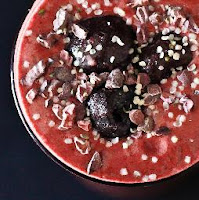
Looking for a delicious and more creative way than colostrum powered chocolate milk to combine today's seconds? What about Linda Wagner's Chocolate Cherry Bomb Smoothie with Colostrum, Caco, Maca, Acai, almond milk & more?
By now you will probably have listened to yesterday's installment of the SuppVersity Science Round-Up either via the Super Human Network live stream, or after downloading the podcast (the Round-Up starts in the 2nd hour) that has now been available for ~20h. In case you did not have the chance to listen live or listen to the podcast, but have a vested interest in erectile (dys-)function, optimal testosterone levels, the connection between testosterone, DHT, estrogen, insulin resistance, obesity, the health of your liver and longevity or you are simply eager to learn more about the latest research on high intensity interval training, steady state cardio,  everyday activity and the fallacy of the "exercise just makes you hungry hypothesis" (additional suggested read: "Dr. Oz Was Right: Exercise Does not Just Make You Hungry") and their effects on your metabolic health, conditioning and physique there is no way, you want to miss listening to this show, either before or after you devour this week's installment of the SuppVersity Science Round-Up Seconds.
  • Colostrum supplementation blunts exercise induced reduction in endogenous anti-oxidants and potentiates its beneficial effects (Appukutty. 2012) --Published on November 22, this paper by Appukutty et al. is only the latest in a long line of articles on the effectiveness or ineffectiveness of colostrum as an ergogenic aid (suggested read: "Ask Dr. Andro: Are Colostrum and Milk Healthy Muscle Builders?). We will get to these differences in a minute, but let's first take a look at the effects the provision of 50mg/kg body weight (human equivalent: 2.4mg/kg) had on the total antioxidant status, lipid oxidation, xanthine oxidase and super oxide dismutase levels in treadmill exercised (30min per day) mice.
    Figure 1: Relative levels of total antioxidants, xanthine oxidase and super oxide dismutase in supplemented (COL), exercised (EX) and exercised + supplemented (EX + COL) mice expressed relative to sedentary non-supplemented control (Appukutty. 2012)
    It's not difficult to see that the effects of the colostrum supplement go beyond the mere amelioration of the exercise induced decrease in total anti-oxidant enzymes and super oxide dismutase levels. The human equivalent of only 2.4mg/kg body weight per day did - after 14 days of supplementation the total antioxidant status in the exercised + supplemented rodents was already 5% greater, after 21 days whopping 11% greater than in the supplement only group.

    In view of the previously reported benefits of supplemental colostrum you could certainly argue that the obvious parallels to the difference between "training" and "overtraining", with the former having promotive and the latter having compromising effects on the endogenous anti-oxidant system of your body are no coincidence. In view of the about as many studies which found no or at least no significant factually or potentially ergogenic effects in response to supplemental "beast milk", we still have to answer the question I invoked in the introductory paragraph of this sub/item of today's installment of the SuppVersity Science Round-Up Seconds: "How come it works in some, but by no means all studies?" The answer could actually be way more straight forward than you think and reads "Simply because he scientists used different supplements!"

    Even the dairy industry has realized that the way they feed their cows and post-process their colostrum, before they eventually feed it to their offspring, renders almost 60% of the maternal colostrum from US dairy farms "inadequate" so that "a large number of calves are at risk of failure of passive transfer or bacterial infections, or both." (Morrill. 2012)

    Not all colostrum is made the same and the beneficial effects of each and every individual product - specifically with respect to the integrity of the intestinal wall - will necessarily depend on its bacteria content and the latter depends on the feed the cows receive as well as the processing the colostrum undergoes.
    If you do still remember my post on the etiology of exericse-induced increased intestinal permeablity and the beneficial effects 'intact' colostrum has on the integrity of the gut you just have to put two and two together and you have your explanation: Just like the efficacy of any artificial supplement depends on he chemicals the producer puts into it, the effectiveness of a food supplement will vary due do both natural (e.g. seasonal, feed dependent, stress andhealth related...) and 'unnatural' fluctuations in its ingredient profile. Heat treatment, which is applied to almost all commercially available colostrum supplements, for example, may leave most of the IgG content intact, but it will reduce not just the total count, but also the diversity of the microbiota in colostrum (only the heat resistant bacteria, mostly gram-positive, will survive; cf. Hayes. 2012) 
  • Study shows, cacao phenols protect your gut from inflammation, but there is much more cacao can do for you (Rodríguez-Ramiro. 2012) -- As a recent paper by scientists from the Ciudad Universitaria in Madrid (Spain) goes to show you, colostrum and bacteria are not the only naturally occuring supplements that are good for your gut health. Cacao has just been shown to do a pretty decent job, as well.

    Table 1: Nutritional content of the experimental diets the rodents were fed for 8 weeks with the carcinogen being injected in week 3 and 4 (Rodríguez-Ramiro. 2012)
    In an in-vivo the Spanish observed that a diet that was enriched with 12% cacao powder had astonishing anti-inflammatory effects in a rat model of azoxymethane (AOM)-induced colon carcinogenesis. The rodents had been fed the 12% cacao diets (composition see table 1 to he right), for 8 weeks. In weeks three and four, the scientists injected the procarcinogenic drug azoyxymethane in order to induce intestinal inflammation that would potentially lead to the development of colon cancer.

    Compared to the animals on the regular chow, the rats in the cacao group exhibited highly significant decreases the nuclear levels of  NF-κB and the expression of pro-inflammatory enzymes such as cyclo-oxygenase-2 and inducible NO synthase, all of which were profoundly upregulated in response to the AOM injections in their peers on the regular diet.

    In a subsequent in-vitro experiment on Caco-2 cells, the scientists were also able to confirm that cocoa the cacao polyphenols effectively down-regulate the levels of inflammatory markers induced by TNF-α by inhibiting NF-κB translocation and JNK phosphorylation.

    Now, it does not really appear feasible to eat a 12% cacao powder diet, right? Well, based on the data from table 1 the average food intake and body weigh of the rodents and some mathematical shenanigan, it's actually not difficult to calculate that the human equivalent dose, which would be 150g of cacao powder per day conains no more than 3g of polyphenols and could theoretically be achieved by supplementing with ~15g of chocamine every day. Ok, that would be hilariously expensive, but I assume you don't inject 3.25mg/kg azoyxymethane on a regular basis, right? Well, I guess this would mean that you won't need 15g of chocamine or 150g of cacoa powder to protect your gut either, right?

    Moreover, I suspect that most if not all of you will have heard or read about one of the dozens of epidemiological studies which show associations between very moderate intake of dark chocolate and cardiovascular, neuronal and metabolic health. Apropos "metabolic" did I mention that the animals in the cacao group were also 10% leaner than their peers on the regular - probably not a fair comparison with the differences in the macronutrient make-up but it would still be worth adding another bulletin point to a pretty impressive list of scientifically proven health-benefits of cacao consumption (or supplementation with respective extracts), which comprises among other things
      Guess how she got in shape? Right! The EDC Program ! EDC? Yeah: "The Female Weight-Loss EDC: The Fat Burning, Waist Reducing Synergy of Exercise, Diet and Dark Chocolate" - click here to  learn more
    • high antioxidant activity
    • improved insulin sensitivity, beta cell function & carbohydrate metabolism
    • improved HDL/LDL ratios
    • inhibition of detrimental byproducts of the arachidonic acid metabolism
    • induction of NO-mediated, endothelium-dependent relaxations
    • reduced incidence of stroke due to hypotensive effects
    • anti-CVD effects via TGF-β1 and decreased tendency of blood to clotting
    • local and systemic TNF-alpha modulation and VGEF suppression => anti-cancer efects
    • immune effects that can protect you from tooth decay
    • protection against UV radiation and rejuvenating effect if its applied to the skin
    • suppressive effect on fatty acid synthesis
    • increases in mitochondrial respiratio
    • ability to boost serotonine (5-HT), improve mood and lower appetite and cravings
    • [...]
    I am not intending to make an all-encompassing list, here. Instead I will conclude with the astonishing insight from one of the most recent meta analysis that the daily consumption of the polyphenol equivalent of 100g of dark chocolate (at least 60-70% cacao content; 500-1,000mg polyphenols) would prevent 85 cardiovascular events per 10,000 capita every year (Zomer. 2012).

    Don't get me wrong I am with you with respect to the absurdity of cost-analyses when we are talking about health, but that's unfortunately the way the health business is operating and therefore I won't simply ignore the 50,000$, which is the saving the scientists estimate for every saved life and the corresponding 40$ of which Zomer et al. suggest that they should be spent "per person per year could be devoted to advertising, educational campaigns, or potentially subsidisation of dark chocolate in this high risk population." (Zomer. 2012)

That's  it for this week - at least as far as the SuppVersity Science Round-Up goes

Since Maxim asked "And what about garlic?", here is an addendum summarizing what I maybe did not get across very well at the end of the show, when I was flabbergast that the show was already over: The researchers took 20 male non-athletes (aged 22-26 years, body fat 16-20% and VO2max 38-42 ml/kg/min) randomized them to 700mg garlic or dextrose control  for 14 days and had them work out at 75% VO2max on the treadmill for 30 minutes at the end of the intervention period. Afterwards they analyzed the blood samples and found that (a)the 14 day supplementation alone reduced the basal triglyceride and increased the high density lipoprotein-cholesterol (HDL) increase (P<0.05) and (b) increased the beneficial effects of the exercise bout on acute reductions in LDL and triglycerides (Zekril. 2012)
I hope you enjoyed listening to the show (click here to download the podcast in case you still haven't done so) and satisfied your cravings for more with this installment of the SuppVersity Science Round-Up Seconds: In case you haven't I suggest you browse over to the SuppVersity Facebook Wall and check out the latest news on
  • The connection between MS an impaired blood-brain barrier: A leaky brain and the intrusion of fibrinogen (a coagulation protein from the blood) could be the cause of multiple sclerosis (read more)
  • Fishing for Omega-3s in Milk: One cup of fish oil enhanced milk yields 432mg of DHA + EPA... and it does not taste or smell fishy (read  more)
  • Heart disease may begin even before you are born: Prenatal stress will turn the "probably" before "develop heart disease" into a "most likely" (read more)
When you are done with that and still hungry for more, you may want to check out my, as well as Patrick Arnold's, Kurtis Frank's (examine.com) and Willem Koert's (ergolog.com) contributions to a round-table discussion on the more or less recent ban of DMAA (aka geranium oil) in Australia - I have been so busy that I totally forgot about having done the respective interview weeks ago. Sorry for letting you know so late ;-)


References:
  • Appukutty M, Radhakrishnan AK, Ramasamy K, Ramasamy R, Abdul Majeed AB, Ismail MN, Safii NS, Poh KB, Chinna K, Haleagrahara N. Colostrum supplementation protects against exercise - induced oxidative stress in the skeletal muscle in mice. BMC Res Notes. 2012 Nov 22;5(1):649.
  • Hayes MM, Hughes TA, Greene AK. Bacterial diversity in dried colostrum and whey sold as nutraceutical products. J Food Sci. 2012 Jul;77(7):M359-63.
  • Morrill KM, Conrad E, Lago A, Campbell J, Quigley J, Tyler H. Nationwide evaluation of quality and composition of colostrum on dairy farms in the United States. J Dairy Sci. 2012 Jul;95(7):3997-4005.  
  • Rodríguez-Ramiro I, Ramos S, López-Oliva E, Agis-Torres A, Bravo L, Goya L, Martín MA. Cocoa polyphenols prevent inflammation in the colon of azoxymethane-treated rats and in TNF-α-stimulated Caco-2 cells. Br J Nutr. 2012 Nov 28:1-10. 
  • Zekri1 R, Jafari A, Dehghan G.  The concurrent effect of one bout aerobic exercise and short-term garlic supplementation on the lipids profile in male non-athletes. J Shahrekord Univ Med Sci. 2012; 14 (5) :34-41
  • Zomer E, Owen A, Magliano DJ, Liew D, Reid CM. The effectiveness and cost effectiveness of dark chocolate consumption as prevention therapy in people at high risk of cardiovascular disease: best case scenario analysis using a Markov model. BMJ. 2012 May 30;344:e3657.