Showing posts with label exercise order. Show all posts

Sunday, October 23, 2016

EMG Study Can Tell Us Something About Using Dumbbells, Barbells and Machines During Chest & Triceps Workouts

The dumbbell bench press is a pec stretcher. Doesn't it already look like maximal pectoralis major activity?
No, a high EMG activity will not necessarily translate into improved long-term muscle or strength gains, but it can tell you a lot about the biomechanics of different exercises and/or, as in the latest study by de Araújo Farias et al. (2016), exercise equipment and order.

The true purpose of this study by scientists from Brazil and the US was to investigate muscle activation, total repetitions, and training volume for three bench press exercise modes, the smith machine (SMBP), barbell (BBP), and dumbbell (DBP) - all followed by a triceps extension (TE).
Want to try something very different? Try BFR and Hypoxia Training

BFR, Cortisol & GH Responses

BFR - Where are we now?

Hypoxia + HIIT = Win?

BFR for Injured Athletes

Strength ⇧ | Size ⇩ w/ BFR

Training & Living in Hypoxia
With nineteen trained men as subjects, the scientists had each study participant perform three testing protocols with 4 sets of bench presses (10RM) with dumbbells, barbells or smith machine being the primary exercises that were then followed up with triceps extensions and two minutes of rest.
Figure 1: EMG activity in pectoralis (left) and the anterior deltoids (right | de Araújo Farias. 2016).
Surface electromyographic (SEMG) activity was assessed for the pectoralis major (PM), anterior deltoid (AD), biceps brachii (BB), and triceps brachii (TB).
Figure 2: Bench press repetition performance and volume for each mode (de Araújo Farias. 2016).
The results of the scientists' EMG and total volume analyses indicat that (a) dumbbells elicit a significantly greater pectoralis major activity than barbells, that (b) the anterior deltoid (shoulder) activity peaks on the smith machine, and that (c) the triceps does the least while the biceps the most work when the bench press is done with dumbbells instead of smith machine or barbell.
ChestBicepsBackCoreLegsTricepsShoulders
Navigate the SuppVersity EMG Series - Click on the desired body part to see the optimal exercises.
Figure 3: Mean and standard deviation values for IEMG (a) bench press (pectoralis major activation) and (b) bench press (triceps brachii activation) with and without pre-exhaustion in Suares. 2016).
Why exactly, the triceps activity during the triceps extensions was still reduced after the dumbbell bench press is not clear, but one may argue that the higher EMG activity after barbell bench presses may be the consequence of pre-exhaustion, which has been shown to augment muscle activity in previous studies, already (Brennecke. 2009; Soares. 2016 - see Figure 2); this, obviously, implies that the muscle activity in the barbell trial was increased, which is different from the initially questioned assumption that using dumbbells despite (or rather due to) their low strain on the triceps yielded inferior results.

As previously pointed out, though, there is no way of using these results for reliable prediction about the long-term adaptational response to training with dumbbell, barbell and smith machine. If we go by the prognostic power of training volume, it should be the dumbbell with a total volume of 31.2 ± 3.2 reps (versus the BBP 27.8 ± 4.8) that builds the most muscle. In that, I will leave it up to you to decide whether it's a coincidence that the dumbbell bench press also produced the greatest EMG activity ... ;-)

What I can and still want to tell you, though is that using dumbbells had the added benefit of showing the least interference with the subsequent triceps extensions (total volume: BBP = 1204.4 ± 249.4 kg; DBP = 1216.8 ± 287.5kg SMBP = 1097.5 ± 193 kg) - an observation that appears logical, and still raises the question: what's more conducive for your gains? The pre-exhaustion of the triceps you get from barbell bench presses and the resulting increase in EMG activity, or the rest your triceps will get during dumbbell bench presses and the subsequently increased training volume during triceps extensions. Well, I can't tell, but based on previous studies, it would appear as if the increased activity and decreased volume would balance each other out and explain why previous research found conflicting results (Prestes. 2015).
The jury on "pre-exhaustion" is still out there. But there is evidence of its usefulness I've discussed in previous articles on suppversity.com | example
So what do I do? You remember the benefits of daily changing loads I discussed in June 2016? Well, what if you kept your body guessing on the type of equipment you use, as well? I would not necessarily recommend switching back and forth between barbells, dumbbells, and the smith machine within a single workout and/or from one workout to the next.

What may make sense, on the other hand, is using dumbbells for two, barbells for two weeks, each, and the (boring ;-) smith machine for another week in a 5-week cycle and thus making sure that you grasp the individual benefits of each of them and the added benefit of motivation and keeping the muscle guessing.

On a side note: The study confirms what many of you probably "felt" anyways. The "best" as in "most pectoralis specific way" of bench pressing is clearly the dumbbell, which - much in contrast to the barbell and smith machine - do not allow the pecs to rest while triceps and front delts take over and lift a sign. percentage of the weight | Comment on Facebook!
References:
  • Brennecke, Allan, et al. "Neuromuscular activity during bench press exercise performed with and without the pre exhaustion method." The Journal of Strength & Conditioning Research 23.7 (2009): 1933-1940.
  • de Araújo Farias, D., et al. "Maximal strength performance and muscle activation for the bench press and triceps extension exercises adopting dumbbell, barbell and machine modalities over multiple sets." Journal of strength and conditioning research (2016).
  • Prestes, Jonato, et al. "Discussion of “The effects of pre-exhaustion, exercise order, and rest intervals in a full-body resistance training intervention”− Pre-exhaustion exercise and neuromuscular adaptations: an inefficient method?." Applied Physiology, Nutrition, and Metabolism 40.8 (2015): 850-851.
  • Soares, Enrico Gori, et al. "Comparison between Pre-Exhaustion and Traditional Exercise Order on Muscle Activation and Performance in Trained Men." Journal of sports science & medicine 15.1 (2016): 111.

Monday, December 28, 2015

"HIIT-ing it After Arm Workouts Will Ruin Your Gains", Study Says and Confuses Statistical and Practical Significance

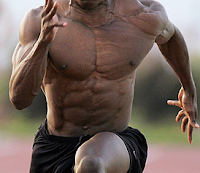
Does this look as if sprinting would impair muscular development of arms or any other muscle? I mean, come on - look at the average sprinter: Many gymrats dream of the arms and overall muscular physique they have; no wonder that the data from the full-text shows a different picture than the abstract would suggest.
I have repeatedly written about combining strength and classic endurance training. With endurance first, endurance last and even endurance in-between the studies yielded often very different results in terms of what would be the optimal way to combine both. With a few exceptions in which resistance training was combined with crazy endurance training sessions, however, I've yet never written about nor seen compelling evidence for the often-heard claim that "cardio ruins your gains".

For HIIT, i.e. high-intensity interval training, a recent study from the Nippon Sport Science University does now claim, though, that my that combining HIIT and weight training may be a very bad idea, ... an idea that may in fact, just as the broscientific nightmare suggests "ruin your gains, bro!" Upon closer scrutiny, however, things appear less unambiguous than the abstract would have it...
You can learn more about the optimal exercise order at the SuppVersity

Before, After or In-Between?

Exercise Order and Leptin Levels

Cardio First for Anabolism?

Large Muscle Groups First?

Combine Cardio & Strength, Right

Cardio or Weights First? What the...
The purpose of the study was to examine whether or not lower limb sprint interval training following arm resistance training influences training response of arm muscle strength and hypertrophy. Or in short: Will doing HIIT sprints immediately after an arm workout ruin the strength and strength gains you've primed before? 
Figure 1: According to the study, you better don't do HIIT sprint training after an intense arm workout if you don't want to ruin the strength and size gains you "primed" with curls and co (photo from Kikuchi. 2015)
The subjects, twenty previously only lightly trained men, were divided into resistance a training group (RT, n=6) and concurrent training group (CT, n=6).
  • The RT program was designed to induce muscular hypertrophy (3 sets x 10 repetitions (reps) at 80% 1 repetition maximum [1RM] of arm curl exercise), and was performed in an 8-week training schedule carried out 3 times per week on nonconsecutive days. 
  • Subjects assigned to the CT group performed identical protocols as strength training (ST) and modified sprint interval training (4 sets of 30-s maximal effort, separated in 4m 30-s rest intervals) on the same day. 
The relevant study outcomes the researchers evaluated were the changes in maximal oxygen consumption (VO2max), muscle cross-sectional area (CSA), and 1RM that were measured before and after the 6-week study.
Figure 1: Relative changes in VO2max (conditioning), muscle size (CSA) and strength (1-RM) over 6 wks (Kikuchi. 2015).
As the data in Figure 1 reveals, significant increases in VO2max from pre- to post-test were observed only in the CT group (p=0.010, ES=1.84), but not in the RT group (p= 0.559, ES= 0.35). The rest of the results in Figure 1, however should be kind of surprising to anyone who has read the researchers conclusion that "our data indicate that concurrent lower limb sprint interval training interfere with arm muscle hypertrophy and strength" (Kikuchi. 2015).

No, you are not mistaken. The average muscle size and strength gain in the combined training group was larger. The reason the scientist still claim that their study would show that HIIT impedes strength adaptation is a statistical one. While the changes in the CT group had p-values p > 0.05 and were thus not statistically significant. The (albeit smaller) mean increase in the RT group was significant. Accordingly, the corresponding "effect size" in the RT group is larger than the one in the CT group and thus HIIT training must be bad, right? Well,... I don't think so.
If you take a closer look at the individual muscle  size and strength development, you should notice that being afraid that sprints would ruin your arm development is unwarranted and the statistical significance and effect sizes of the changes practically irrelevant.
Beware of bling faith in abstracts! If you look at my plot of the individual data the scientists luckily published with their full-text, it is yet obvious that this study does not prove and if we are honest, not even really suggest that there practically relevant negative effects of doing HIIT in this workout. If you just read the conclusion to the abstract, which reads "our data indicate that con-current lower limb sprint interval training interfere with arm muscle hypertrophy and strength" (Kiku-chi. 2015), you may be inclined to make unne-cessary changes to your workout that are neither necessary or productive. After all, the objective result of the study is that in some individuals it is possible that the addition of HIIT to an arm workout may have a minor impact on their gains.

In view of the facts that there's (a) one person with a roughly ~41% increase in sleeve sizes in each group and that (b) the average increase in sleeve size would be 23% in the CT and only 21% in the RT group if the two outlayers who lost muscle (one in each group) were excluded, though, I would suggest you ignore this possibility unless you realize that you're making no gains at all with concurrent training. This doesn't falsify the scientists' conclusion, which is based on scientific standard procedure, i.e. look for statistical significant results, use those to make your conclusion, but I felt I needed to write this article to put the theoretically correct interpretation of results of an unquestionably under-powered study into perspective | Comment!
References:
  • Kikuchi et al. "The effect of high-intensity interval cycling sprints subsequent to arm-carl exercise on muscle strength and hypertrophy in untrained men: A pilot study." Journal of Strength and Conditioning Research Publish (2015): Ahead of Print | DOI: 10.1519/JSC.0000000000001315

Thursday, October 29, 2015

Cardio After Weights! Doing Resistance Before Endurance Training Has More Beneficial Effects on Leptin, Cortisol, Testosterone and Body Composition in Young Men

I can almost guarantee that the results of this study are not sex-specific. Ladies, pick up the weights fater you hit the treadmill, stairmaster, elliptical or other torture instrument you like to use!
It has been a while since the last study on exercise order (cardio or weights first) has been published. Now, scientists from the University of Kurdistan have conducted another study to investigate the effects of intrasession sequencing of concurrent resistance and endurance training on the serum leptin, testosterone, cortisol responses and body composition in obese men.

And don't worry, we are not talking about useless acute-phase data that shows no correlation with either strength or muscle gains, or fat loss (West. 2012). Sheikholeslami-Vatani and colleagues conducted an eight-week study on thirty obese young male students without continuous exercise history (age: 23.2±1.4 year, BMI: 31.8±1.6 kg/m²).
You can learn more about the optimal exercise order at the SuppVersity

Before, After or In-Between?

Exercise Order and Leptin Levels

Cardio First for Anabolism?

Large Muscle Groups First?

Combine Cardio & Strength, Right

Exercise Order Reloaded
The subjects were randomly divided into three groups: concurrent resistance-endurance (CRE, n = 10) group, concurrent endurance-resistance (CER, n = 10) group and control (C, n = 10) group (no training program). The concurrent training groups (CER and CRE) trained three times a week on alternate days for 8 weeks. The training itself consisted of which consisted of ...
"running with 70—75% of maximal heart rate (HRmax) for 10 minutes which gradually increased to 80% HRmax for 21.5 minutes [plus] resistance training consisted of 3 sets of 8 repetitions at 80% of 1 repetition maximum (1RM) in 5 resistance exercises (leg extensions, lying leg curl, triceps pushdown, bench press and lateral pull down)" (Sheikholeslami-Vatani. 2015). 
In-between the endurance and resistance (or vice versa) training parts of the workouts, the subjects rested for 5 minutes. Blood sampling and skin-fold measurements to asses the body composition was conducted 48 hours before the start of the course and again 48 hours after the last training session (learn why waiting longer for the body comp test may have been better, but no study does that).
Figure 1: Relative changes in hormone levels (left) and absolute and relative changes in body fat fat free mass and body fat % (right) after 8 weeks of doing nothing (C) or doing cardio (CER) or weights (CRE) first (Sheikholeslami-Vatani. 2015).
I've plotted the most important results in Figure 1a & b. So, let's take a look: The first thing that everyone should see is that both workout regimen had relevant health and physique effects:
  • Similar gains w/ weights vs. cardio first in trained men | more.
    normalization of leptin levels (health)
  • slight increases in testosterone (health)
  • increases in cortisol (which are benign | learn why)
  • significant reductions in body fat (health + physique)
  • increases in fat free mass (health and physique)
In that, the resistance training first (CER) group came off slightly better in all tested study outcomes. Statistical significant inter-group differences, however, were observed only in comparison to the control group. In view of the fact that the body fat (total and %) improvement reached statistical significance compared to control only in the endurance first, group, yet not in the strength first group, one may still argue that the difference between cardio first (CER) and weights first (CRE) was "almost significant" ;-)
Weights or Cardio? What's the Best Visceral Fat Burner + How Often, Long and Intense Do You Have to Train | Learn more!
So, weights first is the way to go? Well, I assume I should write that doing both on separate days and thus doing having 5-6 workout days per week may have even more pronounced effects on the body composition of obese young men. In the end, though, I have no evidence to prove that doing the same amount of cardio on a separate day would actually have yielded greater improvements in body composition. Against that background and in view of the fact that three workouts per week is everything that fits into the busy schedules of the average trainee, we are left with the confirmation that (a) doing (intense) cardio and weights in one session feasible and effective when the goal are health and physique improvements and that (b) if you or your clients combine both, you better start with the weights, not the cardio part | Comment!
References:
  • Sheikholeslami-Vatani, D., et al. "The effect of concurrent training order on hormonal responses and body composition in obese men." Science & Sports (2015).
  • West, Daniel WD, and Stuart M. Phillips. "Associations of exercise-induced hormone profiles and gains in strength and hypertrophy in a large cohort after weight training." European journal of applied physiology 112.7 (2012): 2693-2702.

Friday, December 26, 2014

The Latest on Combined Training: 15% Increase in Muscle Size in 24 Weeks in Healthy Moderately Active Young Men Regardless of "Cardio First" or "Weights First" Training

If you think even non-significant differences in "lean gains" are significant, "weights first" is for you.
If you are about to embark on a combined strength + endurance training regimen in 2015, it does not matter if you do "cardio first" or "strength first"... well, almost. If you stick to the traditional exercise order, you may gain a non-significant 2% extra on your vastus lateralis (some people would wrongly say "quads") size.

You've read evidence for both, the superiority of "cardio first" and "strength first" on the SuppVersity before and it may in fact be a matter of personal preference, whether you do your cardio or strength training first.
You can learn more about the optimal exercise order at the SuppVersity

Before, After or In-Between?

Exercise Order & Leptin

Cardio First for Anabolism?

Large Muscle Groups First?

How to Combine Cardio & Strength?

Exercise Order Reloaded
The latest study from the University of Jyväskylä and the Edith Cowan University actually appears to confirm just that. In their 24-week study Schumann et al. had 34 physically active and healthy young men performed a combined strength and endurance exercise program with 16 subjects performing the endurance and 18 subjects performing the resistance training exercise first, 2-3 times a week for 24 weeks. Or, more precisely, ...
"[d]uring the first 12 wk, the subjects performed according to their corresponding training group two times 1E+1S or two times 1S+1E per week. The frequency was then increased during the second 12 wk so that two combined training sessions were performed in every first and fourth week and three combined training sessions in every second and third week (i.e., two times 1E+1S or two times 1S+1E or three times 1E+1S or three times 1S+1E, respectively)" (Schumann. 2014)
To reflect tapering before testing, both week 12 and week 24 were conducted by maintaining the training frequency but reducing training volume and intensity by reducing the number of sets, lowering the loads during the strength loading, and reducing both the total duration and time spent at high intensity (i.e., above the anaerobic threshold) during endurance cycling.
Dietary control: To control nutritional intake, food diaries were collected for 3 days including one weekend day at weeks 0, 12, and 24. Subjects received both verbal and written nutritional recommendations and were instructed on how to report nutritional intake in the diaries. The food diaries were analyzed by a nutrient analysis software (Nutri-Flow; Flow-team Oy, Oulu, Finland). Subjects were asked to maintain constant dietary intake throughout the study period. In preparation for all testing, subjects were instructed to consume a light meal 2–3 h before the start of each test and were asked to maintain similar nutritional intake before the measurements at weeks 0, 12, and 24. During each training session, a standardized low dose of glucose was provided at the midpoint of each combined exercise session (after E or S, respectively) whereas water was allowed whenever the subjects felt thirsty.
The intensity of the endurance training was controlled by HR (Polar S410; Polar Electro Oy, Kempele, Finland) associated with subject’s individual aerobic and anaerobic threshold determined during measurements at weeks 0 and 12, respectively. Subjects were instructed to maintain a constant pedaling frequency of approximately 70 rpm during each training session while the magnetic resistance of the ergometer was adjusted to achieve the required exercise intensity.
Concomitant Training: Cardio Before or After Weights? Cardio First Triggers 916% Increase in Growth Hormone. Plus: 7x Higher Testosterone & 3x Higher IGFBP-3 Peaks | read more.
"During weeks 1–7, steady-state cycling of low-to-moderate intensity (below and above the aerobic threshold) was performed, and during the remaining weeks, additional high intensity interval sessions (below and above the anaerobic threshold) were incorporated into the training program. The duration of endurance cycling progressively increased throughout the 12 wk of training from 30 to 50 min. During the second 12-wk period, the major endurance program structure was maintained whereas both training volume and intensity were further increased. The aerobic threshold represented intensities (% HRmax) of 65% T 5% and 67% T 6% in E+S and 68% T 8% and 67% T 6% in S+E at weeks 0 and 12, respectively. The anaerobic threshold represented intensities of 85% T 5% and 86% T 5% in E+S and 82% T 8% and 86% T 5% in S + E at weeks 0 and 12, respectively. The loads used during the strength training were determined by the number of repetitions and execution velocity and progressively increased throughout the two 12-wk periods" (Schumann. 2014)
Exercises for the lower body were bilateral dynamic leg press and bilateral (weeks 1–7 and 13–18) and unilateral (weeks 8–12 and 19–24) dynamic knee extension and flexion. Additional exercises for the upper body included dynamic seated vertical press, lat pulldown, and exercises commonly used to improve trunk stability (crunches, torso rotation, and lower back extension).
  • During the first 2 wk, training was performed as a circuit using 2–4 sets of 15–20 repetitions at an intensity of 40%–60% of 1RM. 
  • Thereafter, protocols aiming for muscle hypertrophy (2–5 sets of 8–10 repetitions at 80%–85% of 1RM, 1.5- to 2-min interset rest) and maximal strength (2–5 sets of 3–5 repetitions at 85%–95% of 1RM, 3- to 4-min interset rest) and, during the last 2 wk, protocols targeting explosive strength (two sets of 8–10 repetitions at 40% of 1RM with maximal velocity, 3- to 4-min interset rest) were performed. 
  • During the second 12-wk period, the major strength program structure was maintained whereas both training volume and frequency were slightly increased to maximize fitness and health outcomes and to avoid a training plateau. 
The overall duration of the strength protocol within each combined training session was 30–50 min, resulting in a total duration of approximately 60–100 min for each combined training session (i.e., E+S and S+E, respectively)
Figure 1: Changes in leg press strength (left), time to exhaustion and aerobic power (right | Schumann. 2014).
Similar to the muscle size, the strength (Figure 1 | left) endurance performance (Figure 1 | right) increased non-significantly more in the "weights first" (S+E) group. In that, it is interesting to observe that the discrepancy between the "endurance first" (E+S) and "weigths first" (S+E) group increase over time. A fact that may suggest that after another four weeks the already measurable difference would have become significant.
Figure 2: Changes in vastus lateralis muscle cross sectional area (CSA, left) and lean mass (right | Schumann. 2014).
This is yet as speculative as the corresponding assumption that the inter-group difference in increase in lean muscle mass and vastus lateralis cross sectional area (CSA) would have achieved statistical significance if the study duration had been longer. On the other hand, that would probably imply that the "strength first group" would have ended up with significantly larger increases in upper body muscle mass.
You know what? Who cares! If there is a bottom line to this article it is the same, I used for previous articles discussing the question whether you "should" do your cardio training before or after your weight training: Do whatever works for you!

Beware of the "training frency" - Chronic Resistance Training Reduces the Anabolic Signaling in Response to Exercise - 12 Days of Detraining Restore It | read more.
And in the unfortunate case that neither "weights first" nor "cardio first" works for you, you can still do cardio and weights on separate occasions. Either on a single day with AM and PM sessions, or on separate days, which is what I would suggest to all of you who are aiming for maximal effects on their physique: Three resistance training workouts and two cardio sessions of which at least one should be a high intensity interval workout on five days of the week. If you stick to a whole-food based higher protein diet (30g of high quality = high EAA protein with every meal), that's going make a difference in the mirror... promise! Comment on Facebook!
References:
  • Schumann, Moritz, et al. "Fitness and lean mass increases during combined training independent of loading order." Medicine and science in sports and exercise (2014).

Sunday, July 20, 2014

Concomitant Training: Cardio Before or After Weights? Cardio First Triggers 916% Increase in Growth Hormone. Plus: 7x Higher Testosterone & 3x Higher IGFBP-3 Peaks

Run first, lift second to end your workouts on an anabolic tune.
I know, judging the anabolic effects of exercise by the post-exercise testosterone, cortisol, growth hormone and IGFBP-3 response is controversial. On the other hand, Claudio Rosa and his colleagues from the University of Trás-os-Montes e Alto Douro are right, when they argue that "concurrent training (CT),  is  an  effective strategy to improve both cardiorespiratory and neuromuscular functions (26), as well to induce a high-energy expenditure (2, 21)" (Rosa. 2014) that comes with one significant disadvantage; a disadvantage scientists have labeled stimulus interference.

A reduction / reduced increase of testosterone and or IGF, of which Rosa et al. state that they are the "most important  anabolic  hormonal  indicators  associated  with  muscle  hypertrophy" would be one of the many potential reasons for said interference.
You can learn more about the optimal exercise order at the SuppVersity

What's the Right Training 4 You?

Hypertrophy Blueprints

Fat Loss Support Blueprint

Strength Training Blueprints

Study Proves: Overtraining Exists

Recovering from the Athlete's Triad
Accordingly, the aim of the Portuguese scientists was to investigate and compare the hormonal responses (testosterone, cortisol, growth hormone, and IGFBP-3) to different intra-session endurance and strength training order in concurrently trained men.
Figure 1: Anaerobic and aerobic performance markers of the study participants (Rosa. 2014).
As the data in Figure 1 goes to show you, the trainees were no absolute noobs. In addition, all participants had been physically active and had engaged in concomitant training at least 3 times a week, during the previous 12 months.

The protocol of the strength training sessions was designed in order to consider an appropriate and efficient manipulation of several training variables which have been associated in the literature with higher energy expenditure during and after the exercise(s), namely: multiple sets; exercises recruiting large-muscle mass; movement speed; number of repetitions ; the intensity and volume of the workload; resting time between sets ; and the execution order of the resistance exercises.
If you feel hypo after the workouts, that's the way to go... well, at least if you want to maximize your growth hormone production. Hypoglycemia, which is characterized by low blood sugar levels, is after all a potent stimulus to secretion of growth hormone (Roth. 1963). Needless to say that your blood glucose levels will be lower if you do cardio first, if this is going to be more anabolic is a whole different question, though.
The endurance training exercise was performed on a treadmill. The training included 32 minutes of intermittent exercise, with 2 minutes at a speed corresponding to a blood lactate concentration of 2 mmol/L, alternating with 1 minute at a speed corresponding to a blood lactate concentration of 4mmol • L/1 (compare the actual running velocities in Figure 1).
Suggested read: "Don't Want to Sacrifice Your Strength on the Altar of Cardio Training? Creatine Monohydrate to the Rescue! Differential Effects on HIIT / Steady State, Legs / Chest" | read more
"The strength training included three sets of 10 repetitions with 70% of 1RM for the following exercises: squat (SQ), bench press (BP), leg press (LP) and front lat pull down (FLPD). Moreover, subjects were also required to perform three sets of 30 repetitions of the abdominal crunch (AC) and lumbar extension (LE) exercise with their own body weight.All sets of an exercise were completed before changing exercise. The ST exercises always followed this order: SQ, BP, LP, AC, FLPD, and LE. A rest interval of 1 minute was maintained between sets. A metronome (Quartz, São Paulo, Brazil) was set used at a cadence of 40 beats per minute in order to establish a rate of 20 exercise repetitions per minute." (Rosa. 2014)
If you imagine the resulting training program which was performed either with the endurance (ES) or the strength (SE) component first, you will realize that the result (specifically SE) is not too far off the average concomitant training regimen of the Average Joes and Janes at your gym.

ES = Endurance first, to maximize testosterone and IGFB-3? 

If you take a look at the outcome values, you will realize that there were significant effects for the main effect of time in the testosterone (p = 0.017) and growth hormone concentrations (p < 0.001), as well as a significant interaction between exercise order groups and time in the IGFBP-3 levels (p = 0.022).
Figure 2: Changes (pre vs. post exercise; %) in testosterone, cortisol, IGFBP-3 & GH (Rosa. 2014)
There were no significant interaction or main effects in the cortisol concentration (p > 0.05) or effects due to the exercise order (p > 0.05). Still, the testosterone and IGFBP-3 concentrations significantly increased in the ES group after the exercise trainings (57.7 ± 35.1%,  p  = 0.013 and 17.0 ±
15.5%, p = 0.032, respectively), only. In the "endurance second" (SE) group  the IGFB-3 levels actually decreased.
If you cannot decide, whether you want to do it before or after, just do your cardio in-between | learn more
Bottom line: If we assume that the increase in testosterone and IGFB-3 are relevant, we would be ill-advised to follow the standard practice and perform our resistance training first. If on the other hand you follow my advice and try both and pick the one you feel works best for you, I suppose most of you will end up with the standard regimen. I mean, who wants to squat after 30 minutes on the treadmill? Apropos, you remember my previous article about doing cardio in-between, ha? Why don't you try this as well? Maybe it's - as so often - the golden middle-way that provides optimal results? What? Oh, yeah. Actually it'd probably be best if you had 2 cardio and 3 strength training days, but I know that this does not fit everyones schedule.

Now, please keep in mind that the evidence for immediate benefits from elevated post-workout testosterone, GH and IGF is marginal if not non-existent. The next logical step would be a 12-week study to compare the long-term effects ... obviously, we don't have that study, yet, but the SuppVersity is the place to go if you want to be notified, when it's been conducted ;)
Reference:
  • Rosa C, Vilaça-Alves J, Fernandes HM, Saavedra FJ, Pinto RS, Machado Dos Reis V. "Order effects of combined strength and endurance training on testosterone, cortisol, growth hormone and IGFBP-3 in concurrent-trained men". J Strength Cond Res. (2014): Jul 15 Ahead of Print. 
  • Roth, Jesse, et al. "Hypoglycemia: a potent stimulus to secretion of growth hormone." Science 140.3570 (1963): 987-988.