Showing posts with label six pack. Show all posts

Wednesday, July 24, 2013

Want to Have 6-Pack Abs? Abdominal Bracing Strengthens Deep Ab Muscles and May Push Those Packs Out. Plus: It Will Add More to Your Core Stability Than 1000 Crunches
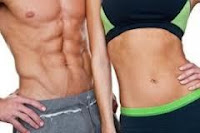
Embrace,... ah pardon, I meant brace your abs! Brace your abs and make the six packs shine through.
It's summertime and thus the time of the year, when men all over the world suddenly realize that there is something missing right between their well-shaven chest and the elastic waist of their shorts. In fact, for the majority of these "poor wretches" (aka perfectly normal men), there is rather "something too much" than something missing and I should point out in advance that the following blogpost is not going to help you to solve that problem, in order not to raise false hopes: Bracing yourself is not going to help you lose body fat. What "bracing yourself" or rather your abs can do for you, though is to help you strengthen your core, wherever you go, stand or train.

"How's that and what exactly is abdominal bracing?"

Now that I have gotten your full attention, it is probably about time to explain what exactly abdominal bracing is. Actually it is nothing else than a static contraction of the musculature. The same thing you would do, when I told you that I was about to punch you right into the stomach. You tighten your abdominal muscles as much as possible and wait for the impact (video). If you do have abs, you will probably be doing something similar while you are doing crunches or any other ab-exercise lying on your back to make sure that your lower back is pressed into the ground all the time (in case you are not ding that it is no wonder you don't see your abs, despite having a low body fat %, by the way).
Figure 1: % EMGmax values in each muscle during abdominal bracing (Maeo. 2013; image on the left Wikipedia)
Now, while the usefulness of this "exercise" for core-stability is something scientists have been aware of for years, the latter cannot be said of the actual activation pattern of the trunk muscle activities during abdominal bracing. Accordingly, a group of Japanese researchers set out to test and compare the intensity of the muscular contraction during abdominal bracint to 5 static exercises, which are often prescribed in rehabilitation programs, and 5 dynamic exercises, which are usually conducted for strength-training purposes. In that, the scientists used an EMG device in order to quantify the muscular activation durin
  • Trunk extension
  • V-Sits
  • Curl-Ups
  • Sit-Ups
  • Back extensions on the floor
  • Back extensions on the back
  • Abdominal hollowing (video)
  • Prone Planks
  • Lateral Planks 
  • Supine Planks
  • Trunk flexion
  • Trunk lateral flexion
and observed the following activation patterns for the rectus abdominis, the internal and external obliques and the erectors spinae (learn more about the anatomy of the abs; check out exrx.net to learn about the exercises): 
Figure 1: EMG-max values for rectus abd., external oblique, internal oblique, erectors spinae (Maeo. 2013)
If you scrutinize the data, there is no debating the "bracing yourself" works - much better than the notorious "hollowing", when it comes to training the rectus abdominis (RA), external oblique (EO) and erector spinae (ES) muscles the maximal activation during the "braces" is alway inferior to at least one of the other exercises. However,
"[...] the % EMGmax value for IO during the abdominal bracing was significantly higher than those in most of the other exercises including dynamic ones such as curl-ups and sit-ups."
Consequently, abdominal bracing (but also hollowing) is one of the "most effective techniques for inducing  a higher activation in deep abdominal muscles, such as IO muscle" (Maeo. 2013) and an underdeveloped "deep" abdominal musculature is much more likely to be the underlying reason that you are lean and still don't see abs, than a generally underdeveloped midsection.

Suggested read: "Shoulder Presses Ain't for Delts, Only!" (read more)
Bottom line: I you are one of the guys or girls who are constantly complaining about seeing nothing but the upper two abs despite being already hilariously lean, abdominal bracing could help push the "upper layer" of muscle out enough to make the horizontal stripes shine through the skin.

And don't forget, even if you don't do it as a standalone movement, you better "brace yourself", when you are doing your sit-ups, crunches and all the rest of the exercises people are wasting their time on, because they don't brace, or rather press their back firmly into the ground, when they are fidgeting around for hours. That being said, you may remember the post about the "ab-building effects" of shoulder presses, take a look at Flex Wheeler over there to the right. If he did not brace his abs he would break his back (the position he is in is still 100% suboptimal).

References: 
  • Maeo S, Takahashi T, Takai T, Kanehisa H. Trunk Muscle Activities during Abdominal Bracing: Comparison among Muscles and Exercises. Journal of Sports Science and Medicine. 2013 [ahead of print]

Friday, June 29, 2012

Topical Fat Loss: Capsaicin Cream Blunts Weight Gain in Rodent Model and Increases Leptin, Adiponectin, Lipolysis and Fatty Acid Oxidation in Visceral Fat Depots

Image 1: If you infused your ice-water with an extract of those, that could supercharge your "cold thermogensis" (see "Ephedra vs. Cold Thermogensis" ;-)
Those last 1-2lbs of stubborn fat have been and still are the focal point of countless of discussions among trainees, trainers and  magazines even average Joes and Janes who would not even remotely consider to go to the gym to get rid of those love handles - interestingly, all these groups are similarly susceptible to one message: "Revolutionary breakthrough in topical fat loss: "Whatever-Our-Marketing-Department-Came-Up-With-Burn will obliterate the stubborn body fat that's still covering your abs, obliges, butt, and whatever else you hate about yourself in record time!" Sounds and, as the countless disappointed testimonies on the Internet confirm, is usually too good to be true.

How many scoville (SHU) does it take to burn 1lbs of body fat?

A soon to be published study by researchers from the University of Ulsan in Korea does however show that many of the companies which advertise with the afore "cited" slogans could in fact be on the right track - at least with respect to one of the key ingredients many of those topical fat-burners contain: Capsaicin, a major pungent molecule that is found in hot chilies and other peppers and has already been shown to exert direct effects on isolated adipocytes in vitro (Kang. 2007; Hsu. 2007) and anti-obesity activity in animal models (Yoshioka. 1999; Zhang. 2007). Interestingly enough, epidemiological (Wahlqvist. 2001) and controlled human trials (Bloomer. 2010) suggest that these effect do - despite the often-touted differences in the thermogenic capacity of humans and rodents - in fact manifest in all the usual steps of scientific experimentation in the medical field, i.e. the petri dish, the animal model and the controlled, randomized, placebo-blinded human trial.

From the mouth onto the skin

As far as its topical usage is concerned the main focus of scientific research has yet been on the ameliorative effects of capsaicinoids on painful neuropathies and neuralgia (Harding. 2001; Roberts. 2011) and Lee et al. claim that their study is the first one to investigate the effects of in vivo application of 100mg of a 0.075% hydrophillic capsaicin cream applied to the shaved abdominal skin of pre-fattened mice who were pair-fed (=equal caloric intake for rodents in both groups to exclude reduced appetite as a cause for the observed effect) for 7-weeks.
Figure 1: Body composition (left) and adipocyte size (right) after 7-weeks on HFD with our without topical application of 100mg 0.075% capsaicin cream to the abdomen of obese mice (based on Lee. 2012)
As the data in figure 1 clearly shows, the topical application of capsaicin elicited similar beneficial effects on the blood lipids (not shown) as its oral ingestion in a previous HFD rodent trial (Kang. 2010). What is however particularly striking is that it did at the same time totally blunt further increases in body weight and reduced body fat storage in both the mesenteric, as well as the epididymal, visceral fat depots. The latter went hand in hand with profound changes in the adipocyte morphology of both fat depots which shifted from fewer large, to many small adipocytes - a feature which is usually associated with lower adipocyte inflammation and thus reduced risk of cardiovascular disease & co.

Topical application, systemic effects?

Both results, the improved lipid profile, as well as the reduction in visceral (intra- not super-abdominal) obesity appear to suggest that the effects of the capsaicin cream was by no means as localized as the producers of respective "supplements", would have it.
Figure 2: Adiponectin, leptin, TNF-alpha, lipoprotein lipase, UCP-2 and PPAR expression in mesenteric fat pads of the animals at the end of the 7-week study period (based on Lee. 2012)
The localized decreases in TNF-alpha, a central regulator or inflammation and the profound increases in adipokine expression (adiponectin + leptin), lipoprotein lipase, as well as UCP-2 and all three varieties of the peroxisome proliferator receptors (PPARs), Lee et al. observed in the mesenteric fat pads of the animals do yet confound this theory - capsaicin is, at least partially, a topical fat burner in the literal sense.

Caution! Stimulant-laden fire hazard!

Aside from the fact that its certainly non-negligible effects on visceral fat should not be of great interested for any avid trainee who is following a wholesome whole-foods diet, as those last slabs of body fat that are covering your abs belong to your subcutaneous and not visceral fat depots, there are two more things you should be aware of before you (most likely) waste your money on one of those products.
  1. The capsaicin itself will make the body part you rub the product on look like a tomato on fire and burn worse than stinging nettle and that usually for hours!
  2. The systemic effects of the stimulants most of these products contain can become an issue especially for leaner folks, as the dosages are usually adjusted for customers with a thick "insulation" that has to be penetrated, first. 
If you still feel that you have to give one or another of those preparations a shot, start with a moderate dose first and wait for a couple of hours to see what it does (don't expect it to do anything to your body fat in that time - if your waistline goes down within the first days of application that's simply water loss!).

My personal recommendation would still be to keep away from any of these products. Regardless of your personal tolerance to stimulants or the specific composition of the different formulas that are currently on the market - 99% of the feedback I have heard and read about states that these products are much better money- than fat-burners  ;-)

References:
  1. Bloomer RJ, Canale RE, Shastri S, Suvarnapathki S. Effect of oral intake of capsaicinoid beadlets on catecholamine secretion and blood markers of lipolysis in healthy adults: a randomized, placebo controlled, double-blind, cross-over study. Lipids Health Dis. 2010 Jul 15;9:72.
  2. Kang JH, Kim CS, Han IS, Kawada T, Yu R Capsaicin, a spicy component of hot peppers, modulates adipokine gene expression and protein release from obese-mouse adipose tissues and isolated adipocytes, and suppresses the inflammatory responses of adipose tissue macrophages.FEBS Lett. 2007;581:4389-96. 
  3. Kang JH, Goto T, Han IS, Kawada T, Kim YM, Yu R. Dietary capsaicin reduces obesity-induced insulin resistance and hepatic steatosis in obese mice fed a high-fat diet. Obesity (Silver Spring). 2010 Apr;18(4):780-7.
  4. Lee GR, Shin MK, Yoon DJ, Kim AR, Park NW, Yu R, Han IS. Topical application of capsaicin reduces visceral adipose fat by affecting adipokine levels in high-fat diet (HFD)-induced obese mice. Obesity (Silver Spring). 2012 Jun 18. doi: 10.1038/oby.2012.166. [Epub ahead of print]
  5. Hsu CL, Yen GC Effects of capsaicin on induction of apoptosis and inhibition of adipogenesis in 3T3-L1 cells.J Agric Food Chem. 2007;55:1730-6. 
  6. Wahlqvist ML, Wattanapenpaiboon N Hot foods--unexpected help with energy balance? Lancet. 2001;358:348-9.
  7. Yoshioka M, St-Pierre S, Drapeau V, Dionne I, Doucet E, Suzuki M, Tremblay A Effects of red pepper on appetite and energy intake.Br J Nutr. 1999;82:115-23. 
  8. Zhang LL, Yan Liu D, Ma LQ, Luo ZD, Cao TB, Zhong J, Yan ZC, Wang LJ, Zhao ZG, Zhu SJ, Schrader M, Thilo F, Zhu ZM, Tepel M Activation of transient receptor potential vanilloid type-1 channel prevents adipogenesis and obesity.Circ Res. 2007;100:1063-70.

Tuesday, May 15, 2012

Integrated Core Exercises for Six-Pack Abs: New EMG Data Questions Efficacy of Crunches, Extensions & Co.

Image 1: Jersey Shore or a fortified core,
what do you chose? (img mediabistro)
If you train in one of the mainstream gyms, you will probably already have realized: It is May, and the beach season is approaching! Now, that it is almost too late for the chubby coach-potatoes to get in shape, they finally realize that their never-existent six-pack is buried under several layers of flabby adipose tissue... so what do they do? Right, they perform the most ridiculous contortions, .. ah, pardon, "ab-exercises" you can think about and talk to their pre-obese neighbor on the right about how they feel their abs working during their latest and greatest Men's Health, Shape and Co "Jersey Shore Ready Beach Workout 2012" ;-)

Strong core and six-pack abs, anyone?

Most of the aforementioned spring-break warriors would be better off dieting hard, and lifting heavy, but I don't have to tell you that, right? Lean or about-to-be-lean as you are, you are probably more interested in which ab-exercises will complement your balanced workout routine best, right? According to the latest research from scientists at the Pennsylvania State University and Le Mills International in Auckland City, NZ, these are not the classic crunch, the oblique crunch and the extensions, everyone is doing for the rectus abdominis (what people usually call their "abs"), the obliques and the musculature of the erector spinae (Gotschall. 2012).
Figure 1: Normalized EMG data for the different exercises and muscle groups (data adapted from Gotschall. 2012)
The EMG measurements Gotschall et al. recorded for healthy college students (10 men, 10 women) suggest that integrated core exercises, rather than isolation movements, are the way to go to maximally stimulate your "abs", your obliques and your lower back. As the data in figure 1 goes to show, not just one, but all of the integrated core exercises shown in figure 2), i.e. (exercise descriptions are quoted directly from Gotschall. 2012) ...
  • Int. Hover with Lateral Arm Reach. Each participant began the exercise in a prone position with the shoulders superior to the elbows, forearms flat with the surface of the floor, shoulders and hips at an even height from the floor, and feet wider than the hips. There [sic!] were instructed to move a single hand laterally from the start position across the floor until the elbow was extended and return to the start position at the cadence of the metronome. 
  • Int. Balance Mountain Climber Plank. The participants were instructed to start with their shoulders, elbows, and wrists aligned from superior to inferior with their feet hip width apart. We provided the cue of flexing the knee to the opposite elbow at the cadence of the metronome and maintaining a flat upper body while twisting the lower body. 
  • Int. Side Hover. Each participant began the exercise in a side position with the shoulders superior to the supporting elbow, supporting forearm flat with the surface of the floor, and feet stacked. We then instructed them to hold the nonsupporting hand superiorly above the head arm for 20 seconds. 
  • Int. Pointer. The participants started in a quadrupedal stance with both hands and knees flat on the surface. We then instructed them to contract their gluteal muscles to lift a single leg and opposite arm to the height of their shoulders at the cadence of the metronome. 
... were superior to their classic counterparts, the isolation crunch, the oblique crunch and, of course, the notorious back extensions done lying on one of those exercise mats.
Figure 2: The integrated core exercises; for a detailed exercise descriptions see text above (img Gotschall. 2012)
The normalized EMS values of the respective target muscles, the rectus abdominis (crunch), the obliques (oblique crunch) and the musculature of the eretor spinae (extensions) were...
  • +225% and +250% higher for the int. hover and the int. m.c. plank than for the crunch
  • +9% higher for the int. side hover than for the oblique crunch, and
  • +66% and +41% higher for the thoracic and lumbar erector for the int. pointer vs. extensions
As you may already have recognized, the additional activation during the side hover, as compared to the oblique crunch, is not only comparably low, the int. mountain climber plank, the int. hover with lateral arm reach and even the standard crunch elicit a +36%, +30% and still +6% higher EMG activitity of the abdominal oblique than the purported "gold standard", trainers in most commercial gyms still prescribe as the "go-to exercise for your obliques".

High EMG values don't equal six-pack abs & 'integrated' exercises  require core stability

Just because the EMG activity that is the electrical potential the scientists measure by the means of surface electrodes is higher for a given exercise than for another, this does not mean that the results you will get from this particular exercise are necessarily going to be superior to those you would see if you performed the 'non-integrated' variety. If you read through the descriptions the scientists give as far as the execution of the exercise is concerned, you may also realize that many of the "spring break warriors" are probably not even able to perform those "integrated exercises" correctly, because they require a non-negligible core-strength to begin with; a foundation, the average Facebook addicted 2012 couch potato is lacking and which obviously cannot be build on the 1000-crunches-a-day people like "The Situation" apparently really believe they had build their abs with.
ChestBicepsBackCoreLegsTricepsShoulders
EMG data for all body-parts -> The SuppVersity EMG Series - Click on the desired body part to see the 'optimal' exercises.
If you can do those movement properly (note: even if you have the strength it will take some practicing to acquire the skills!), fine, do them! If you can't or just started training with your cousin who is raving about the ab-workout he has heard the aforementioned media-personality talk about in one of his YouTube vidoes, you better start (him) out with 'less-integrated' versions of those exercises, such as the "boring"
  • regular plancks, for the rectus abdominis and the obliques, and
  • classic pointers, for the musculature of the erector spinae.
And don't worry, in view of the fact that none of these exercises, advanced or not, are going to shed the flab that may still be covering your muscles, anyways, you and your cousin can, with a clear conscious, take your time, to fortify your core. Not for the next beach season, and not just to build the foundation which will allow you to increase your deadlifts, your squats, your bend-over rows, your pull-ups and all the other movements of which people often don't even realize how much core stability they require, but also and most importantly to be able to walk upright and without pain to the day you depart this life.