Showing posts with label dropsets. Show all posts

Saturday, February 11, 2017

Pyramid Training & Drop-Setting - Both Useless? | Part 2/2 of a Research Update on 3 Popular 'Intensity Techniques'

Machines offer ideal conditions for drop-setting: Switching back and forth between weights is easy and fast.
As I've pointed out in the first part of this article (published on Tuesday), people tend to assume that there is a linear relationship between workout intensity and the gains you're rewarded with. "It just feels effective", or "I feel that I've made greater progress" are characteristic statements you will hear people make even though studies suggest otherwise.

While "no pain, no gain" may be a valid statement, "more pain, more gain" is a motto that may easily burn you out and ruin, not multiply, your gains.
Are you looking for muscle builders for the year 2016? Find inspiration in these articles:

What's the Latest on Failure?

Drop-Sets: Vol-ume ↑, Gains ↕

Pre-Exhaustion = Growth!?

Full ROM ➯ Full Size Gains!

Super-Setting - Yes, but How?

Eccentrics For Excellent Gains?
The above obviously is the worst case scenario, while abusing intensity techniques can impair your gains, the majority of studies with negative study outcomes simply found no differences in long(er)-term outcomes such as lean mass or strength increases; and that's also the the case for the latest study of the effects of "crescent pyramid and drop-set systems" by Vitor Angleri, Carlos Ugrinowitsch, and Cleiton Augusto Libardi (Angleri. 2017).

Just like Nóbrega et al. (2017 | discussed in part 1), Angleri, et al. did a "leg-to-leg" comparison. In contrast to the previously discussed study, however, Angleri's 12-week within-subject design study compared the effects of traditional (TRAD), crescent aka pyramid set (CP) and drop-set (DS) training (note: for each participant, the comparison was TRAD vs. CP or DS). 
  • TRAD: 75% of the 1-RM load in the unilateral 45° leg press and leg extension exercises; 3–5 sets of 6–12 repetitions on each exercise; failure was achieved only during the later sets.
  • CP: ~15 x 65% 1-RM, in the 1st, ~12 x 70% 1-RM in the 2nd, ~10 x 75% 1-RM in the 3rd, 8 x 80% 1-RM in the 4th set and ~6 x 85% 1-RM in the fifth set. 
  • DS: After reaching failure on a given set, the subjects performed up to two drop-sets, for a sequence the scientists describe as follows: "initial load—repetitions to muscle failure—short pause—reduction of 20% of the load—repetitions to muscle failure— short pause—reduction of 20% of the load—repetitions to failure" (Angleri. 2017)
In addition, Angleri's N=32 subjects were not untrained rookies but had 6.4 ± 2.0 years of training experience. Participants were advised to maintain their eating habits, and to consume only the nutritional supplement provided by the P.I., after each RT session (i.e., 30 g Whey Protein–Whey
Select–3VS Nutrition–Brazil); and the total training volume (TTV) was standardized as follows:
Figure 1: The scientists' standardization strategy worked out well: the total training volume in all groups was identical (see bottom line of a discussion of whether that's a good or bad thing).
"[...] we utilized RT records to determine initialtraining load for each participant. Initial TTV was defned as 120% of the TTV that each participant performed in the 2 weeks prior to the commencement of the study. This procedure ensured the absence of abrupt increases or decreases in TTV at the beginning of the study. The TTV performed on each CP or DS session was equalized to the TTV performed on the TRAD session (i.e., trained frst). 70 and 30% of the TTV was performed in the 45° leg press, and leg extension exercises, respectively. The TTV was increased by ~7% every 3 weeks (i.e., 6 RT sessions) for all of the participants" (Angleri. 2017).
Each leg was trained for 12 weeks. All training regimen allowed for 2 minutes of rest between sets and exercises; and the subjects' gains in muscle CSA and architecture, 45° leg press and leg extension 1-RM loads were re-assessed 72 h after the last RT session at post-training.
Why's the within-subject design with its leg-to-leg comparison a problem? There is no conclusive evidence that training one leg will have the other grow, as well. While this may be less of a problem in Angleri's study in which both legs were trained, an interference effect is still possible [If you haven't read up on the evidence and explanation in part 1 of this article, this would be a good time to do just that].
As the scientists point out in the conclusion of their abstract, the results show quite unambiguously that "CP and DS systems do not promote greater gains in strength, muscle hypertrophy and changes in muscle architecture compared to traditional resistance training" (Angleri. 2017).
Figure 2: Maximum dynamic strength (1-RM) in unilateral 45° leg press (LP) and unilateral leg extension (LE), combined measured at baseline (Pre) and after 12 weeks of training (Angleri. 2017).
As you can see in Figure 2 and Figure 3, there's no real doubt that this conclusion is correct. After all, the changes in muscle cross-sectional area, pennation angle ( a measure of changes muscle structure; 45° would be ideal for to produce a strong yet powerful contraction) and fascicle length (not shown in Figure 2) show the same non-significant inter-leg differences as the 1-RM values.
Figure 3: Muscle cross-sectional area (CSA) (a), pennation angle (PA) (b) and fascicle length (FL) (Angleri. 2017)
More specifically, the muscle cross-sectional area (CSA, measure of muscle size) increased significantly and similarly for all protocols (TRAD: 7.6%; CP: 7.5%; DS: 7.8%). The strength gains on both exercises were similar with the values for the leg press and extensions being TRAD =25.9%; CP=25.9%; DS= 24.9% TRAD=16.6%; CP=16.4%; DS=17.1%, respectively.

And even individuality appears not to matter as much, as previous studies have suggested. As the authors point out, resistance training-induced "changes in muscle CSA [usually] have a high between-subject variability (range: 11–30%)".
Figure 4: Individual relative changes (%) in compound maximum dynamic strength (1-RM, unilateral 45° leg press plus unilateral leg extension) (a) and muscle cross-sectional area (CSA) (b) in relation to baseline values for the traditional (TRAD), crescent pyramid (CP), and drop-set (DS) protocols (Angleri. 2017).
In the study at hand, the "between-subject variability was lower than previously reported" and ranged from as little as 1.7 to 13.3%. That's interesting because it addresses the often-heard question of what the results of the study at hand can tell you as an individual; and while there are outliers, the chances to see a 100% increase in size or strength gains according to the training regimen is slim (take another look at Figure 2-3, too, where the pre-post slopes are very similar).
It is unquestionably right that the standardization of the workout volume could have annihilated the benefits of drop-setting which will - just as in Fisher's 2016 study, yield higher total training volumes. Fisher's study does yet also show that this won't translate to increased gains.
So what do we make of the results? If we disregard the previously discussed issues with possible let-to-leg interferences (read up on them), the study at hand provides excellent evidence against the superiority of pyramid and drop-setting - a result that does, unfortunately, line up nicely with previous, similarly disappointing research

Now, one could argue that, without the standardization for total volume, a factor that would not be present in the real world, the results may have been completely different - especially for the drop-set group, where you'd expect subjects to perform more reps and thus move more weight in total. That this doesn't necessarily translate to increased gains, is something you could know from Fisher's 2016, a study which compared training to failure with and without drop-sets, I've discussed in April, last year.

As disappointing as this may sound, the new evidence on "intensity techniques" discussed in this two-part series appears to support the conclusion one could draw based on previous research: it is unlikely that training to failure, pyramid- and drop-sets will boost your gains significantly. To use them within a periodization regime may still make sense. Why's that? For training to failure, I would like to remind you that the jury on training to failure is still "out there", while the weight of evidence is differently distributed for pyramid and drop-set-training. That doesn't mean that you shouldn't use them, though. They did, after all, (a) produce similar gains as traditional training and may, secondly, be a (b) motivational or practical reason, with both of them offering a welcome distraction from the ever-same traditional training regimen and drop-sets allowing you to train at a given volume in a much shorter period of time - something that is unquestionably an argument for those of us who aren't (yet? ;-) paid for going to the gym | Comment on Facebook!
References:
  • Angleri, Vitor, Carlos Ugrinowitsch, and Cleiton Augusto Libardi. "Crescent pyramid and drop-set systems do not promote greater strength gains, muscle hypertrophy, and changes on muscle architecture compared with traditional resistance training in well-trained men." European Journal of Applied Physiology (2017): 1-11.
  • Fisher, James P., Luke Carlson, and James Steele. "The Effects of Breakdown Set Resistance Training on Muscular Performance and Body Composition in Young Men and Women." The Journal of Strength & Conditioning Research 30.5 (2016): 1425-1432.
  • Nóbrega, Sanmy R., et al. "Effect Of Resistance Training To Muscle Failure Versus Volitional Interruption At High-And Low-Intensities On Muscle Mass And Strength." The Journal of Strength & Conditioning Research (2017).

Thursday, August 18, 2016

Drop-Sets Build, Don't Destroy Older Muscle - 50-Y+ Agers Gain >200% More Lean Muscle W/ Extra Creatine | What do Other Studies Say About the Power of Doing Drop-Sets?

Should she drop the weight and add another set? Whether dropsets are superior to regular workouts is unfortu-nately a question the study at hand cannot answer. To learn more, you should read the information in the red box.
What I really like about having a few thousand friends on Facebook is that you point me to the few interesting studies I may not have read yet. One of these studies comes from Darren Candow who posted a link to an interesting "dropset +/- creatine in the elderly" study (Johannsmeyer. 2016) on the ISSN Facebook page.

The study was published ahead of print a few days ago and deals with the "[e]ffect of creatine supplementation and drop-set resistance training in untrained aging adults" (Johannsmeyer. 2016). More specifically, the objective of the study was to investigate the effects of creatine supplementation and drop-set resistance training in untrained aging adults. What the study did not do, unfortunately, is to compare drop-set to regular training... bummer.
Are you looking for muscle builders for the year 2016? Find inspiration in these articles:

Tri- or Multi-Set Training for Body Recomp.?

1, 2, or 5 sets per Exercise? What's "best"?

Pre-Exhaustion Exhausts Your Growth Potential

Will 2016 be the Year of the Kettlebell?

Full Squat for Size, Partial for Strength

Study Indicates Cut the Volume Make the Gains!
Unfortunately, the participants were randomized one of only two groups: Creatine (CR: n = 14, 7 females, 7 males; 58.0 ± 3.0 yrs, 0.1 g/kg/day of creatine + 0.1 g/kg/day of maltodextrin) or Placebo (PLA: n = 17, 7 females, 10 males; age: 57.6 ± 5.0 yrs, 0.2 g/kg/day of maltodextrin) during 12 weeks of drop-set resistance training (3 days/week; 2 sets of leg press, chest press, hack squat and lat pull-down exercises performed to muscle fatigue at 80% baseline 1- repetition maximum [1-RM] immediately followed by repetitions to muscle fatigue at 30% baseline 1- RM). A non-dropset control and non-dropset creatine group were missing, though.

Practically speaking, this means that all subjects did the same "Drop-Set Resistance Training Program" where every set was performed to muscle fatigue (defined as the inability to perform the concentric phase of a muscle contraction; Candow et al., 2011), the scientists describe as follows:
Figure 1: Overview of the study design.
"During the study, participants exercised 3 days/week, on non-consecutive days, to reduce the risk of injury. Participants performed 2 sets of drop-set resistance training for the leg press, chest press, hack squat and lat pull-down exercises. Each set consisted of performing repetitions to muscle fatigue at 80% baseline 1-RM immediately followed by repetitions to muscle fatigue at 30% baseline 1-RM" (Johannesmeyer. 2016).
What is a bit odd, is the fact that the training load was not increased over the the 12 weeks of training and supplementation, as the purpose of the study was to overload the upper and lower body musculature by increasing the number of repetitions performed to muscle fatigue - not by increasing weights / loads.
"Dietary intake was recorded during the first and final week of supplementation and resistance training to assess differences in total energy and macronutrient composition between groups. Participants used a 3 day food booklet to record food intake for two weekdays and one weekend day. Participants were instructed to record all food items, including portion sizes consumed for the three designated days" (Joannesmeyer. 2016).
Next to body composition, strength and the training loads, the scientists also tested the levels of 3-methylhistidine (3-MH), an indicator of muscle protein breakdown which is (obviously) of particular importance for potentially catabolic elderly muscle.
Figure 2: Lean mass (kg) and protein breakdown (3MH) before and after the 12 week study (Johannesmeyer. 2016).
That this protein catabolism was lower than the exercise-induced anabolism for both groups becomes obvious when you look at the lean mass changes in Figure 2.
Goto et al.'s 2004 study is the only one showing a sign. lean mass advantage when comparing regular strength training (5 x 90%1RM; 3 min rest) to the same training plus a single extra-set at only 50% 1RM that was performed 30 s after the last of the 90%1RM sets. What is important to remember is that this advantage existed only in the strength phase of the linear periodization cycle Goto et al. choose, yet not when the subjects did nine sets of exercises at 80-40% of their 1RM in the hypertrophy phase.
What can other studies tell us about the efficacy of dropsets? Well, I've discussed this question only recently based on a study by Fisher et al. (2016) who were unable to confirm extra-gains in response to drop-sets in a much younger subject group. In contrast to the dropset protocol you are probably doing, the protocols in the Fisher study were however chosen "to allow parity between training load (the BD and CON groups both used the same relative load to begin; permitting 8–12 repetitions) and repetition volume (the HLBD and CON groups both performed a total of ~8 to 12 repetitions)" (Fisher. 2016). Thus the researchers eliminated the (probably) only relevant advantage of doing drop sets, i.e. a sign. increase in training volume, so that it is not really surprising that they didn't record sign. inter-group differences - after all, increasing the training volume was exactly what Sarah Johannsmeyer et al. had in mind when they combining heavy loads with light loads for their latest paper in Experimental Gerontology.

This doesn't change the fact that there's only little evidence that drop sets work: Goto et al. (2003) who had initially observed a sign. increase in GH when they had their subjects to extra low-intensity sets (50% of 1RM) immediately after the performance of a high-intensity sets, for example, observed in a follow up study (Goto. 2004) that drop setting resulted in a significant increase in the muscle CSA as opposed to doing the standardized baseline strength training program, alone. In contrast to the Fisher study, the training volume was not controlled for by Goto et al. (2004), though. Eventually it's thus not unlikely that it all came back to the benefits of an increased training volume - an advantage of which the Goto study also suggests that it exists only if the volume is rather low (strength phase vs. hypertrophy phase in the figure above).
A figure that also tells you that the "addition of creatine to drop-set resistance training significantly increased body mass (p = 0.002) and muscle mass (p = 0.007) compared to placebo" (Johannesmeyer. 2016).
Figure 3: Muscle strength (1-RM) for t (Johannesmeyer. 2016).t, chest press and lat pull down exercise and endurance measurements (repetitions to volitional fatigue with 80% baseline 1-RM for leg press and 70% baseline 1-RM for chest press) before and after 12 weeks of supplementation and high-low resistance training (Johannesmeyer. 2016).
That's in contrast to the data in Figure 3, which indicates that the changes in muscle strength (1-RM) for the leg press, hack squat, chest press and lat pull down exercise and endurance measurements (repetitions to volitional fatigue with 80% baseline 1-RM for leg press and 70% baseline 1-RM for chest press) before and after 12 weeks of supplementation and high-low resistance training did not differ sign. when the scientists compared the placebo (PLA) to the creatine (CR) group.
Table 1: Total calorie (kcal/day) and macronutrient (g/day) content of the CR and PLA group for 3 days during the first and final week of supplementation and resistance training (Johannesmeyer. 2016).
Whether the existing inter-group difference in total and lean mass gains, as well as the likewise significant sex-differences which indicate that males benefit more from creatine, strength-wise (lat pull-down only) than women have anything do do with the protein intake of the subjects (see Tablel 1) is merely speculative. If you do the math, you will realize that both groups consumed almost the same relative amount of protein with 1.28 g/kg in the creatine and 1.11 g/kg in the placebo group... thus, it seems very unlikely that the protein intake mattered.
Figure 4: Unfortunately, there's nothing you can learn about the efficacy of dropsets in 50-y+ agers from a study with only two experimental groups differing only by creatine supple-mentation (Johannsmeyer. 2016). For that we need the few existing studies that had these groups (see red box + discussion in the bottom line)
One thing's missing... eventually, even two things, namely a non-dropset PLA and CRE group that would allow us to modify the scientists conclusion that "[t]he addition of creatine to drop-set resistance training augments the gains in muscle mass from resistance training alone" with reference to the individual effects of doing dropsets.

Accordingly, the study at hand shows that drop sets won't burn old muscle and confirm that creatine at a dosage of ~7-8g/day will sign. improve the lean mass gains of men and women in their late 50s. What it does not do, however, is to give us any clue whether the subjects would have gained less than the 3kg of lean mass if they hadn't done dropsets. Previous studies in younger people (discussed in this SV Classic | Fisher. 2016) appear to refute that - if they don't contribute to sign. increases in training volume. If this increase occurs, as in the strength period of the Goto Study, however, things look good for dropsets | Comment!
References:
  • Bubbico, Aaron, and Len Kravitz. "Muscle hypertrophy: New insights and training recommendations." IDEA Fitness Journal 2326 (2011).
  • Fisher, James P., Luke Carlson, and James Steele. "The Effects of Breakdown Set Resistance Training on Muscular Performance and Body Composition in Young Men and Women." The Journal of Strength & Conditioning Research 30.5 (2016): 1425-1432.
  • Goto, K., K. Sato, and K. Takamatsu. "A single set of low intensity resistance exercise immediately following high intensity resistance exercise stimulates growth hormone secretion in men." Journal of sports medicine and physical fitness 43.2 (2003): 243.
  • Goto, Kazushige, et al. "Muscular adaptations to combinations of high-and low-intensity resistance exercises." The Journal of Strength & Conditioning Research 18.4 (2004): 730-737.
  • Johannsmeyer, Sarah, Candow, Darren G., Brahms, C. Markus, Michel, Deborah, Zello, Gordon A.  "Effect of creatine supplementation and drop-set resistance training in untrained aging adults." Experimental Gerontology (2016) - Published ahead of print on Aug 11 (doi: 10.1016/j.exger.2016.08.005).

Monday, August 31, 2015

Training to Failure and Modifying Rest Times: Two Ways to Maximize Muscle Activity? Two Studies, Similar Implications

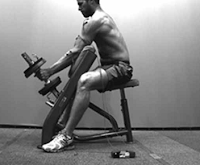
This is what science looks like... Well, at least in the Hiscock study, where the subjects, 10 young men with at leas 12 months of training experience did regular and hammer dumbbell curls on the preacher bench - (photo | Hiscock. 2015).
In today's SuppVersity feature article, I am going to address not one, but two potentially highly relevant articles from the Journal of Strength and Conditioning Research (Looney. 2015) and the European Journal of Sport Science (Hiscock. 2015). What makes these papers interesting is the fact that both investigated the effect of commonly prescribed remedies to "bust a plateau" by providing novel growth triggers: (a) Training to failure and (b) modifying rep schemes and whether you fail or don't fail on every set.

If you believe in what you can read in many articles on strength training, both, training to failure and decreasing rest times / drop sets should significantly increase the muscle activity and thus - this is the most important thing - the number of motor units that are recruited during the exercises.
Want to become stronger, bigger, faster and leaner? Periodize appropriately!

30% More on the Big Three: Squat, DL, BP!

Block Periodization Done Right

Linear vs. Undulating Periodizationt

12% Body Fat in 12 Weeks W/ Periodizatoin

Detraining + Periodization - How to?

Tapering 101 - Learn How It's Done!
But is this actually true? I mean, is there a link between EMG activity, the number of motor units that are firing and the way you train? I guess, it would be wise to take a brief look at the pertinent research before we get to design and results of the individual studies. So, what do we have? As Looney et al. point out, motor unit activity can be measured through electromyography (EMG) which is commonly considered to reflect the neural drive to the muscle. Since the electrical impulse should be proportional to the number of motor units that are firing and in view of the fact that the latter determines the acute force output, it should be obvious that increasing force demands result in higher EMG amplitude due to the greater recruitment of motor units and faster firing rates necessary to increase the contractile force.
Figure 1: Previous studies show that the motor unit recruited (or at least it's indicator, the mean EMG values) increases over the duration of sustained or repeated muscle actions at a constant force level (Masuda. 1999 - l; Mottram. 2005 - r)
Unfortunately, more does not necessarily help more. If you take a closer look at the existing research you have to realize you cannot stretch this proven increase of the EMG amplitude (Carpentier. 2001; Fuglevand. 1993; Lind. 1979; Masuda. 1999; Mottram. 2005; Petrofsky. 1982) infinitely. Over prolonged exercise / contraction times, the initially increasing firing rates will eventually decrease. That this is the case is interpreted by many scientists as evidence of the the fact that the initial rise in EMG amplitude is just a compensatory mechanism for sustaining contractile force as fatigue accumulates (when the individual fibers fatigue, more are recruited to sustain the same force). This hypothesis appears to be confirmed by numerous investigations that have demonstrated that EMG amplitude increases during dynamic exercise as the extent of the effort, or number of repetitions performed, increases (Hasani. 2006; Spreuwenberg. 2006; etc.).
Why is it even important that all muscle fibers contract? The reason should be obvious, but I am happy to explain it once more. It is the contraction that's responsible for the exercise induced increase in GLUT-4 receptor expression and mTOR phosphorylation. In view of the fact that the latter determine the increase in glucose uptake and protein synthesis after a workout, you obviously want as many muscle fibers to contract as possible. Or, to put it differently: If you don't use it you won't grow it, bro... well, at least not to the same / optimal extent.
This is where the "train to failure to maximize motor unit recruitment"-theory comes from. After all, this observation indicates that usually inactive motor units are going to fire only during prolonged training at high intensities (best to failure). As usual, though, there are problems with this theory:
"While the increase in EMG amplitude observed during repeated muscle actions has been explained by increased central drive necessary to sustain force as fatigue accumulates, it is inconclusive whether fatigue derived from earlier performed exercise induces greater EMG amplitude during subsequent exercise. Previous studies have shown EMG amplitude diminishes after strenuous resistance exercise protocols. In contrast, Smilios et al. demonstrated progressive increases in EMG amplitude over a series of 20-repetition sets with gradually decreasing resistance interspaced with 2-minute rest periods. Further uncertainly exists pertaining to consecutive maximal effort sets with progressively lighter resistance performed without allotted rest periods. This frequently incorporated training technique, commonly known as a “drop set”, has remained relatively uninvestigated" (Looney. 2015).
Needless to say that we all expect that lighter weights can stimulate greater motor unit recruitment, if you use them in dropsets, but as Looney et al. say, the science that would conclusively confirm that is simply not there (yet). The goals of Looney's study were thus as follows:
  • Firstly, confirm / refute the assumption that EMG amplitude would be significantly greater in light resistance exercise (50% 1RM) performed in rested conditions to a maximal number of repetitions than to a submaximal number of repetitions. 
  • Secondly, assess whether the EMG amplitude would be significantly lower in maximal repetition sets performed in rested conditions with 50% 1RM resistance than with heavy resistance (90% 1RM). 
  • Thirdly, test whether the EMG amplitude would be greater in maximal repetition 50% 1RM resistance sets performed in pre-fatigued conditions (no prior rest period) than in rested conditions. 
As the authors rightly point out, the "findings of this investigation would provide critical information on understanding the changes in neuromuscular physiology during dynamic exercise related to variable levels of target repetitions, resistance, and fatigue" (Looney. 2015) and may thus be of great value to scientists (initially, because the would have to still check the practical consequences of any increases in motor recruitment) and coaches + athletes (later). What the Hiscock study in which the researchers evaluated the rate of perceived exertion (RPE) and its correlation with muscle activation and lactate levels can add to the table is information on the effect of another parameter: Different rest times.
If you don't do them as an intensity add-on / finisher don't do partial reps at all - "Full Rom, Full Gains" | more
Don't forget that form, time under tension and the range of motion matter, as well. In 2013, for example, I discussed the results of a study by McMahon et al. that leaves little doubt that the increased mechanical stress and workload (remember work is the product of force x time) from doing exercises over the full range of motion will trigger greater morphological and architectural adaptations in response to resistance training than doing the same exercises over only a partial range of motion. Unfortunately, the evidence in favor of the significance of optimal form (beyond going over the full range) and the time under tension for optimal gains is less convincing and in parts contradictory.
In order to avoid any confusion, though, let's initially look at the Looney study in isolation. In said study ten resistance trained men (age, 23±3 yr; height, 187±7 cm; body mass, 91.5±6.9 kg; squat 1RM, 141±28 kg) had EMG electrodes attached to their vastus lateralis and vastus medialis muscles on two occasions:
  • A drop set day, on which he subjects performed three consecutive maximal repetition sets at 90%, 70%, and 50% 1RM to failure with no rest periods in between. 
  • A single set day, on which the subjects performed a maximal repetition set at 50% 1RM to failure (no "dropping" involved). 
The analysis of the EMG data yielded overall unambiguous results: The maximal repetition sets to failure at 50% and 70% 1RM resulted in higher peak EMG amplitude than during submaximal repetition sets with the same resistance. In view of the fact that the peak EMG amplitude was significantly (P ≤ 0.05) greater in the maximal 90% 1RM set than on any of the other sets the subjects performed, the classic drop set with 90%, 70% and 50% 1RM should thus still have an edge over any regular "low intensity + high rep to failure" single set training. The question remains, however, whether it will also have the edge over conventional training?
Figure 2: Very general summary of the research interests and designs of the two studies discussed in today's SuppVersity article by Looney et al. (2015) and Hiscock et al. (2015)
We will get back to that question in the bottom line. In the mean time, let's briefly take a look at another, quite surprising result, one that will also lead us to the results of the previously mentioned study by Hiscock et al. (2015): The lack of association between the ratings of perceived exertion (CR-10). In contrast to what most of you certainly expected, the fatigue levels did not differ over the intensity range of loads and did not reflect the degree motor unit recruitment in any way (see Figure 3). You as an individual without the necessary technical equipment are thus probably unable to tell hor many motor units you've actually recruitment in a workout; and - even more importantly - the mere fact that you have to crawl instead of walk out of the gym is not a sign of a productive workout.
Figure 4: Mean number of repetitions (left, top), rate of perceived exertion (RPE | left, bottom), and peak EMG amplitude as a measure of motor recruitment (Looney. 2015).
You don't want to believe that? Well, bad luck for you: This result appears to be confirmed by Hiscock's study, in which 10 recreationally trained (>12 months of previous resistance training) did DB Curls and DB Hammer Curls on the preacher bench for three sets with their preferred arm at a constant load of 70% of their individual 1-RM over 4 trials:
  1. 3 sets × 8 repetitions × 120 s recovery between sets; 
  2. 3 sets × 8 repetitions × 240 s recovery; 
  3. 3 sets × maximum number of repetitions (MNR) × 120 s recovery; 
  4. 3 sets × MNR × 240 s recovery.
After each of the exercises the participants rated their overall and active arm muscle rate of perceived exertion (RPE-O and RPE-AM) and the data was correlated with the biceps brachii and brachioradialis muscle EMG activity during each set for each trial.
Figure 5: Despite sign. higher volumes (see boxes) and a 100% increase in rate of perceived local muscular exertion there was no significant increase in muscle activity with lifting 70% of the 1RM for 8 vs. to failure (Hiscock. 2015).
Just like in the Looney study, the measured rates of perceived exertion in the Hiscock study had did not correlate with with either the muscle activation or the lactate accumulation in the biceps. Rather than that, it appears as if the subjects' bicepses didn't even care about rep schemes and failure. While the RPE increased significantly, when the subjects trained to failure, the mean and peak EMG activity levels in Figure 5 are more or less identical for all rep x intensity (+/- failure) schemes.
So what's the significance of the results, then? If you put some faith into Looney's conclusion, it is that the results of his (and I may add Hiscock's study, too) confirm "previous recommendations for the use of heavier loads during resistance training programs to stimulate the maximal development of strength and hypertrophy" (Looney. 2015).

SuppVersity Suggested Topical Article: "Failure, a Necessary Prerequisite for Max. Muscle Growth & Strength Gains? Another Study Says 'No Need to Fail, Bro!'" | read more
Reducing the load and training to failure (Looney's "single set" day) or reducing the rest times and or switching from a set rep number to training to failure (Hiscock's groups A-D), on the other hand, has no effect on motor recruitment and could, in view of potentially increased recovery times due to higher rates of perceived exertion w/ training to failure, rather hinder than facilitate rapid strength and size gains. Whether the same is the case for the drop-set, though, is not 100% clear. With the peak muscle activity occurring in the first set, you cannot argue that the stimulus was weakened. On the other hand, there's a proven reduction in total volume (reps x weight | Melibeu Bentes. 2012) of which long-term studies would have to investigate whether the can impair your strength and size gains.

Overall, there is still little doubt that the results of the two studies I discussed today support the notion that "going heavy" is still the way to activate a maximal number of muscle fibers. Whether this does also mean that it is necessarily the best way to make those fibers grow and or increase their glucose uptake, however, is still not fully proven. The same goes for the usefulness of training to failure, of which some studies suggest that failure does not matter, while others appear to indicate that "failing" is almost necessary to maximize your gains - as usual, I've written about both of them and will continue to do so in the future, so stay tuned if you want to be among the first to learn what works best for strength and hypertrophy training ;-) | Comment on Facebook!
References:
  • Carpentier, Alain, Jacques Duchateau, and Karl Hainaut. "Motor unit behaviour and contractile changes during fatigue in the human first dorsal interosseus." The Journal of physiology 534.3 (2001): 903-912.
  • Fuglevand, A. J., et al. "Impairment of neuromuscular propagation during human fatiguing contractions at submaximal forces." The Journal of physiology 460.1 (1993): 549-572.
  • Gibson, A. St Clair, E. J. Schabort, and T. D. Noakes. "Reduced neuromuscular activity and force generation during prolonged cycling." American Journal of Physiology-Regulatory, Integrative and Comparative Physiology 281.1 (2001): R187-R196.
  • Hassani, A., et al. "Agonist and antagonist muscle activation during maximal and submaximal isokinetic fatigue tests of the knee extensors." Journal of Electromyography and Kinesiology 16.6 (2006): 661-668.
  • Hiscock, Daniel J., et al. "Muscle activation, blood lactate, and perceived exertion responses to changing resistance training programming variables." European Journal of Sport Science ahead-of-print (2015): 1-9.
  • Lind, Alexander R., and Jerrold S. Petrofsky. "Amplitude of the surface electromyogram during fatiguing isometric contractions." Muscle & nerve 2.4 (1979): 257-264.
  • Looney, David P., et al. "Electromyographical and Perceptual Responses to Different Resistance Intensities in a Squat Protocol: Does Performing Sets to Failure With Light Loads Recruit More Motor Units?." The Journal of Strength & Conditioning Research (2015).
  • Masuda, Kazumi, et al. "Changes in surface EMG parameters during static and dynamic fatiguing contractions." Journal of Electromyography and Kinesiology 9.1 (1999): 39-46.
  • McMahon, Gerard E., et al. "Impact of range of motion during ecologically valid resistance training protocols on muscle size, subcutaneous fat, and strength." The Journal of Strength & Conditioning Research 28.1 (2014): 245-255.
  • Mottram, Carol J., et al. "Motor-unit activity differs with load type during a fatiguing contraction." Journal of neurophysiology 93.3 (2005): 1381-1392.
  • Petrofsky, Jerrold Scott, et al. "Evaluation of the amplitude and frequency components of the surface EMG as an index of muscle fatigue." Ergonomics 25.3 (1982): 213-223.
  • Smilios, Ilias, Keijo Häkkinen, and Savvas P. Tokmakidis. "Power output and electromyographic activity during and after a moderate load muscular endurance session." The Journal of Strength & Conditioning Research 24.8 (2010): 2122-2131.
  • Spreuwenberg, Luuk PB, et al. "Influence of exercise order in a resistance-training exercise session." The Journal of Strength & Conditioning Research 20.1 (2006): 141-144.