Posts

Showing posts with the label ATP

Popular topics

Show more

400 mg ATP Supplementation Acutely Ergogenic - Gymrats' Max. Leg Workout Volume/Rep Number Increases by 24%
Image
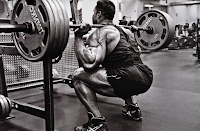
Needless to say that the study at hand cannot prove that, but it is logical to assume that similar increases in training volume would be observed for full squats and other lower body exercises. Moreover, Jordan et al. (2004) have observed significant improvements in all-out (1RM) bench press performance many of you would certainly appreciate. There's little doubt that well-stocked ATP stores are essential for maximal exercise performance. Adenosine-5’-triphosphate (ATP) is, after all, the primary source of energy for muscle cells. Still, scientists have long assumed that the provision of exogenous ATP (orally) wouldn't trigger measurable performance increases because it (a) wouldn't even make it to the muscle but is metabolized before and/or (b) is rapidly resynthesized during exercise training, anyway. As de Freitas et al. (2017) point out in their latest paper, "the first study to evaluate the effects of oral ATP administration was performed by Jordan et al. in...


Oral adenosine-5’-triphosphate (ATP) Supplementation - A Story of Mice & Men | Can ATP Be the Cornerstone of a New Generation of Innovative Pre Workout Pump Supplements

Image
Photos like this helped BSN sell truckloads of their "mother of all pre-workouts" NO XPlode! Increases in blood flow? That's something each and every of the first, second and third generation promises "pump supplements" to deliver. For the first generation it was arginine, for the second citrulline and for the third nitrates that were supposed to get the job done. What? None of them worked for you? Well luckily the next "big thing" is already looming on the horizon: "Oral adenosine-5’-triphosphate (ATP) supplements," of which you'd think that they would be used to deliver immediate energy, are probably soon going to be marketed as "pump supplements". I would alway chose creatine creatine over ATP supplements Creatine Doubles 'Ur GainZ! Creatine, DHT & Broscience Creatine Better After Workout ALA + Creatine = Max Uptake? Creatine Blunts Fat Loss? Build 'Ur Own Buffered Creatine Why? Well,...

Orally Administered ATP (400mg) Increases Muscle Mass, Size and Performance Gains in Complex 12-Week Study With Previously Strength-Trained Subjects

Image
Training till you drop? Well with some ATP 30 minutes before your workout it may take a couple of minutes / workout sessions more to "drop" ;-) If you drive a Porsche that runs on super you would not put crude oil in the tank, would you? Well, why do you eat carbohydrates and fats then, when ATP, i.e. adenosine triphosphate, is the "fundamental energy unit" in our bodies? Why don't we guzzle ATP all day to run with the speed of light and lift with the force of an elephant? When? Well before, during and after a workout - sounds right, hah? Ok, ok, we are not "meant" to do so, I know... but even if you managed to keep the "paleo logic" out of the equation for once, there would be another stumbling block. Oral ATP is - supposedly - not bioavailable, at least that's what many people think. "ATP supplements are not orally bioavailable." In fact, Arts et al. even used the words in the subheading of this paragraph as the title...

300mg CoQ10 Boost Peak Power Increases in Young Elite Athletes. Plus: 140ml of Beet Root Juice, That's all it Takes to Minimize the Oxygen Demands During a Workout

Image
Athletes from various sports train at the Olympic Camp, where the CoQ10 study was conducted. As unfortunate as it may sound, the number of "next big things" in the area of performance enhancing (legal) substances - at least in large parts - a line-up of supplemental non-starters. Against that background it is all the more surprising that today' SuppVersity article features not one, but two already available supplements that could in fact make a valuable contribution to your workout regimen. And while we are going to take a brief look at the latest research on the ergogenic effects of beet root juice later, we will start out with a study the results of which did actually surprise me - in a positive sense, that is. Reduced CoQ10 (ubiquinol) increases peak power in trained athletes (Alf. 2013)  -- While previous studies on the efficiacy of CoQ10 demonstrated at best inconclusive and statistically, but mostly practically insignificant benefits, the latest study from t...

To Fail or Not to Fail - 5x10 or 10x5? The Energetic Demand of Your Workouts Doesn't Depend on Workloads, Alone

Image
Image 1: PCr, ATP, whatever as long as there was energy left, Arnold kept pumping iron (pun intended ;-) "To fail or not to fail", this question is probably about as ancient as the hilarious idea to engage in physical activity that is not in one way or another directly related to one of our two most fundamental needs, survival and procreation. Researchers from the Physical Education Department at the Sport Sciences University of the Basque Country and the Department of Health Sciences at the University of Navarra in Spain have recently examined this question from a slightly different angle than most of the articles you have probably seen in and on the various muscle mags and bodybuilding related websites on the Internet. What Esteban M. Gorostiaga and his colleagues wanted to know was: Are There Significant Differences in Energy Metabolism When you Train to Failure? Or, put another way: Does it make a difference if you fail from a molecular energetic point of view...

Beet Root Juice Supplementation Improves Exercise Performance. Nitrate Content of the Beets Decreases ATP Turnover in High Intensity Exercise.

Nitrates have long been decried as toxic and dangerous and I bet, before their latest appearance to the supplement market, none of you would even have remotely considered to consciously increase his/her dietary nitrate supply. Yet, recent scientific studies confirm that nitrate (in moderate doses) is not only safe, but also has, its effects on vasodilation aside, quantifiable effects on exercise performance. A group of scientists from the UK tried to find out the underlying mechanisms of the ergodicity of supplemental nitrate ( Baily. 2011 ). Following a six day supplementation period in the course of which seven males (aged 19-38 yr) consumed 500 mL per day of either nitrate-rich beetroot juice (~300mg nitrate content) or placebo (PL, with negligible nitrate content). What they observed is best described as a "tuning effect" that was observable both, in the course of high, as well as in the course of low intensity exercise training. During low intensity exercise ,...

Oral ATP Supplementation Proves Completely Ineffective Even at Very High Doses

I think most supplement companies have hitherto given up on convincing you of the use of oral ATP supplements. About 2 month ago, I did however notice a new "high dosed" product (I cannot remember the figures out of my head, but the daily dose was far below 1.000mg) was released to be bought by the in-educated public ;-) Just to discourage you from wasting your money on any such products, here is a very recent study ( Coolen. 2010 ) on the futility of attempting to rise ATP levels via oral supplementation: Thirty-two healthy subjects were randomised to receive 0, 250, 1250 or 5000 mg ATP per d for 28 d by means of enteric-coated pellets . In addition, on days 0 and 28, all thirty-two subjects received 5000 mg ATP to determine whether prolonged administration would induce adaptations in the bioavailability of ATP. ATP supplementation for 4 weeks did not lead to changes in blood or plasma ATP concentrations. Of all ATP metabolites, only plasma uric acid levels ...

Caffeine Activates Mainly AMPK-alpha1

Image
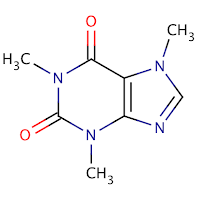
The ergogenic effects of caffeine (structure, see image on the right; HMDB v2.5 ) have in parts been established to be AMPK-dependent. AMPK protects cell from ATP, i.e. energy deffiency, and its activation by caffeine has been shown to improve time to exhaustion as well as overall performance. Hypothalamic AMPK also plays a critical role in hormonal and nutrient-derived anorexigenic and orexigenic signals and in energy balance ( Minokoshi. 2004 ). A recent study by Egawa, et.al. ( Egawa. 2010 ) did now reveal that caffeine, at least at lower doses, is a relative specific activator the alpha1 variant of AMPK: "Incubation of isolated epitrochlearis muscle with 1 mM [and injection of 5mg/kg) of caffeine for 15 min increased AMPKα1 activity, but not AMPKα2 activity; concentrations of ATP, PCr and glycogen were not affected." ( Egawa. 2010 ) Higher doses of 3 mM of caffeine did however activate AMPKα2 and reduced PCr and glycogen concentrations. Although caffeine is certain...
Disclaimer:The information provided on this website is for informational purposes only. It is by no means intended as professional medical advice. Do not use any of the agents or freely available dietary supplements mentioned on this website without further consultation with your medical practitioner.