Showing posts with label strength training. Show all posts

Saturday, May 21, 2016

Polarized Concomitant Training - Will it Help You Make Max. Gains & Improvements in Body Comp. W/ Strength+Cardio?

Polarized training? Find out more...
Does concurrent / concomitant training intensity distribution matter? Unless you're a first timer at the SuppVersity you will have read at least two or three previous articles of mine about studies investigating the effects of concurrent training, i.e. the combination of strength and cardio training, (i.e. concomitant training) here.

If you recall the results, you will know that previous research has demonstrated the influence of intensity distribution on strength endurance training adaptations.
You can learn more about the optimal exercise order at the SuppVersity

What's the Right Training 4 You?

Hypertrophy Blueprints

Fat Loss Support Blueprint

Strength Training Blueprints

Study: Over-training Exists

Recovering from the Athlete's Triad
You may also remember that no previous study has addressed the influence of "intensity distribution", i.e. the way intensity and volume are distributed across the training sessions, on the effectiveness of concurrent training (CT | see Figure 1). The goal was to prevent interference of the two types of training:
Figure 1: Training design of the experimental groups during the 8-week training period. Continuous-line and dotted-line circles represent the different training session modalities for the PT and TT groups, respectively. PT: polarized training group; TT: Traditional-based training group; BW: brisk walking; RM: repetition maximum; RNG: running; IST: intermittent sprint training (Varela-Sanz. 2016).
"Another problem which must be solved is the comparison of external training loads. Thus, our independent variable and focus was training intensity distribution with an equivalent total external load [...] of both training programs. A training group performed a combination of strength and endurance training aligned with the current ACSM recommendations of intensity distribution, while another group performed the same amount of external workload but with a polarized intensity distribution. Both ex. groups were evaluated before and after an 8-week training period (weekly training frequency of 3 days), and compared to a control group. To examine the effectiveness of the [...] training regimes, [...] physical (jump capacity, upper- and lower-body strength, running performance, and body composition), physiological (heart rate variability), and perceptual variables (rate of perceived exertion, training impulse, and feeling scale) were examined as dependent variables" (Varela-Sanz. 2016)
Thirty-one healthy sport science students (30 men, 5 women; all moderately active, but training less than 2 days per week apart from their academic activities which included a variable amount of PA on a daily basis) volunteered and were, after a 2-week familiarization phase (training thrice a week for two weeks), evaluated for resting heart rate variability (HRV), countermovement jump, bench press, half squat, and maximum aerobic speed (MAS).
I don't get it. How exactly did this "polarized training" work? Yes, the protocol was different from the one you may remember from Seiler et al. (2006) who tried to quantify training intensity distribution in elite endurance athletes. More specifically, subjects trained thrice a week (i.e. Monday, Wednesday, and Friday) for ~120 min each on Monday and Friday, and ~60 min on Wednesday. The training sessions on Mondays and Fridays consisted of cardiorespiratory exercise training (i.e. brisk walking or running) followed by resistance exercise training; meanwhile on Wednesdays participants only performed cardiorespiratory exercise training.

Each training session started with a standardized warm-up that consisted of 5 min of calisthenics followed by 5 min of brisk walking at 30% of the MAS. Before resistance exercises, participants also performed a specific warm-up that consisted of 2 sets of 8 repetitions of the resistance circuit they performed during the familiarization period with a OMNI-Scale perception of effort of 2-3. Cooling down exercises consisted of 2-3 sets of 15 s of stretching exercises of the muscle groups involved during the session. The exercises during the actual workout were bench press and half squat. Based on the conclusions of Simão et al., whose study had revealed that you will see greater gains on those exercises you do first in your workout, the order of resistance exercises was alternated each week. In that, the TT group performed 3-5 sets of 10-12 RM with 3 min of rest between sets. The PT group performed 3-5 sets of 5 RM on Mondays, and 2-4 sets of 15 RM on Fridays. The rest between sets was always 3 min. Resistance exercise workloads were equated.
All were then randomly distributed into either a traditional-based training group (TT; n=11; 65-75% of MAS, combined with 10-12RM), polarized training group (PT; n=10; 35-40% and 120% of MAS, combined with 5RM and 15RM), or control group (CG; n=10).
Figure 2: Relative changes in heart rate, jump height, peak power, bench press (1RM) and half squat (1RM) after 8 weeks of traditional (TT), polarized (PT) training or control (Varela-Sanz. 2016).
After 8 weeks of training (3 days.week-1), TT and PT exhibited similar improvements in MAS, bench press and half squat performances. No differences were observed between TT and PT groups for perceived loads. There were no changes in heart rate variability (HRV) for any group although TT exhibited a reduction in resting HR.
Figure 3: Effect sizes corresponding to the relative values in Figure 1 (Varela-Sanz. 2016).
What is worth mentioning, though, is that, compared to other groups, the PT group maintained jump capacity with an increment in body weight and BMI without changes in body fatness, in other words: they gained muscle, but also fat (see Figure in Bottom Line | body fat measured by skinfold "only").

There's one thing we didn't discuss yet: Was the polarized training maybe less taxing or more fun? The findings of the study at hand suggest that this was the case: TT and PT reported similar perceptions of effort, sensations, and internal load levels over the 8-week training period. Briefly, RPE and TRIMPS increased progressively along the 8-week training period. These perceptual levels demonstrated an increase in external load during the 3rd microcycle compared to the 1st and 2nd microcycles of each mesocycle. Thus, "the current findings suggest that different concurrent training regimes of equated loads could be similarly perceived by participants" (Varela-Sanz. 2016).
Effects on body composition; effect sizes and rel. (%) changes (Varela-Sanz. 2016).
Bottom line: The previously outlined observations lead the scientists to conclude that their funky polarization approach to concurrent training "induced similar improvements in physical fitness of physically-active individuals", but that "PT produced a lower interference for jumping capacity despite an increment in body weight, whereas TT induced greater bradycardia" (Varela-Sanz. 2016).

The fact that there were further benefits in terms of peak power, squat and bench press performance, but that those were not statistically significant (see Figure 2), however, is something the scientists don't mention in the abstract, even though these differences could become significant in the longer (>8 weeks) term.

A mistake? No, in view of the conflicting evidence from the calculated effect sizes (see Figure 3), it is absolutely correct to say that there were no meaningful inter-group differences in the most important parameters for most trainees, i.e. the bench press, half squat and the effects on body comp (see Figure on the right) | Comment!
References:
  • Seiler, K. Stephen, and Glenn Øvrevik Kjerland. "Quantifying training intensity distribution in elite endurance athletes: is there evidence for an “optimal” distribution?." Scandinavian journal of medicine & science in sports 16.1 (2006): 49-56.
  • Simao, Roberto, et al. "Exercise order in resistance training." Sports Medicine 42.3 (2012): 251-265.
  • Varela-Sanz, Adrián; Tuimil, José L.; Abreu, Laurinda; Boullosa, Daniel A. "Does concurrent training intensity distribution matter?" Journal of Strength & Conditioning Research: Post Acceptance: May 09, 2016 doi: 10.1519/JSC.0000000000001474.

Monday, December 28, 2015

"HIIT-ing it After Arm Workouts Will Ruin Your Gains", Study Says and Confuses Statistical and Practical Significance

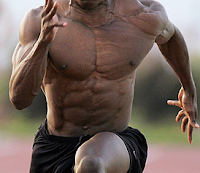
Does this look as if sprinting would impair muscular development of arms or any other muscle? I mean, come on - look at the average sprinter: Many gymrats dream of the arms and overall muscular physique they have; no wonder that the data from the full-text shows a different picture than the abstract would suggest.
I have repeatedly written about combining strength and classic endurance training. With endurance first, endurance last and even endurance in-between the studies yielded often very different results in terms of what would be the optimal way to combine both. With a few exceptions in which resistance training was combined with crazy endurance training sessions, however, I've yet never written about nor seen compelling evidence for the often-heard claim that "cardio ruins your gains".

For HIIT, i.e. high-intensity interval training, a recent study from the Nippon Sport Science University does now claim, though, that my that combining HIIT and weight training may be a very bad idea, ... an idea that may in fact, just as the broscientific nightmare suggests "ruin your gains, bro!" Upon closer scrutiny, however, things appear less unambiguous than the abstract would have it...
You can learn more about the optimal exercise order at the SuppVersity

Before, After or In-Between?

Exercise Order and Leptin Levels

Cardio First for Anabolism?

Large Muscle Groups First?

Combine Cardio & Strength, Right

Cardio or Weights First? What the...
The purpose of the study was to examine whether or not lower limb sprint interval training following arm resistance training influences training response of arm muscle strength and hypertrophy. Or in short: Will doing HIIT sprints immediately after an arm workout ruin the strength and strength gains you've primed before? 
Figure 1: According to the study, you better don't do HIIT sprint training after an intense arm workout if you don't want to ruin the strength and size gains you "primed" with curls and co (photo from Kikuchi. 2015)
The subjects, twenty previously only lightly trained men, were divided into resistance a training group (RT, n=6) and concurrent training group (CT, n=6).
  • The RT program was designed to induce muscular hypertrophy (3 sets x 10 repetitions (reps) at 80% 1 repetition maximum [1RM] of arm curl exercise), and was performed in an 8-week training schedule carried out 3 times per week on nonconsecutive days. 
  • Subjects assigned to the CT group performed identical protocols as strength training (ST) and modified sprint interval training (4 sets of 30-s maximal effort, separated in 4m 30-s rest intervals) on the same day. 
The relevant study outcomes the researchers evaluated were the changes in maximal oxygen consumption (VO2max), muscle cross-sectional area (CSA), and 1RM that were measured before and after the 6-week study.
Figure 1: Relative changes in VO2max (conditioning), muscle size (CSA) and strength (1-RM) over 6 wks (Kikuchi. 2015).
As the data in Figure 1 reveals, significant increases in VO2max from pre- to post-test were observed only in the CT group (p=0.010, ES=1.84), but not in the RT group (p= 0.559, ES= 0.35). The rest of the results in Figure 1, however should be kind of surprising to anyone who has read the researchers conclusion that "our data indicate that concurrent lower limb sprint interval training interfere with arm muscle hypertrophy and strength" (Kikuchi. 2015).

No, you are not mistaken. The average muscle size and strength gain in the combined training group was larger. The reason the scientist still claim that their study would show that HIIT impedes strength adaptation is a statistical one. While the changes in the CT group had p-values p > 0.05 and were thus not statistically significant. The (albeit smaller) mean increase in the RT group was significant. Accordingly, the corresponding "effect size" in the RT group is larger than the one in the CT group and thus HIIT training must be bad, right? Well,... I don't think so.
If you take a closer look at the individual muscle  size and strength development, you should notice that being afraid that sprints would ruin your arm development is unwarranted and the statistical significance and effect sizes of the changes practically irrelevant.
Beware of bling faith in abstracts! If you look at my plot of the individual data the scientists luckily published with their full-text, it is yet obvious that this study does not prove and if we are honest, not even really suggest that there practically relevant negative effects of doing HIIT in this workout. If you just read the conclusion to the abstract, which reads "our data indicate that con-current lower limb sprint interval training interfere with arm muscle hypertrophy and strength" (Kiku-chi. 2015), you may be inclined to make unne-cessary changes to your workout that are neither necessary or productive. After all, the objective result of the study is that in some individuals it is possible that the addition of HIIT to an arm workout may have a minor impact on their gains.

In view of the facts that there's (a) one person with a roughly ~41% increase in sleeve sizes in each group and that (b) the average increase in sleeve size would be 23% in the CT and only 21% in the RT group if the two outlayers who lost muscle (one in each group) were excluded, though, I would suggest you ignore this possibility unless you realize that you're making no gains at all with concurrent training. This doesn't falsify the scientists' conclusion, which is based on scientific standard procedure, i.e. look for statistical significant results, use those to make your conclusion, but I felt I needed to write this article to put the theoretically correct interpretation of results of an unquestionably under-powered study into perspective | Comment!
References:
  • Kikuchi et al. "The effect of high-intensity interval cycling sprints subsequent to arm-carl exercise on muscle strength and hypertrophy in untrained men: A pilot study." Journal of Strength and Conditioning Research Publish (2015): Ahead of Print | DOI: 10.1519/JSC.0000000000001315

Tuesday, June 2, 2015

In Untrained Subjects, Circuit Training Rocks! Study Shows Similar Strength & Better Aerobic Performance Gains W/ Circuit vs. Combined Resistance & Aerobic Training

If you are just starting out on your way to build a body like this, there's little doubt that circuit training is worth considering. If you are more advanced and have a priority on strength and muscle gains, things may be different.
This is not the first article about the benefits of circuit training here at the SuppVersity. It is however one of the most convincing ones, as far as the the choice between time-efficient circuit training regimen and a more time-consuming classic resistance training + aerobic training combo is concerned.

To test, which of the two regimen is "better, the subjects of the study, 34 sedentary young women (20.9 +/- 3.2 years; 167.6 +/- 6.4 cm; 65.0 +-/ 15.2 kg), were assigned to either (a) a combined resistance and aerobic exercise group (COMBINED; n = 17) or (b) a circuit-based whole-body aerobic resistance training circuit group (CIRCUIT; n = 17).
Learn more about building muscle and strength at www.suppversity.com

Tri- or Multi-Set Training for Body Recomp.?

Alternating Squat & Blood Pressure - Productive?

Pre-Exhaustion Exhausts Your Growth Potential

Exercise not Intensity Variation for Max. Gains

Battle the Rope to Get Ripped & Strong

Study Indicates Cut the Volume Make the Gains!
All subjects, regardless of which group (for a detailed description of the training protocols see Figure 1) they'd been assigned to trained 3 days per week for 5 weeks.
Figure 1: Tabular overviews of the two training protocols; the COMBINED training group did 30 minutes of resistance training followed by 15 minutes of aerobic exercise (Myers. 2015).
The study outcomes included pre- and post-training measures including VO2peak, anaerobic Wingate cycling, and muscular strength and endurance tests. Tests that revealed that...
  • Figure 2: Selected study results (Myers.2015).
    the aerobic performance, as measured by the VO2peak pre- vs. post-test, increased exclusively in the CIRCUIT group (11%),
  • peak and relative average power increased to similar extents in both groups, i.e. by 5% (p = 0.027) and 3.2% (p = 0.006), respectively, in the CIRCUIT group and by 5.3% (p = 0.025) and 5.1% (p = 0.003) in the COMBINED training group, 
  • a slightly greater inter-group difference was observed for the chest and hamstrings 1 repetition maximum (1RM) which improved by 20.6% (p = 0.011) and 8.3% (p = 0.022) in the CIRCUIT and by 35.6% (p , 0.001) and 10.2% (p = 0.004) in the COMBINED group, respectively,
  • the most significant advantage of the COMBINED training group, was observed for the back (11.7%; p = 0.017) and quadriceps (9.6%; p = 0.006) 1RM, which did not improve in the CIRCUIT group, 
so that it may eventually still be a question of priorities. Or, practically speaking, a decision between a "cardio" and "strength" focus - only the negative effect of COMBINED training on VO2 max may come as a small surprise (small, since 15 minutes of medium intensity exercise are like no cardio).
Keep in mind that the subjects were untrained: I wouldn't say that it is impossible for a trained person to increase his / her VO2 max with circuit training, but if you want to do so, you will certainly have to incorporate a lot of high intensity body weight exercises and minimize rest extremely. Fur-thermore, the strength advan-tage of "real" resistance training regimen will increase, the more advanced you are. In other words: If you've been training for 2-3 years, now, don't scrap your regular routine for circuit training unless you want to use it as a means to mix things up or taper.
So what? In spite of the fact that the inter-group difference may have been smaller than many of you probably expected, common wisdom prevails: If you want maximal strength gains, there is no way you can skip classic resistance training regimen. What is the truly surprising results of the study at hand is thus not the lack of quads and back 1RM strength gains in the CIRCUIT group, but the absence of VO2 increases in the COMBINED group.

Simply adding in 15 minutes of "cardio" after your resistance training protocol is as effective as doing nothing. So, if you want the best of both worlds, you better HIIT the gym (i.e. do HIIT training) on two of your "off days". As I've pointed out in numerous previous articles, 10 intervals and a 20 minute workout may suffice to trigger significant increases in VO2max and, let's be honest, you can squeeze that into even the tightest schedule, can't you | Comment on Facebook!
References:
  • Myers TR, Schneider MG, Schmale MS, Hazell TJ. Whole-body aerobic resistance training circuit improves aerobic fitness and muscle strength in sedentary young females. J Strength Cond Res. 2015 Jun;29(6):1592-600.

Monday, March 30, 2015

It Doesn't Have to be an Exhaustive Workout - Increasing Physical Activity Just as Effective as Strength, Endurance or Combined Exercise to Lose Fat and Build Muscle

Taking the stairs instead of the elevator, using the bike instead of the car and other means to increase your regular daily physical activity are just as effective as three workouts per week for you or overweight clients who cut their energy intake to lose body weight.
What's the reasons your clients' and friends' exercise efforts fail? They are too ambitious. The all-or-nothing approach combined with the expectation that the belly they've build over decades will fade away in weeks is a combination that programs them to fail.

Against that background, the results of a recent study from the Technical University of Madrid are extremely important. After all, the scientists were able to show that a mere increase in daily physical activity is as effective in boosting obese subjects weight loss efforts as "serious" exercise. The aim of the study was simple: To compare the effects of different physical activity programs, in combination with a hypocaloric diet, on anthropometric variables and body composition in obese subjects.
Don't worry about fasting when your're dieting!

Breakfast and Circadian Rhythm

Does Meal Timing Matter?

Habits Determine Effects of Fasting

Breaking the Fast & the Brain

Does the Break- Fast-Myth Break?

Breakfast? (Un?) Biased Review
To this ends, the researchers recruited ninety-six (!) obese (men=48; women =48; age range 18-5
years) participants, who took part in a supervised 22 week program. The subjects were randomized into four groups (the details are described further below):
  • strength training (S, n=24),
  • endurance training (E, n=26),
  • combined strength + endurance training (SE, n=24), and as previously hinted at
  • physical activity recommendations (C, n=22).
In addition, all groups had to followed the same hypocaloric diet for 22 weeks. The diets contained between 5 028 and 12 570 kJ (1,201.72-3,229kcal | that's a deficit of -32% / -41% / -32% / -35% for the S, E, SE and C groups compared to their previous intakes, which were obviously too high to keep weight stable) and were prescribed individually for all participants by "expert dieticians" at the Department of Nutrition, La Paz University Hospital, Madrid.
"The diet was designed to provide 30% less energy than the baseline total daily energy expenditure (DEE), as measured using a SenseWear Pro Armband accelerometer (Body Media, USA). Some 29-34% of energy came from fat, and 50- 55% from carbohydrates, according to the recommendations of the Spanish Society of Community Nutrition (SENC, according to its Spanish initials, and 20% from protein (beyond that outlined in the above recommendations) in order to achieve the body composition benefits observed in different studies and examined in a recent meta-analysis" (Benito. 2015).
Dietary counselling was given at baseline and at 12 weeks to resolve questions and to motivate participants sufficiently to comply with dietary advice. All subjects were instructed on how to record their dietary intake using a daily log, and given recommended portion sizes and information on possible food swaps. In addition, nutrition education sessions were given by the dieticians. The goal was to equip the participants with the knowledge and skills necessary to achieve gradual but permanent behaviour changes.

Speaking of behavioral changes,...

While diet was one pillar of the weight loss success of the study participants, exercise was another. You already know that there were three groups. What you don't know, though is what exactly the subjects who had been randomly assigned to the previously listed groups actually did (I quote from th paper by Benito et al., 2015):
  • The exercise groups (training 3x per week): The S group followed a circuit involving eight exercises: the shoulder press, squats, the barbell row, the lateral split, bench press, front split and biceps curl, and the French press for triceps. Running, cycling or elliptical (self-selected) exercises were the main components of the session for group E, while group SE followed a combination of cycle ergometry, treadmill or elliptical exercises intercalated with squats, rowing machine, bench presses and front split exercises (15 lifts per set or 45 s for the SE endurance phase).

    The exercise training programs were designed taking into account each subject’s muscular strength (MS) and heart rate reserve (HRR). MS was measured in the strength program subjects (S, SE) using the 15-repetition maximum (15 RM) testing method every other day during the week before the intervention period. The volume and intensity of the three training programs were equal and increased progressively during the study. In weeks 2-5, exercise was at an intensity of 50% of the 15RM and HRR, and lasted an overall 51 min and 15 s. In weeks 6-14, exercise was performed at an intensity of 60% of 15RM and HRR, again with a duration of 51 min and 15 s. Finally, in weeks 15-22, exercise was performed at an intensity of 60% of 15RM and RR, with a duration of 60 min. 
All groups gained the same amount of lean mass! I find it quite remarkable that all groups gained 5% lean mass - even the endurance and the "control" group which did no prescribed exercise at all, but simply took the stairs and were only "made aware" of the rest of the activity recommendations of the American College of Sports Medicine (ACSM).
  • The get active in your everyday lives group: The C subjects followed the hospital’s habitual clinical practice for achieving weight loss: dietary intervention - the same as followed by the exercise training groups -plus being made aware of the general recommendations of the American College of Sports Medicine (ACSM) regarding physical activity.

    Thus, the C subjects were advised to undertake at least 200-300 min of moderate-intensity physical activity per week (30–60 min on most, if not all, days of the week). The C subjects were also advised to reduce their sedentary behaviour (e.g., watching television or using the computer) and increase daily activities such as brisk walking or cycling instead of using a car, or climbing stairs instead of using the lift etc.
At baseline and at end of the intervention, dietetic and physical activity variables were assessed using validated questionnaires. Anthropometric variables were recorded along with body composition
variables measured using dual-energy X-ray absorptiometry techniques.
Figure 1: Relative changes in weight, waist and total body fat over the 22-week study period (Benito. 2015).
As the data in Figure 1 indicates, there were significant improvements in all groups: All subjects lost ~9-10kg body mass (S: -9.21±0.83 kg; E: -10.55±0.80 kg; SE: -9.88±0.85 kg; C: -8.69±0.89 kg) and reduced thir total fat mass by ~5kg (S: -5.24±0.55%; E: -5.35±0.55%; SE: -4.85±0.56%; C: -4.89±0.59%). In view of the research question, this is a very important result. After all, the scientists were not able to detect a significant inter-group-difference between the four study groups.

The lack of inter-group differences in body composition is probably a direct consequence of the fact that the total physical activity per week during the intervention increased similarly, but not identically in all groups (S: 976±367 MET-min/week; E: 954±355 MET-min/week; SE: 1 329±345 MET-min/week; C: 763±410 MET-min/week). in view of the lack of statistical difference between th exercise groups which got - on average - more exercise than the control group, it is thus not surprising that the 22-week changes in body composition did not differ, either.
Figure 2. The macronutrient intake (in g/day) in both groups was virtually identical (Benito. 2015).
Overall, the study at hand does thus - just as the scientists say - "shows that, when combined with a hypocaloric diet, exercise training and the following of physical activity recommendations are equally effective at reducing body weight and modifying body composition in the treatment of obesity" (Benito. 2015).

This may be because we are (a) dealing with an increase from basically zero in many obese indiviuals (the relative increase is thus exorbitant) and is may (b) be a consequence of the "higher frequency" of physical activity you can achieve with moving more everyday vs. sitting around for 4 days and working out "like a maniac" (compared to your regular activity level) on 3 days | Comment on Facebook!
References:
  • Benito, Pedro J., et al. "Change in weight and body composition in obese subjects following a hypocaloric diet plus different training programs or physical activity recommendations." Journal of Applied Physiology (2015): jap-00928.

Thursday, January 22, 2015

No Superior Longterm Muscle/Strength Gain W/ Blood Flow Restriction - W/ Low Weights, BFR Gains Don't Differ From Those of Classic Strength Training to Failure

The benefits of blood flow restriction in healthy athletes may be less pronounced than the advocates would have it.
After the initial hype abated, only few people are still talking about blood flow restriction and its potential beneficial effects on strength and muscle gains. One of the reasons for the reduced enthusiasm among muscle heads is that all beneficial effects were observed in low intensity training; and "low intensity" = using low weights is not exactly what bros like to do.

Against that background it would be all the more important to be sure that reducing your training weights to 40% to do your blood flow restricted biceps curls is actually worth it.
You can learn more about BFR and Hypoxia Training at the SuppVersity

BFR, Cortisol & GH Responses

BFR - Where are we now?

Hypoxia + HIIT = Win?

BFR for Injured Athletes

Strength ⇧ | Size ⇩ w/ BFR

Training & Living in Hypoxia
A recent study from the Department of Public Health at the Aarhus University does now suggest: It is not worth it! In said study, Farup et al. the hypertrophic potential of load-matched blood-flow restricted resistance training (BFR) vs free-flow traditional resistance training (low load TRT) performed to fatigue.
Figure 1: Study design. The upper timeline displays the overall study period whereas the lower timeline displays the 6 weeks training period. Measures of muscle thickness (by ultrasound; UL), muscle soreness (by visual analog scale; VAS), muscle volume and muscle water content (by magnetic resonance imaging; MRI), isometric strength (by maximal voluntary contraction; MVC), dynamic strength (by three repetition maximum; 3 RM), and muscle activity (by electromyography; EMG) were performed on specific time points as indicated.
To this ends, they recruited ten healthy young subjects who performed unilateral BFR and contralateral low-load traditional strength training for the elbow flexor with dumbbell curls and a weight amounting to 40% of their individual 1-repetition maximum.
  • Strength and size don't always go hand in hand... and BFR training appears to be better suited for strength | more.
    All sets were performed until volitional concentric failure, meaning no add. rep with accurate form could be performed. 
  • The athletes trained three days per week for a total study duration of 6 weeks (that's more than in many other studies). 
  • Prior to and at 3 (post-3) and 10 (post-10) days post-training, magnetic resonance imaging (MRI) was used to estimate elbow flexor muscle volume and muscle water content accumulation.
The results shows that the total work (number of reps x weight lifted) was threefold lower for BFR compared with low-load TRT ( P < 0.001).
Figure 2:Pre-post comparison of muscle size and strength gains show no differences between regular and BFR training if the exercises are performed to failure (Farup. 2015).
On the other hand, both BRF and low-load TRT increased muscle volume by approximately 12% with no significant difference in the MRI-determined water content and the muscle size being measured three and ten days after the last workout. Due to the exercise induced muscle swelling the muscle size was yet increased to a greater extent with BRF ( P < 0.05) in the early training phase, i.e. up to 48h after a workout.
Even the cell swelling occurs only after the initial workouts (a) not after the long-term use (b) of BFR!
Bottom line: Since the "impressive" short term increases in sleeve size in the first 48h after the initial BFR workout are just a consequence of cell swelling, not actual size gains, the results of the study at hand prove what many of you may already have suspected: Even if you train with low weights, regular strength training without blood flow restriction is not inferior to BFR training when it comes to long-term (=real) strength and size gains, as long as it is performed with proper form and to full fatigue.

Considering the fact that proponents of blood flow restriction write in their reviews that there is no significant difference between size gains on BFR and regular RT regimen (Loenneke. 2012), it is not likely that a comparison of a high intensity traditional resistance training (TRT) regimen to the BFR protocol used in the study at hand would have yielded increased strength and size gains with BFR. I would be curious, though, whether using BFR as intensity technique in conjunction with traditional training made an effective training strategy - for size, specifically | Comment on Facebook!
References:
  • Farup et al. "Blood flow restricted and traditional resistance training performed to fatigue produce equal muscle hypertrophy." Scand J Med Sci Sports (2015): Accepted Article.
  • Loenneke, Jeremy P., et al. "Low intensity blood flow restriction training: a meta-analysis." European journal of applied physiology 112.5 (2012): 1849-1859.