Showing posts with label frozen foods. Show all posts

Sunday, March 26, 2017

Grind, Blend, Microwave - How Does the Way You Process Them Affect the Health-Benefits of Veggies and Fruits
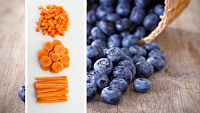
Carrots and blueberries - superfoods you cannot ruin by grinding, blending and even the falsely depreciated use of the microwave oven.
Cooking / Food-Processing Done Right: 5 Things to Remember to Make the Most of the Antioxidant Prowess of Your Foods Cooking or the preparation of food (food processing at home) is something I would love to address more often. Unfortunately, studies such as Boyan­ Gao's recently published paper in "Food Science & Nutrition" are truly rare. In said paper, the Chinese scientists followed up on recent studies that indicate that different food preparation methods could significantly change the chemical profiles and bioactivities including the antioxidant and real-world anti-inflammatory activity of (super-)foods.
Learn more about the effects of your diet on your health at the SuppVersity

All About Almonds and Their Health Effects

Taste Matters - Role of the Taste Receptors
Egg-Ology, Today: Why Eggs are Awesome

Walnuts Boost Exercise Performance

You May Roast & Salt Nuts! They're Still Healthy

All About Cheese, Your Health, Per-formance & More
I've discussed some of these studies in the SuppVersity Facebook News (subscribe by liking if you haven't done so), before. Zaiter, et al., for example, found that the particle size of your green tea powder will affect its antioxidant activity - with the best grinding conditions and particle size being rather rough, i.e. 6000 rpm and 100–180 μm (Zaiter 2016). Likewise, I've addressed the issue of microwaving both in the Facebook News and here on suppversity.com. What I haven't discussed in detail, though, is "whether and how different home-based food preparation methods, including blending, chopping with/without microwaving, might release different levels of beneficial bioactives from carrot and blueberry food models" (Gao 2017) - simply because the study at hand is the first to do that.
The scientists didn't just assess the content of vitamins and phenols, but also tested the free radical scavenging and absorbing capacity, as well as the biological, anti-inflammatory effects of the processed blueberries and carrots.
Aside from the fact that it addresses a commonly overlooked, yet practically relevant question, I like about the study that the scientists bought samples of regular carrots and blueberries at a local supermarket and used five home-use blenders, including Nutribullet 600, Nutribullet Pro 900, Nutribullet RX, Vitamix 5200 and Oster Versa 1400 that you could buy over at Amazon (or elsewhere), too. To investigate the antioxidant prowess of differently prepared samples, the authors proceeded as follows:
"Carrots were cut into one-inch length, accurately weighted and blended with pure water (1:2, w/v) for 20 s using the highest speed in a blender. The blended samples were separated into two parts, one part was microwaved for 10 s to inactivate the enzymes in the carrots or blueberries, while another part was not microwaved to examine whether and how their inherent enzymes might alter the releasable level of bioactive components. The blended carrot samples were centrifuged at 10,000 g for 5 min, and the supernatant was collected and the calculated volume of acetone was added to make a final concentration of 50% acetone (v/v) for further assays. Blueberries were extracted following the same procedure without cutting. The extracts were kept at 4°C until testing" (Gao 2017).
Afterward, the samples were analyzed for their free radical scavenging ability using DPPH, ORAC, hydroxyl radical (HOSC) and - most importantly - macrophage cell assays (the latter mirror the biological effects of the extracts much better than the aforementioned chemical assays) - and here's what they found:
  • The β-carotene availability in carrots concentration extracted from the chopped carrot was below the limit of detection (LOD). All tested commercial blenders were able to enhance the release of β-carotene at a level of 0.2–0.94 μg/g fresh carrot, which was significantly greater than the chopped counterpart.
    Figure 1: HPLC analysis of β-carotene in carrot extracts. The results are reported in μg β-carotene per gram of fresh carrot. The vertical bars represent the standard deviation (n = 3) of each data point. Bar with different letter represents significant different at p < .05. HPLC (Gao 2017)
    There was no significant difference in extractable concentration of β-carotene among the blended/ground carrots using different commercial blenders, regardless of microwaving immediately after grinding.

    In addition, no difference in extractable β-carotene was observed between the ground carrots using the same blender with and without microwaving. 
  • The anthocyanin content of the blueberry samples was not affected by any of the preparation methods. If you scrutinize the data in Figure 2 you will see that the differences in anthocyanin content for all samples were well within the statistical margin or error for the HPLC analysis for all commercial blenders/grinders.

    Microwaving, on the other hand, did change the content of these powerful antioxidants [(a) malvidin-3-O-glucoside and (b) cyanidin- 3-O-glucoside were measured representative for the total anthocyanin content] - and significantly that is. The scientists argue that this difference may be explained by a decrease in the activity of inherent enzymes such as glucosidases and other carbohydrases. Unfortunately, these enzymes have previously been shown to increase the bioactive availability from fruits and other botanicals including vegetables (Otieno 2007; Alrahmany 2012).
    Figure 2: HPLC analysis of (a) malvidin-3-O-glucoside and (b) cyanidin-3-O-glucoside in blueberry extracts. The results are reported in μg anthocyanins per gram of fresh carrot. The vertical bars represent the standard deviation (n = 3) of each data point. Bar with different letter represents significant different at p < .05 (Gao 2017).
    As Gao et al. explain, microwaving your blueberries may thus be a bad idea, even though it increases the extractable level of malvidin-3-O-glucoside and cyanidin-3-O-glucoside, because a reduction of these compounds at the expense of their degradation products could eventually imply a reduced bioavailability, because some of their "degradation products such as malvidin and cyaniding might have greater absorption in GI track" (Gao 2017).
  • The total phenolic content (TPC) of carrots ranged from 0.19 to 0.34 mg gallic acid equivalents per gram of fresh carrot, which was equivalent to 593.6–1062.2 mg chlorogenic acid per kilogram of fresh carrot.

    It's not just about food processing, it's also about food combining: Whole Eggs Can Boost Your Beta-Carotene and Vitamin E Uptake from Veggie Salad W/ Oil Dressing by 400%-700% | more
    While no difference in extractable TPC was detected in carrot samples processed with different blenders, and the chopped carrots, the total antioxidant prowess (measured by TPC) was increased with blending under the experimental conditions, "suggesting the potential effect of particle size in bioactive release from vegetables" (Gao 2017). In addition, microwaving had no significant effect on the extractable amount of phenolics from ground carrots. In a similar vein, the total phenolic content of the blueberries was observed to increase with grinding, which is obviously similar to chewing (blending had no significant effect).

    In contrast to carrots, however, the availability of total phenolic contents in the blueberries did, however, increase significantly with microwaving, "indicating that inactivation of blueberry enzymes might reduce the loss of phenolics during grinding and storage of the blended blueberries" (Gao 2017), so that the TPC results clearly indicate that "microwaving immediately after blending may be recommended for blended blueberry to retain a desirable availability of total phenolics" (Gao 2017). 
  • Foods in the Limelight: Blueberry Smoothies, Egg Protein & 'Healthy Eating' | Plus: How to Diagnose Gluten Sensitivity? Find out in this SV Classic!
    The TROLOX radical scavenging, ORAC radical absorbance, and hydroxyl radical scavenging capacity (HOSC) While the DPPH (TROLOX) assay was more or less randomly affected by blending and/or microwaving, the ORAC and HOSC assays showed a statistically significant increase in radical absorbance capacity with blending or grounding. Microwaving, on the other hand, increased only the ORAC, not the HOSC capacity - "a possible effect from the inherent carrot enzymes" (Gao 2017) and thus the release of bioactives.

    For blueberries, all three assays, i.e. the DPPH assay (TROLOX), the ORAC assay and the HOSC assay produced more or less random effects - a clear trend for increased or decreased values with either blending, grinding or microwaving was not observed.
  • The biological anti-inflammatory activity that was measured in macrophages that were exposed to an LPS challenge, no differences were observed for both, the carrot and blueberry samples prepared using different commercial blenders/grinders in releasable levels of potential anti-inflammatory components in the LPS-induced IL-6 mRNA expression in macrophage cells (Figure 7). The inhibitory effects of blueberry extracts on LPS-induced COX-2 and TNF-α mRNA expressions could be dose-dependent.
Frozen blueberries are 'better' than 'fresh' ones unless you gather them yourself (Gustafson 2012).
Remember: Food processing ain't always bad(!) - if you could remember one take-home message, only, it should be just that: "Food processing ain't always bad!" While the study found no difference among the commercial blenders/grinders on the extractable levels of health-beneficial components including carotenoids, anthocyanins, free radical scavenging compounds and potential anti-inflammatory components, there is a general trend that favors the increase, not decrease, of such components in carrots (veggies) and blueberries (fruit) with blending and no effect in the probably most important anti-inflammatory effects (measured in the macrophage experiment the scientists did) with either blending/grinding or microwaving.

So, if you buy frozen blueberries, defrost them in the microwave oven and blend them that's not worse than eating the 'fresh' blueberries from the farmers' market (you cannot tell me that the 'farmer' gathered them in the morning before he sells them). In fact, doing the former may have two important advantages: (a) the frozen blueberries may actually be "fresher" and more nutritious than the ones from the farmers' market (see Figure) so that the small drop in their health promoting effects matters only if supermarket stored the blueberries for years (Skupień. 2006) | Comment!
References:
  • Alrahmany, Roaaya, and Apollinaire Tsopmo. "Role of carbohydrases on the release of reducing sugar, total phenolics and on antioxidant properties of oat bran." Food chemistry 132.1 (2012): 413-418.
  • Gao, Boyan, et al. "Home‐based preparation approaches altered the availability of health beneficial components from carrot and blueberry." Food Science & Nutrition (2017).
  • Gustafson, Sally J., et al. "Effect of postharvest handling practices on phytochemical concentrations and bioactive potential in wild blueberry fruit." Journal of Berry Research 2.4 (2012): 215-227.
  • Otieno, D. O., J. F. Ashton, and N. P. Shah. "Isoflavone phytoestrogen degradation in fermented soymilk with selected β-glucosidase producing L. acidophilus strains during storage at different temperatures." International journal of food microbiology 115.1 (2007): 79-88.
  • Zaiter, Ali, et al. "Effect of particle size on antioxidant activity and catechin content of green tea powders." Journal of food science and technology 53.4 (2016): 2025-2032.

Tuesday, February 3, 2015

Frozen Fruit & Vegetables: Excellent Sources of Dietary Vitamins C, E & B2, Even After 90 Days of Storage - At Least If the Cold Chain Remains Intact | Only β-Carotene is Lost

Don't fall for the "trick! In fruit A loss of water weight can cause "increases" in relative vitamin content.
You will probably be aware that freshly frozen vegetables and fruit retain large amounts of its natural vitamin content. "Large amounts", however, is not an exactly accurate figure. The results of a very recent study by Ali Bouzari, Dirk M. Holstege, and Diane Marie Barrett may yield some quantitative insights into the exact nutrient loss due to freezing and subsequent storage in several fruit and vegetable commodities (Bouzari. 2014).

To be more specific, the scientists evaluated the ascorbic acid, riboflavin, α-tocopherol, and β- carotene in corn, carrots, broccoli, spinach, peas, green beans, strawberries, and blueberries.
Learn more about the effects of your diet on your health at the SuppVersity

Only Whey, Not Soy Works for Wheytloss

Taste Matters - Role of the Taste Receptors
Dairy Protein Satiety Shoot-Out: Casein vs. Whey

How Much Carbs Before Fat is Unhealthy?

5 Tips to Improve & Maintain Insulin Sensitivity

Carbohydrate Shortage in Paleo Land
As you can see in Figure 1, the the loss of vitamin C is minimal compared to non-frozen foods, where much of the vitamin C content is lost after a few days of storage. commodities.
Figure 1: Changes in vitamin content of selected vegetables after freezing and storage for 90 days (Bouzari. 2014)
For peas, the ascorbic acid (vitamin C) and alpha tocopherol (vitamin E) level did even increase during storage.
The distribution cold chain has to remain intact! Theoretically frozen vegetables are an excellent source of vitamins. Unfortunately this is true only if the foods are handled properly. When the cold chain is broken, the advantage of freezing fruit and veggies is lost and the vitamins are lost, because the drip loss increases by ~760% (Gonçalves. 2011)!
That sounds great, but just like similar changes in strawberries, these effects are brought about by a loss of water weight during freezing and storage and are thus not actually good news. Furthermore, the scientists were able to show that...
  • none of the commodities showed significant differences with respect to riboflavin content
  • three commodities had higher levels of α -tocopherol in the frozen samples, 
  • β carotene was not found in significant amounts in blueberries, strawberries, and corn,
  • peas, carrots, and spinach were lower in β -carotene in the frozen samples
Overall, the vitamin content of the frozen commodities was comparable and occasionally higher than their fresh counterparts. Only for beta carotene there were significant decreases in some commodities, you should keep in mind, when you go grocery shopping.
Changes (%) in vitamin C content of fresh and frozen spinach during storage (Gil. 1999; Bouzari. 2014).
Bottom line: With the exception of beta carotene, frozen commodity foods are excellent sources of vitamins and can - in case of vitamins like vitamin C - deliver even more of the important nutrients than their "fresh" counterparts that lose large amounts of their precious vitamin content during storage - the same goes for phytochemicals, where this was studied (Mullen. 2002).

One thing we should keep in mind though, is that the exact values are thwarted by the dehydrating effect of freezing which is also at the heart of the sudden "increase" in vitamin C in spinach leaves upon freezing measured in the study at hand | Comment on Facebook!
References:
  • Bouzari, Ali, Dirk M. Holstege, and Diane Marie Barrett. "Vitamin Retention in Eight Fruits and Vegetables: A Comparison of Refrigerated and Frozen Storage." Journal of Agricultural and Food Chemistry (2014). 
  • Gonçalves, Elsa M., et al. "Degradation kinetics of colour, vitamin C and drip loss in frozen broccoli (Brassica oleracea L. ssp. Italica) during storage at isothermal and non-isothermal conditions." International Journal of Refrigeration 34.8 (2011): 2136-2144.
  • Gil, María I., Federico Ferreres, and Francisco A. Tomas-Barberan. "Effect of postharvest storage and processing on the antioxidant constituents (flavonoids and vitamin C) of fresh-cut spinach." Journal of agricultural and food chemistry 47.6 (1999): 2213-2217.
  • Mullen, William, et al. "Effect of freezing and storage on the phenolics, ellagitannins, flavonoids, and antioxidant capacity of red raspberries." Journal of Agricultural and Food Chemistry 50.18 (2002): 5197-5201.

Thursday, May 1, 2014

Study Suggests: Frozen Veggies Worse Than Common Wisdom Says - Frozen Asparagus, Zucchini and Green Beans Lose More Antioxidants During Boiling

Green asparagus from the fridge and  from the market are not created equal - at least not when they finally end up on your plate after a short bath in hot water.
You just have to watch one of the consumer report shows on television to hear it: "Frozen veggies are way better than their reputation would suggest." Actually, here in Germany this sentence has been repeated to soften that I've even heard people say they'd buy the frozen broccoli because it contained "more vitamins and the other good stuff, you know." And you know what? For some veggies like spinach, for example, this may actually be the case. For others, like broccoli or peas, the nutrient status of the frozen and the raw uncooked vegetable appears to be more or less identical (Favell. 1998). But that's something you cannot say for the green asparagus stems, zucchini and green beans in a recent study from the Università degli Studi di Parma in Italy.
Warning: Don't take this article as an excuse and stop eating veggies completely. The frozen stuff may lose more vitamins, when you boil it, but (a) you can still blanch it and (b) even with significantly reduced antioxidant effects veggies are still among the healthiest things you can eat.
I am not an asparagus expert and can still tell that the cell structure of the Transverse  sections boiled (C - from raw | D - from frozen) is profoundly messed up compared to the raw (A) and blanched (B) variety | legend: c = collenchyma; vp = vascular bundle; p = parenchyma; f = fissure.
In the corresponding experiment, the Italian researchers bought Green asparagus stems (Asparagus officinalis L., var. Grande), zucchini (Cucurbita pepo L., va Quine) and green beans (Phaseolus vulgaris L., var. Giamaica) from a local producer and processed them within 24 hours from harvesting. For each of the veggies four samples were prepared: Raw/uncooked  (R), raw/boiled  (B), blanched (BL) and industrially frozen/boiled (FB)

The raw (ten kilograms of each vegetable), blanched (five kilograms of each vegetable) and industrially frozen  samples  (five  kilograms  of  each  vegetable) had been transported were  transported  to  the  University of  Parma laboratories  under  adequate  refrigerated conditions to avoid the exuberant nutrient loss that occurs upon inadequately slow (re-)freezing.
SuppVersity Suggested Read: " Conventional vs. Organic: It's Not About Getting More, But Getting Less For Your Money. Less Pesticides, Dioxins & Co" | read more if you want to know if the claim "organic is always better" is a similar misconcept as "frozen over fresh".
If you "freeze" your veggies in the freezer compartment of your fridge, this will make the cells blast, so that even before they are cooked, and the nutrients flow out. It is generally assume that the latter would not happen, if the veggies are shock-frosted.
Figure 1: Total antioxidant capacity of green asparagus, zucchini and green beans raw, blanched, boiled and frozen and boiled (Paciulli. 2014); as the data tells you frozen veggies with similar  icy grease on them like you see on the right may not really be a better source of antioxidants than fresh veggies from the farmers or even the supermarket.
If we look at the data in Figure 1, though, it would appear that the cells may have "cracked" already so that they are more susceptible to the subsequent heat assault and the frozen + boiled samples end up having consistently lower total antioxidant (Figure 2) and feric acid reducing capacity than their raw + boiled counterparts.

For a similar reason (nutrient retention), the blanched samples have been cooled immediately after blanching in an ice-water bath for 3 min before they have been transported to the laboratories, where their analysis shows that only the Zucchini lost a small, but significant amount of their total antioxidant activity.
Figure 2: It would be interesting to see if the negative effects of freezing and boiling occur in all vegetables. In view of the fact that previous studies compared raw vs. frozen, but nor raw + cooked vs. frozen + cooked, frozen Broccoli + cooked broccoli could be exactly as "bad" as asparagus, zucchini and green beans.
The thing that is of most practical relevance, tough, is the significant negative effect of freezing + boiling on both, the total antioxidant capacity (Figure 1) and the ferric reducing capacity (Figure 2) of all three vegetables.

The previously "cited" statement that you're better of with the "fresh" frozen veggies is thus probably only right, if you eat them raw. Compared to fresh veggies, the previously frozen asparagus, zucchini and green beans lost almost 11-30% of their antioxidant prowess during the cooking process - and the same may well happen to other veggies, including broccoli, which have been compared in previous studies only on a raw vs. frozen, but not on a cooked vs. frozen + cooked basis. Unless you're afraid that all the good veggies may limit your gains due to their potent anti-oxidant effects, it appears smart to stay away from their frozen varieties.
References:
  • Paciulli, Maria, et al. "Impact of the industrial freezing process on selected vegetables Part I. Structure, texture and antioxidant capacity." Food Research International (2014).