Showing posts with label colorectal cancer. Show all posts

Friday, July 26, 2013

Science Round-Up Seconds: DHA + EPA + DPA & Prostate Cancer - Auxiliary Data on the Effect of Fish & Fish Oil on Prostate-, Breast- and Colorectal Cancer
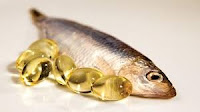
Did the media hype surrounding the "Fish Oil Promotes Prostate Cancer" break this poor critter's neck?
I guess you will all have listened to the Science Round-Up live, right? No? Well then I'd suggest you do that now, because I am not going to waste any more time on the breakfast or sweetener study, but felt inclined to take another look at the fish / fish oil and prostate cancer issue.

Why? Well, I have written tons about breakfast (read it), the circadian rhythm (read it) and by good way too much about sweeteners (look here) in the past to reiterate that in the absence of any new scientific evidence whatsoever.

"Fish oil promotes prostate cancer! What shall we do?"

While I am not sure that someone actually wrote that, it is only natural for the layman to assume that taking fish oil capsules and even eating fish would be detrimental to his prostate health, once he is confronted with scientific evidence not just from one study, but actually from a meta analyses of what the researchers deem to be the "currently available literature". This lends a whole new level of credibility to the results the scientists observed in the male subjects from the SELECT trial; a trial, of which you will probably remember, that it is the study that found that vitamin E + selenium supplementation area associated with higher risks of prostate cancer.

All that lends the recent "fish oil is killing you" study the aura of a controlled intervention study. And that despite the fact that the Brasky study is nothing but another non-specific cross-analysis of the associations between high serum levels of long-chain omega3-PUFAs and prostate cancer. A study that delivers no information whatsoever on where the DHA, EPA and DPA (an intermediate form) came from and a study that does not tell you, whether the levels have been high before and remained high afterwards or were high because the subjects were afraid to develop prostate cancer and started to supplement with fish oil. Yes, even Carl's hypothesis that having prostate cancer will increase the enzymatic cascade that produces EPA and DHA from short chain omega-3s could be possible - at least the study at hand would not be able to rule it out.

Now, you've heard most of that on the Science Round-Up, yesterday. So let's rather take a look to the left and the right to get a better grasp of the current state of the art... ah, I mean research:
  • "No association was found between overall fish consumption in early or midlife and prostate cancer risk." (Torfadottir. 2013) This is the conclusion of an Icelandic study from April this year. The study was nested among the 2268 men aged 67-96 years in the AGES-Reykjavik cohort study and produced another surprising result: While high fish consumption in early- and midlife was not associated with overall or advanced prostate cancer,
    "[..] a high intake of salted or smoked fish was associated with a 2-fold increased risk of advancedprostate cancerboth in early life (95% CI: 1.08, 3.62) and in later life (95% CI: 1.04, 5.00)." (Torfadottir. 2013)
    An observation which clearly brings us back to the previously made reservations with respect to the absence of any reliable data on where the "fish oil" in the blood of the subjects in the Brasky study came from. It also stands in line with the results of Stott-Miller et al. (2013), who report a +32% increased prostate cancer risk for men consuming fried fish more than once a week.
    Figure 1: Overall fish oil consumption and risk of prostate cancer (Torfadottir. 2013)
    Talking about fish oil, if you take a look at figure 1 you can see that it had non-significant protective effects when consumed irregularly in mid and late life, but was (likewise not stat. sign.) associated with a higher risk of developing prostate cancer in early life.
  • The role of docosapentaenoic acid (DPA) remains elusive. While the Brasky study suggests that it's "bad stuff", another recently published paper identified DPA as a marker that "is linked with reduced total prostate cancer risk" (Sorongon-Legaspi. 2013).

    Figure 2: Omega-3 levels and prostate cancer risk (Sorongon-Legaspi. 2013; DPA highlighted in red); enzymatic cascade that converts ALA in 5 steps to DHA
    If you take a look at the figure on the right, you will see that ALA, EPA and DHA, alone, which are #1, #4 and #6 on the enzymatic cascade that converts short chain (ALA) to long chain omega-3 fatty acids (see figure 2, right), have no effect on prostate cancer at all. DPA, on the other hand, is - in this analysis (!) - associated with a 24.4% reduced risk for prostate cancer.

    How that's supposed to work, though eludes me. And in the absence of a mechanistic explanation of this statistical feature, we should be careful to clutch at straws, when we do, on the other hand, negate the risk Brasky et al. observed.
  • If you already have prostate cancer high levels of DHA, the "bad prostate cancer omega-3" actually appear to protect you from dying. A recently published study by Epstein et al. (2013), for example, found
    "Among all men, those with the highest omega-3 docosahexaenoic acid and total marine fatty acid intakes were 40% less likely to die from prostate cancer (P(trend) = 0.05 and 0.04, respectively)." (Epstein. 2013)
    On the other hand, the 525 Swedish men with prostate cancer in Örebro County (1989-1994) who were the subjects in Epstein et al.'s study were at 2x higher risk of dying, when their overall fat intake was high. This is something that cannot be excluded in the Brasky, respectively SELECT trial either - after all an overall high fat intake will bring about higher LC omega-3 PUFA levels than a lower fat intake with the same ratio of LC omega-3 PUFAs in it.
Now in the absence of any reasonable explanation for the observations and in view of the fact that you would have to expect that the same effects should be observed in other forms of tissue, if the effects were related to the negative effects of rancid fish oils, as they have been observed by Garcıá-Hernándéz et al. (2013) in a recently published study (a detailed discussion of the results will follow on the weekend). The latter, i.e. a risk increase for other types of cancers has yet not been reported. We do in fact have evidence to the exact opposite, i.e. a reduced cancer risk for...
  • colorectal cancer incidence (case-control studies) -- risk reductions of -26% for high total LC-PUFA intakes (Kimura. 2007); -38%  for EPA > 442mg/d and -37% for DHA > 587mg/d  (Theodoratou. 2007) and -39% for total LC-PUFA > 180mg/d; -35% for EPA > 50mg/day (!) and -42% for DHA >110mg/day (Kim. 2010)
  • breast cancer incidence (case control studies) -- risk reductions of -49% for total LC-PUFA > 550mg/day; -73% for EPA > 1.39% of total fat in erothrocytes; -94% for DHA > 4.79% of total fat intake (Kuriki. 2007); -50% for EPA > 101mg/day (Kim. 2009) and -56% for DHA >213mg/day (Kim. 2009); -49% for EPA = 0.69 of total fat in erothrocytes (Shannon. 2009)
These results are supported by beneficial results from prospective cohort studies and in-vitro evidence for these and other forms cancer. So, if there was a mechanism to explain the increased cancer risk, it must be prostate specific and until we have not found this very mechanism, I doubt the relevance of the associations that were observed and reviewed by Brasky et al. in their latest paper.

Bottom line: Call me a stubborn physicist, but as long as I don't understand or at least have a hypothesis that would point towards an underlying mechanism that could explain the association of high serum levels (not high intake) of long-chain omega-3 fatty acids and the incidence of prostate cancer, I don't believe that it is relevant.

"Are You Going to Die From or With Prostate Cancer? Plus: What Can be Done to Influence This Fate?" Learn more about prostate cancer in the SuppVersity Prostate Cancer Special (read more)
And let's be honest, that the exact opposite appears to be the case for almost all other forms of cancer does not exactly support the notion that this very mechanism even exist.

I still don't discard the possibility and in view of the fact that I've never been an advocate of fish oil supplements, this is not exactly a reason for me to go back on my previous recommendation to keep your intake of omega-6 fatty acids "low" (compared to that of your fellow inhabitants of the Western Obesity Belt) and include fatty fish in your diet at least once, better twice a week. Don't fry it, and don't put it into the smoker and you will live happily ever after.

Well, no not exactly; but even if the likelihood that you develop prostate cancer increases, the established benefits of the inclusion of fish in your diet - here is just one of the most recent examples: -16% all-cause mortality, -37% risk of dying from ischemic stroke and -39% for dying from the consequences of diabetes (results based on data from 134,296 men and women in Takata. 2013) - certainly outweigh the potential increase in prostate cancer risk.

References:
  • Brasky TM, Darke AK, Song X, Tangen CM, Goodman PJ, Thompson IM, Meyskens FL Jr, Goodman GE, Minasian LM, Parnes HL, Klein EA, Kristal AR. Plasma Phospholipid Fatty Acids and Prostate Cancer Risk in the SELECT Trial. J Natl Cancer Inst. 2013 Jul 10. [Epub ahead of print]
  • Epstein MM, Kasperzyk JL, Mucci LA, Giovannucci E, Price A, Wolk A, Håkansson N, Fall K, Andersson SO, Andrén O. Dietary fatty acid intake and prostate cancer survival in Örebro County, Sweden. Am J Epidemiol. 2012 Aug 1;176(3):240-52. 
  • Kimura Y, Kono S, Toyomura K, et al. Meat, fish and fat intake in relation to subsite-specific risk of colorectal cancer: The Fukuoka Colorectal Cancer Study. Cancer Sci. 2007; 98:590 – 597. 
  • Kim J, Lim SY, Shin A, et al. Fatty fish and fish omega-3 fatty acid intakes decrease the breast cancer risk: a case-control study. BMC Cancer. 2009; 30:216 – 226.
  • Kim S, Sandler DP, Galanko J,et al.Intake of polyunsaturated fatty acids and distal large bowel cancer risk in whites and African Americans. Am J Epidemiol. 2010; 171:969 – 979. 
  • Kuriki K, Hirose K, Wakai K, et al. Breast cancer risk and erythrocyte compositions of n-3 highly unsaturated fatty acids. Japanese Int J Cancer. 2007; 121:377 –385.
  • Shannon J, King IB, Lampe JW,et al. Erythrocyte fatty acids and risk of proliferative and nonproliferative fibrocystic dis ease in women in Shanghai, China.Am J Clin Nutr. 2009; 89: 265 – 276.
  • Sorongon-Legaspi MK, Chua M, Sio MC, Morales M Jr. Blood level omega-3 Fatty acids as risk determinant molecular biomarker for prostate cancer. Prostate Cancer. 2013;2013:875615.
  • Stott-Miller M, Neuhouser ML, Stanford JL. Consumption of deep-fried foods and risk of prostate cancer. Prostate. 2013 Jun;73(9):960-9.
  • Takata Y, Zhang X, Li H, Gao YT, Yang G, Gao J, Cai H, Xiang YB, Zheng W, Shu XO. Fish Intake and Risks of Total and Cause-specific Mortality in 2 Population-based Cohort Studies of 134,296 Men and Women. Am J Epidemiol. 2013 Jul 1;178(1):46-57.
  • Theodoratou E, McNeill G, Cetnarskyj R, et al. Dietary fatty acids and colorectal cancer: a case-control study. Am J Epidemiol. 2007; 166:181 – 195. 
  • Torfadottir JE, Valdimarsdottir UA, Mucci LA, Kasperzyk JL, Fall K, Tryggvadottir L, Aspelund T, Olafsson O, Harris TB, Jonsson E, Tulinius H, Gudnason V, Adami HO, Stampfer M, Steingrimsdottir L. Consumption of fish products across the lifespan and prostate cancer risk. PLoS One. 2013 Apr 17;8(4):e59799.

Saturday, April 13, 2013

True Or False: Alpha Lipoic Acid Promotes Creatine Uptake. Using Non-Stick Teflon Pans Causes Colorectal Cancer. Locusts, Beetles & Moths Can Easily Compete With Whey

As a SuppVersity reader you already know that eggs are not going to give you cancer (learn more about eggs), but with the recent Facebook News on the correlation between non-stick pans and colorectal cancer in a Greek study, the question is, whether this changes, when you prepare your eggs in a Teflon coated pan.
Since the really interesting news are a bit slow these days and you've got your weekly serving of short-news yesterday, already I thought it would be nice if I tackled one of the "True or False" suggestions I have - as promised - started to collect and file for future episodes, mix that with two things I just had on my mind and serve the gray-matter enhancing mixture as an extraordinary installment of "True or False".

I am, by the way, still open for suggestions, although I suppose I should come up with a better way to submit them... well, I guess that's something to keep in mind for the re-design, which is slowly but steadily progressing.

Apropos, any other suggestions (aside from a better archive, which is already on the list) you believe could make the SuppVersity even better, are highly appreciated :-)

Alpha lipoic acid increases creatine uptake

True. The only human study I know of which investigated the effect of alpha lipoic acid (ALA) on the efficiacy of creatine supplementation shows that the addition of 1g of alpha lipoic acid to the baseline 20g/day + 100g/day sucrose supplement the 16 male subjects (18-32 y) in the 2003 study from the Department of Human Kinetics at the St. Francis Xavier University in Antigonish, Nova Scotia, Canada received in the course of a 5-day loading phase lead to a significantly faster increase in phosphocreatine and total creatine in the skelatal muscle of the vastus lateralis muscle (Burke. 2003)

It is however about questionable how relevant this effect actually is, after all the whole notion of the benefits, let alone the necessity of a "loading phase" has been revised over the past decade. Outside of scenarios, where the immediate supercompensation of the PCr stores is of utmost importance the use of ALA as a to promote creatine uptake is thusly probably unwarranted.
Figure 1: Relative 10th-rib fat depth, 10th-rib longissimus muscle area and intramuscular fat in pigs finished on diets containing 24g/day of creatine, 600mg of alpha lipoic acid or a combination of both; data expressed relative to unsupplemented control (Berg. 2003)
As far as its effects on body composition and metabolic health are concerned the data in figure 1 clearly shows that the additional provision of alpha lipoic acid must not necessarily translate into visible (muscle size & body fat) or unvisible (intramuscular fat) improvements - especially during a bulk. This is at least what the higher body fat and lower muscle size of the pigs in the the 2003 study by Berg et al. would suggest (Berg. 2003; it should be said, though, that the differences did not reach statistical significance!).

Bottom line: There is hardly any dietary supplement, where the good old saying "never change a winning team" is so to the point as with the good old creatine monohydrate. Whether it is one of the bazillion "advanced creatine formulas" or the myriad of different supplementation protocols or uptake promoters, time and again the simple, the "boring", yet proven and effective chronic ingestion 3-5g of creatine monohydrate per day produced equal or, as it was / still is the case of the die hard supplement scam creatine ethyl esther (CEE; learn more), even superior results.

 The Teflon coating of non-stick pans will give you cancer

False. While the average American carries 4–5ppb of Perfluorooctanoic acid (PFOA), the potentially carcinogenic synthetic perfluorinated carboxylic acid and fluorosurfactant that's used in the production process of teflon pans & co is not the main, most likely not even a source of the PFAO in your blood.
Coffee-Chile-Cocoa Rubbed Sirloin, Creamed Kale (recipe) - The perfect way to eat your red meats and avoid potentially carcinogenic effects of more than well-done meats? Or is it enough if you drink an Espresso afterwards? Lot's of additional questions and a handful of answers in previous SuppVersity posts.
"[T]he coated cookware tested here do not appear to be a significant source of PFOA which will migrate due to cookware’s low µg/kg initial residual level of PFOA. Furthermore, an extreme heating test (abusive) of the cookware did not appear to increase the residual amount of PFOA in the cookware. That is, additional PFOA does not appear to form during the normal use or misuse of these products.

[...]  This conclusion also assumes that all cookware has the same highest initial concentration of PFOA. In fact, a number of cookware items had at least ten times less PFOA. [...] Eventually because the cookware is a repeat use item, the amount of PFOA in cookware should approach zero provided that no PFOA is generated over time." (Begley. 2005)
Much more likely candidates for PFOA in your blood are papers with fluorochemical coatings/additives such as popcorn bags which emit a 100x higher amount of fluorochemical (e.g. PFOA) than even high PFOA cookware at 175°C during its first use.
Figure 2: Serum fluorochemical levels in Greeks with and without cancer (Vassiliadou. 2013)
And while the Kontou study, which spiked my interest in this topic (Kontou. 2013), showed correlation between colorectal cancer patients and the use of non-stick cooking ware. Another study, likewise done in Greece, shows that there is no correlation between cancer and the serum PFOA levels in Greek citizens (Vassiliadou. 2010; see figure 2).

Which confounding factors? The fact that you tend to overheat and burn the foods (learn more), when you don't have to clean the mess later on, for example, or the simple correlation that exists between the use of non-stick pans and the frequency of fried food consumption which has repeatedly been shown to increase the risk of colorectal cancer (e.g. Miller. 2013).
Bottom line: In view of the current scientific evidence wrt to the total amount of potentially carcinogenic fluorochemicals leeching from non-stick coated cookware, I want to reemphasize my previously voiced hypotheses that the use of non-sick cookware was associated with an increased risk of colorecteral cancer in a recently published study from Greece is probably the result of confounding factors as those I mentioned in the original facebook post and in the box on the right.

Yet although I suspect that it's really about eating too much "burnt" foods (if the stuff burns in a sticking pan it will remain in the pan and not be eaten!) is the best explanation I cannot exclude that something else than the fluorochemical that the could be responsible for the observations in the Kontou study.

Whey was yesterday, maggots, locusts & co are the future

*Yamyoll* As in the case of meat, it may be a good idea not to panfry your insects for too long; see "True or False" item on Teflon pans and burnt meats above
True. It may sound disgusting, but from what I gather it (a) isn't and (b) is pretty realistic that we are going to see more and more insect proteins in our food-chain in the future. So why shouldn't he protein powder of the future also be an "insect protein isloate"?

I mean, ISI sounds much cooler than WPI, as in whey protein isolate...Well, not so much for the whey was yesterday, as I believe it will take at least a couple of day for whey to be overtaken by insect protein (isolates?), but the current scientific evidence clearly suggests that insect protein is not only a nutritionally complete protein source, but offers similar if not superior additional health benefits as whey.

You don't believe a word I am saying? You want examples? While there are no controlled trials with insect protein isolates (ISI) + resistance training as of yet, there is good evidence that ISIs would be competitive.
    The insect protein cheat sheet: Grass hoppers are the chicken (high protein, low fat; 362–427kcal per 100g), beetles the eggs (high protein, high fat; 410–574kcal) and butterflies and moths the meats (high protein medium fat content; 293–762kcal) of insect nutrition.
  • high digestibility -- insect protein is of high quality and has a high digestibility (77-98%; cf. Verkerk. 2007)
  • high protein content  -- 0-75 g/100g of the dry weight of most of the critters is pure protein (Verkerk. 2007)
  • high essential amino acid content -- the concentration of essential amino acids ranges from 46-96% of the nutritional profile (Verkerk. 2007)
  • ACE inhibition -- just like whey protein hydrolysates, insect protein hydrolysates have been shown to contain enzymes that can reduce blood pressure (Vercruysse. 2005 & 2010) 
Aside from simply eating insect proteins, various proteins and cell lines have already been tested for the manufacturing of vaccines and functional molecules (Altmann. 1999; Drugmand. 2012).

Table 1: EAA content of various insect proteins (Verkerk. 2007) and a a standard whey protein concentrate (Met+Cys, Phe+Tyr not measured individually)
Bottom line:  As so often, it appears as if we were once again racing the tortoise. Whenever we think we have invented the "optimal" *put whatever you like here* it doesn't take long until we realize that nature has already been there or has topped our latest invention millions of years ago, already.

Allegedly, nature's way of "inventing" things may not comply to the strict standards of natural science, but still, insect proteins are only one example for the unexploited bio-ressources that slumber in the Brazilian rain forests and also and even more so the deepest dephts of the oceans.


That's it for today and since it's Saturday, I guess I will have to close this post with the obligatory reminder of the SuppVersity Facebook News you can find at www.facebook.com/SuppVersity ... why you should go there? Well,... maybe you want to learn the latest about how...
    Days ago the carnitine in them was bad for our heart, now it saves the lives of patients with heart disease?
  • TV watching "dissolves" the trunk muscles of adolescents, so that each hour/day costs them ~20lbs of muscle power (read more)
  • being "somewhat diabetic" is not just "somewhat of a problem", but will effectively increase your risk of cardiovascular disease (read more)
  • carnitine in red meat saves not threatens lives, those of people with heart disease, to be precise (read more)
Just don't forget that sitting in front of the computer or with your shiny iPhone on the sofa is not going to (re-)build your trunk musculature either and the fact that you did not have junkfood today is not an excuse to skip on your workout ;-) Have a nice weekend!


References:
  • Altmann F, Staudacher E, Wilson IB, März L. Insect cells as hosts for the expression of recombinant glycoproteins. Glycoconj J. 1999 Feb;16(2):109-23.
  • Begley TH, White K, Honigfort P, Twaroski ML, Neches R, Walker RA. Perfluorochemicals: potential sources of and migration from food packaging. Food Addit Contam. 2005 Oct;22(10):1023-31. 
  • Berg EP, Maddock KR, Linville ML. Creatine monohydrate supplemented in swine finishing diets and fresh pork quality: III. Evaluating the cumulative effect of creatine monohydrate and alpha-lipoic acid. J Anim Sci. 2003 Oct;81(10):2469-74.
  • Burke DG, Chilibeck PD, Parise G, Tarnopolsky MA, Candow DG. Effect of alpha-lipoic acid combined with creatine monohydrate on human skeletal muscle creatine and phosphagen concentration. Int J Sport Nutr Exerc Metab. 2003 Sep;13(3):294-302.
  • Drugmand JC, Schneider YJ, Agathos SN. Insect cells as factories for biomanufacturing. Biotechnol Adv. 2012 Sep-Oct;30(5):1140-57.
  • Miller PE, Lazarus P, Lesko SM, Cross AJ, Sinha R, Laio J, Zhu J, Harper G, Muscat JE, Hartman TJ. Meat-related compounds and colorectal cancer risk by anatomical subsite. Nutr Cancer. 2013 Feb;65(2):202-26.
  • Vassiliadou I, Costopoulou D, Ferderigou A, Leondiadis L. Levels of perfluorooctanesulfonate (PFOS) and perfluorooctanoate (PFOA) in blood samples from different groups of adults living in Greece. Chemosphere. 2010 Aug;80(10):1199-206. 
  • Vercruysse L, Smagghe G, Herregods G, Van Camp J. ACE inhibitory activity in enzymatic hydrolysates of insect protein. J Agric Food Chem. 2005 Jun 29;53(13):5207-11.
  • Vercruysse L, Van Camp J, Morel N, Rougé P, Herregods G, Smagghe G. Ala-Val-Phe and Val-Phe: ACE inhibitory peptides derived from insect protein with antihypertensive activity in spontaneously hypertensive rats. Peptides. 2010 Mar;31(3):482-8.
  • Verkerk MC, Tramper J, van Trijp JC, Martens DE. Insect cells for human food. Biotechnol Adv. 2007 Mar-Apr;25(2):198-202.