Showing posts with label T2. Show all posts

Tuesday, November 22, 2016

Allegedly 'Harmless' Thyroid-Based Fat Burner 3,5-T2 Works Like a Charm, While Commonly Sold 3,3-T2 Could Mess W/ Your Blood Glucose Levels, Liver & Body Fat + Muscle

These are the kind of abs, you will see on products with T2 and/or T2 and other alleged fat-burners. Don't be fooled by the ads - even if it's the actually active form of diiodothyronine (T2), namely 3,5-T2, you're buying, the pills alone won't get you to the sub-10% body fat range you  may be dreaming of.
I've written about the thyroid hormone metabolite diiodothyronine aka T2 before. Accordingly, you will probably know that it has long been thought of as an inactive byproduct of the thyroid hormone metabolism (read previous T2-articles). You will also be aware of the fact that research shows that (a) this is not the case and that (b) only one of its two forms, namely 3,5-diiodothyronine (3,5-T2) shares the fat burning, metabolic effects of its big brother triiodothyronine aka T3.

Just like me, you probably don't know, however, why supplement companies are still stupid enough to use both 3,5- and 3,3-diiodothyronine in their allegedly fat burning supplements - "stupid", because we already knew it has no effect and even more stupid, since a recent study from the Universidade de São Paulo and the Houston Methodist Research Institute has shown that it will, in total contrast to 3,5-T2, of which the latest research by da Silva Teixeira et al. shows that it will reduce the blood glucose levels independently of insulin sensitization, impair the metabolism of glucose.
Want help losing body fat, try coffee or caffeine - Frequent Side Effects = Improved Health ;-)

For Caffeine, Timing Matters! 45 Min or More?

Intraworkout Caffeine = Useful or Bogus?

Three Cups of Coffee Keep Insulin At Bay

Caffeine's Effect on Testosterone, Estrogen & SHBG

The Coffee³ Ad- vantage: Fat loss, Appetite & Mood

Caffeine Resis- tance - Does It Even Exist?
Yes, you read that right: While 3,5-T2 burns fat (especially in the liver) and increases your metabolism, its cousin 3,3-T2 will do nothing for your BMR/RMR + glucose and fatty acid metabolism and can, on top of that, even impair your glucose metabolism and, as the data in Figure 1 shows, increase the amount of liver fat and food intake.
Figure 1: Effects of T3 (DT3 at 0.75 mg/kg), 3,5-T2 (D3,5-T2 at 1.25 and 12.5 mg/kg) and 3,3 T2 (D3,3-T2 at 1,25 mg/kg) on (A) body weight trajectory, (B) body fat (%), lean mass (%), (D) body temperature, (E) food intake, (F) liver fat, (G) heart weight & (H) TSH of diet-induced obese mice (da Silva Teixeira. 2016).
I guess this negative effect on your glucose metabolism alone should be reason enough to avoid supplements with the commonly used combination of 3,3- and 3,5-T2.
In man, there's a J-shaped correlation between blood glucose 3,5-T2 in (open boxes: all subjects; closed boxes: euthyroid patients), but no significant correlation with waist circumference (a proxy of visceral fat) and subcutaneous fat according to Pietzner et al. (2015).
What dosages are we talking about? Unfortunately, the study at hand provides no guideline as to how much of this thyroid metabolite is actually necessary to boost your overall, fat and glucose metabolism, because the regular way to calculate human equivalent doses (HED | learn how to do it) seems to be way off when we talk about thyroid hormones. Humans appear to need much lower doses of exogenous thyroid hormones to see the same effects as rodents; and the dose regimen that delivered the most significant effect in the study at hand would translate to hilariously high doses of 3,5-T2 - doses you can luckily (?) never get out of any of the T2-supplements on the market).

Plus: The fact that a 2015 study by Pietzner et al. suggests that, in healthy euthyroid human beings, there's a J-shaped correlation of circulating 3,5-T2 levels and glucose (p >> 0.05 for insulin, waist, and subc. fat) with the latter being more or less constant until a certain optimal 3,5-T2 level is achieved and the fasting glucose levels "explode" (see Figure to the left).
After all, you can only hope for the 3,5-T2 the Brazilian scientists who have been dabbling with diiodothyronines in previous studies, already, to counter the ill effects of 3,3-diiodothyronine (3,3-T2).
Figure 2: (A) Fasting blood glucose, (B) glucose response during glucose tolerance test and (B) insulin levels in diet-induced obese mice according to treatment (da Silva Teixeira. 2016).
What's more, no supplement company can give you a guarantee that the 3,5-T3 in their products will fully counter the ill effects of 3,3-T2 on liver fat, the response to glucose tolerance tests, and the increased levels of insulin and appetite you can see in Figure 2 (and Figure 1, respectively) - no matter, how large the words "synergy" or "synergistically" are plastered all over the supplement bottle.
Read before using T2-products: "High-Dose 3,5-Diiodo-L-Thyronine (T2) Has Similar Side Effects as Regular Thyroid Hormones: Natural Thyroid Hormone Production ↓, Myocardial Stress ↑, Heart Weight ↑" | more.
So what's the verdict then: If you have understood that neither form of T2 is free of side effects (see "High-Dose 3,5-T2 Has Similar Sides as Regular Thyroid Hormones" | read it) and still want to use a T2-product, you better make sure it contains only the actually active 3,5-diiodothyronine (3,5-T2) and no 3,3-diiodothyronine) stupid supplement producers have put into the product to be able to claim that they would thus make sure to keep the side-effects at bay.

With a 3,5-T2 product you could at least hope for (a) weight loss / the prevention of weight gain, (b) fat loss and thus increases in relative lean mass, and, as the study at hand demonstrates (c) reduced liver fat and improved glucose tolerance and fasting glucose as well as insulin levels... all that, however, requires the product to be high-dosed - probably higher than the average fat burner you can buy at your favorite supplement shop (see red box for more information on the dosing regimen) | Comment!.
References:
  • Pietzner, Maik, et al. "Translating pharmacological findings from hypothyroid rodents to euthyroid humans: is there a functional role of endogenous 3, 5-T2?." Thyroid 25.2 (2015): 188-197.

Thursday, October 23, 2014

High Dose 3,5-Diiodo-L-Thyronine (T2) Has Similar Side Effects as Regular Thyroid Hormones: Natural Thyroid Hormone Production ↓, Myocardial Stress ↑, Heart Weight ↑

No, the rodents had "only" enlarged hearts, but hairloss is a common side effect of elevated thyroid hormones and could theoretically occur in the long run.
You have read about it on the SuppVersity and you've seen it as an ingredient in several recent fat burners... a purportedly 100% save non-suppressive thyroid hormone which goes by the name 3,5-Diiodo-L-Thyronine (T2).

While previous rodent studies highlighted only the beneficial metabolic effects, i.e. increases in fatty acid oxidation and resting energy expenditure, a recent study from the German Institute of Human Nutrition Potsdam-Rehbruecke raises serious concerns about what Wenke Jonas and her colleagues call the "indiscriminate administration of 3,5-T2 as powerful natural hormone for the treatment of hyperlipidemia and pandemic obesity" (Jonas. 2014) - in other words: About using T2 as a weight loss supplement or anti-obesity drug in lean or obese individuals without medical supervision.
Overtraining puts you at a similar risk of low T3 levels as T2 (ab)use

Female Athletes' Body Comp Suf- fers From Dieting

Female Athlete's Triad is not ex- clusively female

Female Athlete's Triad - A Vicious Cycle

Female Athlete's Triad - Recovery Part 1/3

Female Athlete's Triad - Recovery Part 2/3

Female Athlete's Triad - Recovery Part 3/3
But what exactly is it, the scientists are concerned about? In their latest rodent study (there is as of now a scarcity of human studies on "T2") the German scientists observed dose-dependent thyromimetic effects of 3,5-T2 akin to those of T3 in diet-induced obese male C57BL/6J mice.
Figure 1: The study clearly indicates that the administration of T2 leads to highly significant reductions in serum T4 and serum T3 - one thing appears to be certain: T2 is not without side effects (data from Jonas. 2014)
That's in contrast to early studies which claimed that T2 had no thyromimetic effects on hypothalamus-pituitary-thyroid axis, but would act only peripherally to increase resting energy expenditure and fat oxidation, but in line with a rodent study by Padron et al. (2014) who reported only recently that Administration of 3,5-diiodothyronine (3,5-T2) causes central hypothyroidism and stimulates thyroid sensitive tissues of rats.
Maybe the dosage is just too high? Possible, but in view of the fact that the study reports a dose dependent increase in total energy expenditure that peaks at 14% with the high dose that was used in the study at hand, using less would be pointless anyways.

On the other hand, previous studies with only 300mcg of T2 per day showed no effect on T3 & T4 levels and a small but significant weight loss in two obese subjects with normal thyroid function (Antonelli. 2010). With N=2 the number of subject in this study from a (imho) non-peer-reviewed publication you cannot access online is yet far to low to call the results representative. Moreover, it is at least somewhat disturbing that all the beneficial research on T2 comes from Department of Internal Medicine at the University of Pisa, while other labs consistently find negative side effects.
As you can see in Figure 1, this claim is 100% unwarranted, the adminstration of 2.6µg/g body weight (since the standard calculations for human equivalent doses didn't work in previous studies on real thyroid hormones, I am not even attempting to give you the human equivalent) was not without consequences on the levels of the "classic" thyroid hormones T4 (thyroxine) and T3 (triiodothyronine) in the male C57BL/6J mice.

Figure 2: Despite the increase in energy expenditure the obese rodents didn't lose weight - they simply ate more.
Now, if the goal is to increase the fat oxidation and basal energy expenditure, this probably wouldn't matter, if you decide to stay "on" forever (if you don't you would to wait at least a couple of days for your natural thyroid production to kick in, again) and, more importantly, if these changes had nothing but beneficial consequences.

Unfortunately, Jonas et al. didn't just find that the hepatic thyroid target genes involved in lipid metabol were elevated to a similar extent as you would see it with T3, they did also find that the heart weight of the mice was significantly increased (just like you would see it with T3, again) after 28 days "on" T2.

And as if that wasn't bad enough, the increased appetite that's characteristic of the hyperthyroid state the rodents were in triggered an increase in food intake which rendered the increase in energy expenditure void and 12% increase in total energy expenditure void and kept the weight of the pre-fattened and thus obese mice stable.
In view of the latest results, I would actually have to rewrite all previous SuppVersity articles. I mean, I clearly wouldn't suggest it as a tool for lean bulking any longer.
Bottom line: As the scientists point out in their previously cited conclusion, the study at hand clearly "raise[s] concern about indiscriminate administration of 3,5-T2 as powerful natural hormone for the treatment of hyperlipidemia and pandemic obesity" (Jonas. 2014).

This does not mean that you cannot use T2 as a weight loss tool, but in fact of the previously mentioned absence of human data that would indicate that it does even work and considering the fact that the study at hand clearly indicates that it has similar same side effects as T3 (shut down of natural thyroid hormone production, increased heart weight indicative of myocardial stress) you could just as well use "real" thyroid hormones instead of 3,5-Diiodo-L-Thyronine (T2) if you are willing to live with the risk of side effects... or do you disagree? What are your thoughts and experiences? Let us know on the SuppVersity Facebook Page.
References:
  • Antonelli, A., et al. "3, 5-diiodo-L-thyronine increases resting metabolic rate and reduces body weight without undesirable side effects." Journal of biological regulators and homeostatic agents 25.4 (2010): 655-660.
  • Jonas, Wenke, et al. "3, 5-Diiodo-L-thyronine (3, 5-T2) exerts thyromimetic effects on hypothalamus-pituitary-thyroid axis, body composition, and energy metabolism in male dietinduced obese mice." Endocrinology (2014).
  • Padron AS, Neto RAL, Pantaleão TU, de Souza Dos Santos MC, Araujo RL, de Andrade BM, da Silva Leandro M, de Castro JPSW, Ferreira ACF, de Carvalho DP. Administration of 3,5-diiodothyronine (3,5-T2) causes central hypothyroidism and stimulates thyroid sensitive tissues. J Endocrinol. 221.3 (2014):415–27

Saturday, July 9, 2011

Higenamine: PES Introduces New "Fat Burner" to the Market. Potent Thermogenic or Dangerous Stimulant?

Image 1: The reformulated PES Alpha T2
contains higenamine, alpha yohimbine
and 3.3-diiodo-l-thyronine
I just received an advertisement email containing some information about the reformulation of PES popular fatburner Alpha T2 (make sure to read "T2 a Fat Burner for Bulking?" for some details on the thyroid stimulating properties of 3.5-diiodo-l-tyronine the metabolically more active "brother" of the 3.3.-diiodo-l-tyronine in PES Alpha T2) mentioning a compound that is advertised as "an all new beta-agonist", that would have been found to be "more effective" than synephrine. While this claim did not impress me at all, I took the time and dug up some information about "higenamine"...

The adrenergic effects of higenamine (Hig. demethylcoclaurine) have been well established since the 1980s (Park. 1984). In fact, the cardioactive benzylisoquinoline alkaloid isolated from Aconiti tuber has long been used as a cardiotonic in traditional Chinese medicine (Zhou. 2003). Its inotropic effects, i.e. its effect on the contractivity of the heart muscle have been studied in various models and range, dependend on dose, from mild stimulation and a minor but significant increase in the effective refractory period (which would be beneficial for patients with bradyarrhythmias, i.e. slow heart beat, to tachycardia, the medical definition of which is an elevated heart rate that remains >100 beats per minute, even in the rested state (Yu. 1985).

In ancient Rome, high doses of Aconit powder were commonly used to poison unwanted enemies, who then died of a 'sudden and unexpected heart attack'. In that, it should be mentioned that the Romans used the whole plant, which, higenamine aside, contains other Aconites which potentially modified it's effects; interestingly, though Kimura et al. (Kimura. 1995) report that aconitine, another compound derived from aconite extract, does the exact opposite, i.e. it induces bradycardia (slow heart) beat and - if administered together (which is how nature meant it to be ;-) - higenamine and aconitine more or less neutralize each other.Enough of TCM and homeopathy... let's get back on the subject at hand.

Will this stuff burn away your love handles or will it literally break your heart? 
 
In order to answer these questions, we would, first of all,need to know how much higenamine actually is in the product - according to the original PES-writeup the reformulated ALPHA T2 contains 40mg higenamine per serving (2 caps).

Q: Is 40mg of higenamine a dangerous dose?  

A: 40mg taken orally appear to be perfectly save.

Details: According to a 1997 rodent-study on the acute toxicity of higenamine by Lo and Chen (Lo. 1997), orally administered even 2.0g/kg higenamine did no harm in the mouse model. For an adult human being this would translate to 160mg/kg or roughly 13g for someone who weighs 80kg. I would nevertheless refrain from consuming all 90 caps one bottle contains, at once - after all, you are no 160pound mouse, are you?

Image 2: Seeds of Aconitum nepellus.
The whole plant contains Aconites,
their concentration is yet particularly
high in the roots of the plant.
If we take into account the results of a 1996 study of the same authors (Lo. 1996), which found that oral bioavailability of higenamine in rabbits, is somewhere between 2.84% and 5.5%, and assume similar bioavailability in humans (rabbits are certainly not the most adequate model for human metabolism), one serving of alpha T2 would effectively deliver no more than 1.14mg-2.2mg of higenamine to your blood stream. This does not sound particularly potent, especially, if you consider the short terminal half-life of 22min (the short half-life does not contradict PES' claim that subjects in their tests felt effects of higenamine for 60 minutes; remember half-life != clearance). It took a dose of 50mg/kg, i.e. 4mg/kg to kill 50% of the mice in the aforementioned study by Lo (Lo. 1997). For our standard human being, weighing 80kg this would equal 320mg or 145x the maximally absorbed amount of higenamine in one serving of Alpha T2 - all that under the hypothetical assumption that we can translate absorption-kinetics observed in a rabbit model to human beings by using a standardized formula that is solely based on the ratio of body weight to surface area of man or rabbit respectively. Before we are trying to speculate about "effective dosages", however, we should initially establish that higenamine is in fact more than a inotopic agent in the arsenal of traditional Chinese medicine; or, in other words, that it does "burn" fat.
A note of caution! If you are taking blood thinning or antiplatelet medications, you should be aware that higenamine itself is a weak anticoagulant (Pyo. 2007; 2008). That being said anybody without respective health conditions should not be too worried and might even benefit from higenamine's anticoagulant effect, of which Yun-Choi et al. (Yun-Choi. 2002) found that it particularly antagonizes epinephrine induced aggregation. With epinephrine being elevated by the beta-adrenergic effects of higenamine, the latter effectively counters its own negative side effects (again, in healthy individuals).

Q: Will taking higenamine help me lose fat?

A: Higenamine is a beta-1 and beta-2 adrenergic agonist, meaning that it will raise your heart rate (beta-1) and help with lipolysis, i.e. the release of triglycerides from your fat cells, but you will still have to "burn" that fat on your own.

Figure 1: Chemical structure
of higenamine (Bai. 2008)
Details: The number of studies that are relevant to our fatloss question is relatively limited and studies from the late 1990s and early 2000s seem to suggest that, despite its stimulating effects on cardiomyocytes (heart muscle cells), higenamine would rather make you tired than spike you up: Shin et al. (Shin. 1999), for example, observed a decrease in tyrosine hydroxylase activity and consequently dopamine content of PC12 cell lines. This downregulation of the dopamine content in cells that, among various other functions, also synthesize, store and secrete catecholamines, would initially suggest the opposite, i.e. a calming and fat-sparing effect - after all, catecholamine induced beta-oxidation is what most of the fat burners out there are all about. More recently, however, Bai et al. (Bai. 2008) identified higenamine as the active, i.e. beta2-adrenergic ingredient, in Radix Aconiti Lateralis Preparata; results, which have since then been confirmed by Tsukiyama et al. (Tsukiyama. 2009) for higenamine isolated from Nandina domestica Thunberg. If you add to that the beta-1 agonistic effects observed in a study by Kimura et al. (Kimura. 1994) you have - just as PES promises - a synephrine analogue.

That being said, the aforementioned study on higenamine's effects on bronchoconstriction by Bai et al. (Bai. 2008) also provides useful information about the potential applicability of Aconti as a "fat burner". The scientists had used an in-vitro cell model, to elucidate the beta2-adrenergic activity of an extract from Aconiti Lateralis Preparata (RALP); and though the latter had not been specifically standardized for its hygenamine content, chromatographic and mass spectrometric analyses revealed that the active ingredient in the extract was in fact the same bioactive plant-alkaloid PES is now introducing to the supplement market. Other than Bai et al., who were interested in the ameliorative effects higenamine, as a beta2-agonists could exhibit on bronchoconstriction, our interest, however, is directed at its use as "fat burner". I assume, most of you will be familiar with the notion that commercially available pharmacological beta2-agonists, above all clenbuterol and its short acting relative albuterol, are widely (ab-)used by bodybuilders and fitness competitors as fat burners and/or ergogenics. Consequently, it stands out of question that higenamine will further liposlysis and may thus facilitate fat loss, the question is yet, to what extend?


Q: How effective is higenamine compared to prescription and over-the-counter beta-2 agonists?

A: It will work, and it is probably more potent than regular (and I guess even methyl-)synephrine. Data on its actual fat loss effects, is yet still not available.

Details: From the Bai study we know that the stimulating effects of higenamine on beta2-adrenoreceptors is dose dependent. We also know that the 40mg of higenamine each serving of the reformulated PES Alpha T2 will activate the beta2-receptors to some extent, what we do not know, yet is whether those 2.2mg that could potentially make it to your fat tissue would be enough to "increase your fat burning" (PES official write-up) significantly.
Figure 2: Dose [in mg/ml] response curves of the activity of albuterol, synephrine and higenamine in CHO-β2-AR-CRE-GFP cells.  Data are expressed as the mean percentage of the maximal response of the individual ligand (data adapted from Bai. 2008 and Bay. 2009).
If we now combine the data Gang Bai and his colleagues from the Nankai University  in Tianjin, China, collected for synephrine (Bay. 2009) and higenamine (Bai. 2008) a (I did that for you in figure 2), it seems that  higenamine is milligram by miligram less potent than regular synephrine, let alone its methylated version, which was used in the original formula and is specifically mentioned in the newsletter. But this does not necessarily mean that its absolute potency as a beta2-agonist falls behind, as well, since the values in figure 2 are expressed as percentage of the maximal activation of the individual ligand.

Since we have no data on lypolisis, we have to turn to the anti-astmatic effects of the compounds in order to judge the magnitude of the effect. At a dosis of 1ng/ml, albuterol was about 4x as potent in the ginea pig asthma model used in Bay. 2009, while higenamine at the same dosage exerted about 3/4 or 75% of the effect of salbutamol in the same model in Bai. 2008. Taken together this data suggest that
  • the dose response curve of higenamine inclines more steeply, than the one of synephrine or the presciption drug albuterol, thus finding the right dose could be a little more difficult
  • judged by its effects on bronchoconstriction in a ginea pig model, higenamine would be 75% as potent as albuterol and about 3x as potent as regular synephrine (I suppose methyl-synephrine would be somewhat more potent, but suspect that it would still fall short of higenamine)
Note that the above calculations are of hypothetical nature, as they are based on data from two different studies, despite using identical models and have been calculated on the relative magnitude of the bronchorelaxant effects measured in isolted guinea pig tracheal muscle. Definite conclusions with respect to the lipolytic effects of all three beta2-agonists discussed in this write-up are illegitimate. The above statements must thus be regarded as working hypothesis which still warrant validation by future research!

Concluding remarks

Whether and to what extend the 40mg of higenamine from PES reformulated Alpha T2 actually facilitate "fat burning" does yet remain to be seen, because the dosages from in-vitro data derived in an animal model cannot be translated into dosing regimens for human beings, as it would be the case in an in-vivo placebo controlled study, where rodents were actually supplemented with different amounts of higenamine or the full spectrum of ingredients present in PES' reformulated Alpha T2. Until such data is available all I can say is. The new Alpha T2 probably works just as well, if not better than the old one. I'll leave it up to you to decide whether that was "good" or "bad" ;-)

On a side note: You may have noticed that Performance Enhancing Supplement (PES) products in general and Alpha T2 in particular have been on "blow-out sale" for some time. While this may have been in preperation for the new product line to replace the old one, it is also probable that the PES guys are preparing for future legislative regulations. Synephrine has been way up on the list of substances scheduled to be added to the ban list ever since 2005 (cf. Position Statement of the Council for Responsible Nutrition. 2005). Thus, replacing the methyl-synephrine in the original formula may turn out to be a smart move regardless of whether or not the fat loss effects of higenamine are more or less pronounced than those of methyl-synephrine - at least they could still sell their products, when the FDA strikes again.

Tuesday, June 28, 2011

T2 a Fat Burner for Bulking? 3,5 Diiodo-L-Thyronine Wards Off Fat Gains & Doubles the Number of Hypertrophy-Prone Glycolytic Fast Twitch Muscle Fibers.

Image 1: T2-based fat burners work!
At least when interperitoneally
injected in overfed rats ;-)
Those of you, who followed my writings even in the pre-SuppVersity days may remember my Team-Andro review (original article in German, link is just a google translation) of the purported fat-loss effects of diiodo-L-tyronines. Almost two years ago, I concluded that scientific evidence for their use as "fat burners" in humans was non-existent, while the rodent data that was available at that point, only confirmed that high-dose supplemental 3,5 diiodo-thyronine (and to a lesser extent 3,3' diiodo-thyronine) was able to ameliorate the detrimental metabolic effects of hypothyrodism in rats. Now, the same group of Italian researchers who conducted the initial studies on the metabolic effects of these previously overlooked "by-products" (evidence suggest that they are in fact more than that) of thyroid hormone metabolism, came out with more recent - and certainly way more exciting results (Moreno. 2011).

To assess the effects of 3,5 diiodo-L-thyronine on non-hypothyroid, yet overfed animals, Maria Moreno and her colleagues fed three groups à 15 male Wistar rats (aged 8 weeks, body weight 300+/-5g) either a normal (measured by rat standards ;-) low fat or the infamous high-fat diet, scientists use to induce a pathology that is generally accepted as a model for human obesity and the metabolic syndrome.
Figure 1: Energy content and composition of control and high fat diet in kcal/g of body weight
(data adapted from Moreno. 2011)
Out of the two groups that were fed the hypercaloric high fat diet (cf. figure 1 for a comparison of macronutrient composition and energy content of the diets), one group was injected with 3,5 diiodoL-thyronine at a dose of 25µg/kg (human equivalent: 4µg/kg) interperitoneally. A procedure which turned did not only to reduce or even reverse the detrimental effects of high fat overfeeding on body weight, blood lipids and triglycerides of the animals, but also had direct effects on their muscle fiber composition and muscular glucose uptake via an increased expression of GLUT.4 transporters:
The HFD-induced increases in muscle levels of fatty acid translocase (3-fold; P<0.05) and TGs (2-fold, P<0.05) were prevented by T2 (each; P<0.05 vs. HFD). T2 increased insulin-stimulated Akt phosphorylation levels (~2.5-fold; P<0.05 vs.HFD). T2 induced these effects while sparing muscle mass and without cardiac hypertrophy [both side-effects commonly observed if the same effects are triggered by administration of T3]. T2 increased the muscle contents of fast/glycolytic fibers (2-fold; P<0.05 vs. HFD) and sarcolemmal glucose transporter 4 (3-fold; P<0.05 vs. HFD).
Unfortunately, from a dieters perspective, who will obviously be in a caloric deficit and does not want to ward fat gains off, but to get rid of his/her love-handles, these results are hardly significant. As it was the case in the previous studies by the same group, the model, the scientists used (hyperthyroid animals in previous studies; overfed animals in the study at hand) does not allow for a definitive conclusion on whether or not 3,5 diiodo-L-thyronine, let alone its short acting (cf. Lanni. 1994) "brother" 3,5,3' diiodo-L-thyronine, would facilitate fat loss in healthy (i.e. non-hypothyroid) human beings on a calorically restricted weight loss diet. That being said, the present data allows for the hypothesis that it could ameliorate the detrimental effects of caloric restriction on thyroidal determined parameters of basal metabolism and, at the same time, prevent muscle breakdown via the insulin-dependent upregulation of muscle protein synthesis by increased Akt phosphorylation.
Figure 2: Cholesterol, triglycerides and body weight after 8 weeks of high fat feeding in rats with and without T2 injections relative to values of normal-fed controls (data calculated based on Moreno. 2011)
On the other hand, the study clearly supports the notion that adding T2 to a bulk, i.e. a diet-phase which is intended to increase body, in most cases, muscle mass, could out turn out to be a good idea. The diet used in the study may be called "high fat diet", at the heart, it is however an overfeeding diet; and despite the different macronutrion composition this is not completely different from what body builders will do on a bulk. With appropriate doses (>320µg/day for a 80kg human being) and absorbtion (there is a major difference between interperitoneal injection and oral administration, taken with food, for example T2 could befall a similar fate as levothyroxin (T4) medications, which are to be taken hours away from your last meal to be absorbed properly) T2 could thus ...
  • keep you lean due to its beneficial effects on energy expenditure in a state of nutrient overabundance
  • help you build & restructure lean muscle via its effects on protein synthesis and muscle fiber type composition [note: a switch towards fast-twitch type-II muscle fibers will not only make you stronger, it will also help you
And since there were no changes observed in the serum levels of the main thyroid hormones T4 and T3, chances are, you could potentially get both these benefits without messing up with your natural thyroid production and without the risk of heart damage or muscle loss, which is a common side effect of using either T3 (both heart damage & muscle loss) or clenbuterol ("just" heart damage) for the exact same purposes, which is decreasing fat gain and increasing type-II to type-I muscle fiber ratio.

Saturday, April 16, 2011

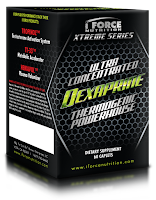
I-Force Dexaprine Ingredient Write-Up.

Figure 1: I-Force Nutrition's
newest fat burner Dexaprine
Just received an email from the marketing guys @I-Force Nutrition informing me that "Dexaprine is finally here...". Well, to be honest, I had not been waiting for it, but the email intrigued me and I would like to give you a brief rundown on the ingredients, which are "guaranteed to give you more energy, increased appetite suppression, and insane mood enhancement than you have ever experienced!" - I don't know about you, but I think I have heard similar claims before ;-)

Ok, here we go: One bottle of Dexaprine, which is 39.99 (pre-order offer @ I-Force webshop) has 60 servings (serving size 1 capsule) of the "thermogenic powerhouse" (I love these advertisment guys) @ 600mg of the following ingredients
  • Thermophoric Amine Mood Enhancing Complex,
    which is basically just synephrine (from citrus aurantium) + geranamine (which is also known as 1,3-dimethylamylamine, 4-methyl-2-hexylamine, or as I-Force has it on the label 1,3-dimethylpentylamine)
  • Extended Release Energy Complex,
    which is a combination of caffeine and theophylline, with the latter having identical beneficial (stimulant, beta receptor agonism, etc.) as well as detrimental (e.g. temporary insulin resistance in muscle tissue, cf. Colnes. 2010, adrenal problems due to long term (over-)use etc.) effects on perceived energy and weight loss, but a longer half-life, which is even prolonged by the concomittant admistration of caffeine (Jonkman. 1991)
  • Anabolic Protein Synthesis Enhancing Complex,of which I think that it is completely mislabeled, because it is a combination of the two diiodo-L-Thyronines (also known as T2s), 3,3'-T2 and 3,5-T2, of which I have already written in a paper for a German BodyBuilding and fitness magazine (click here for Google-translation) that their impact on metabolic rate (in non-hypothyroid individuals) is probably negligible and would - according to the mice studies that are presently available - require much higher doses than those present in current "thyroid stimulating" products to up-regulate UCP significantly above "normal" levels.
So, overall this does leave us with a probably relatively long lasting stimulant that will enable you to work harder and thus burn more calories and subsequently more fat. Not bad, but nothing new or even revolutionary here.

On a side note: As it is quite often the case in the supplement industry, Dexaprine is deliberately named to sound similar to a potent drug, the synthetic amphetamine Dexedrine (has up to 15 mg dextro-Amphetamin per cap). This practice is about as shabby as calling a product XYZ-"drol". The latter, i.e. the "drols", have incidentally been banned by bodybuilding.com - good idea, guys ;-)