Posts

Showing posts with the label fitness

Popular topics

Show more

'Training Low[Carb]' Requires 0.12g/kg Extra-Protein | Fitbit Fitness Data Decently Reliable | Plus: Salt vs. Passin' Out

Image
Mixed news about nutrition, exercise, and supplementation. In the absence of game-changing nutrition, exercise, and supplementation science I decided to post one of the recently rare installments of the good old " on short notice " column at the SuppVersity . This installment of the " short news " features two plus one papers from the latest issue of "Medicine & Science in Sports & Exercise"  and their, as of yet, unpublished "ahead of print" articles. While we'll start with a short discussion of the latest investigation into the accuracy (or rather usefulness) of your (old) Fitbit Charge 2.0 , I suspect that most of you will be more interested in the "training low [carb/glycogen]" study which is the first to quantify the (to be expected) increase in protein/amino acid requirements in those who avoid carbs to maximize the mitochondrial response to exercise (see "Maximizing Training-Induced Cellular Adaptation: T...

'Survival of the Fittest!' Large-Scale Study Backs Classic Evolutionary Paradigm - Being Unfit Worse Than Smoking | Plus: Fit/Unfit - What are You + What Can You do About it?

Image
Even the difference between having 'below ' vs. 'above average' fitness levels amounts to the same 1.4-fold increase in mortality risk the scientists calculated for smoking cigarettes. When I first read about the latest study from the  Cleveland Clinic and that it would demonstrate that "not working out" was "worse than smoking", I expected that a press-release writer had compared the reduction in mortality risk and physical fitness, which has been observed by a new medium-scale observational study from his employer, to the hazard ratio (HR) other scientists calculated for smoking in a completely different study (or meta-analysis) for publicity reasons. However, upon closer scrutiny, it turned out that both, the hazard ratio for smoking vs. non-smoking, which is 1.41 (p < 0.001), and the hazard ratio for elite vs. low fitness, which is 5.05 (p < 0.01) and hence 3.6 times higher, were based on analyses of the same dataset - cool! Bicar...

Healthier, Fitter & Leaner After 12-Day McDonalds Challenge Thanks to HIIT? Plus: TRX®, Fitness ↗ Fatness ↘ in Women

Image
Short news: Sprinting & TRX  "Have you already burned off that burger you had for lunch today?" If that's a question you're asking yourself regularly, you are at a high risk of misinterpreting a recent study by Christian Duval et al. (2017) as a license to eat how much you want, whatever you want, whenever you want. Unfortunately, a 12-week study in which young, healthy subjects were allowed to consume only three more or less energy-adequate meals is not representative of the futile "if you eat more/worse, just exercise more"-approach to diet and exercise. Apropos exercise, if you're still looking for the right exercise to get or stay fit and healthy, TRX training, the suspension training bodyweight exercise that has purportedly been developed by/for US Navy Seals seems to actually live up to some of its promises of developing strength, balance, flexibility and core stability - overall fitness (VO2max) improvements are yet probably its greatest...

Free-Weights = 10.4kcal, Machines = 8.9 kcal, Incorporating Cardio in a Weight Training Circuit = 13 kcal/min Burned

Image
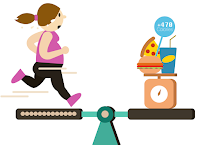
This article is not supposed to encourage the use of exercise as a means to eat more junk. After all a psychotherapeutic / psychiatric ward is the only place this form of exercise addiction is going to get you. Ok, let me briefly make one thing unmistakably clear: you should never  train to burn calories (even worse, to eat pizza and pie, because you "deserve it"). Good reasons to train are (a) to build muscle, (b) build strength, (c) improve your conditioning and (d) general health. It is likewise a good idea to (e) support your dieting efforts with strength and cardio training that is meant to increase the rate of fat/muscle loss. Yet even if you don't train to burn calories, it can be very useful in all these contexts to have at least an estimate of how much energy you're spending during the workouts. What for? Well, to know roughly how much more you'd had to eat to stay in an energy and how much more would be too much so that fat gain would be the inevit...
Disclaimer:The information provided on this website is for informational purposes only. It is by no means intended as professional medical advice. Do not use any of the agents or freely available dietary supplements mentioned on this website without further consultation with your medical practitioner.