Showing posts with label enzymes. Show all posts

Wednesday, September 30, 2015

3.8 vs. 2.3 g/kg Protein + Exercise to Improve Body Comp. | Digestive Enzymes to Pimp Vegan Proteins | High Protein vs. MUFA Meals for GLP1 | ISSN Research Review '15 #3
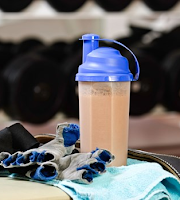
"If some is good, more is better!" Unfortunately, this simple maxime does rarely apply when it comes to the physiological response to certain foods and/or supplements. For protein, however, it appears as if the relation holds - at least as long as protein does not become the only energy source in your diet.
I guess by now I can simply skip the lengthy introduction telling you about how I didn't want to cherry pick only three out of more than twenty newsworthy studies that were presented at the Twelfth International Society of Sports Nutrition (ISSN) Conference and Expo in 2015, when I started writing this series right (click here if you have missed the previous articles)?

Well, that's good because it leaves more room for a brief preview of the studies I am about to discuss in today's third serving of the SuppVersity ISSN Research Review 2015 - studies that are all related (in one way or another) to increased protein intake. Either in overweight or obese people, for whom higher protein meals increase the post-prandial increase of the "satiety hormone" GLP-1, or in vegans, vegetarians and everyone else who wants to make the most of his vegetable protein sources (pea and rice protein, to be precise) by adding digestive enzymes to the mix, or - last but not least - gymrats who ramp up their protein intake from 2.3 to 3.8 g/kg body weight to see even more pronounced improvements in body composition.
Read more about ISSN and other studies at the SuppVersity

Vitargo, Red Bull, Creatine & More | ISSN'15 #1

Pump Supps & Synephrine & X | ISSN'15 #2

High Protein, Body Comp & X | ISSN'15 #3

Keto Diet Re- search Update | ISSN'15 #4

The Misquantified Self & More | ISSN'15 #5

BCAA, Cholos-trum, Probiotics & Co | ISSN'15 #6
  • High protein, high GLP-1, ... highly beneficial? As a SuppVersity reader you are aware of the far-reaching metabolic effects of GLP-1 on appetite (suppression | Näslund. 1999), glucose and fat metabolism, as well as thermogenesis (Lejeune. 2006). Against that background, you will know that the small, but statistically significant increase in GLP-1 Franklin et al. (2015) observed in their latest study which compared the effects of a high protein and high mono-unsaturated fat meal on the well-known incretin hormone may have significant long-term effects even though the blood glucose levels of the study's twenty-four overweight or obese participants (male/female: 12/12; age: 38.7 ± 15.3 (mean ± standard deviation) years; BMI: 31.6 ± 4.0kg/m²), who consumed isocaloric meals containing either 35.2% energy from fat and 20.7% from monounsaturated fat (HMF meal) or 31.9% energy from protein (HP meal), did not trigger differences in post-prandial glucose levels at 30, 60, 120, and 180 min.

    Figure 1: Levels of active GLP-1 in response to high protein (HP) or high MUFA (HMF) meals (Franklin. 2015).
    To believe that "simply eating more protein" is going to solve all your weight problems, though, would be short-sighted - especially for the overweight obese for whom the study at hand as well as previous studies investigating the effects of GLP-1 on glucose metabolism suggest that they may benefit to a lesser extent from protein induced increases in GLP-1 than lean individuals, in whom the "satiety hormone" will trigger much more pronounced β-cell responses that in in patients with sign. insulin resistance and pre- or full-blown type 2 diabetes (Kjems. 2003).

    If that sounds like you, using the high(er) protein meals in conjunction with an energy restricted diet to lose weight and thus to improve your insulin sensitivity can obviously still be beneficial. Without a planned, reasonable caloric deficit, however, high(er) protein intakes alone are probably not going to "cut it" (all puns intended).
Even if weight loss is the goal, training fasted and thus hungry does not appear to provide significant benefits. Learn more about this longstanding myth and the reality in my write-up of Schoenfeld et al's seminal paper on fasted cardio and fat loss. A paper that finally had a long-standing and die-hard fat loss myth tumble.
Are you hungry before your workouts? In this case you may be interested in the results of a paper by Nystrom et al.' who suggest that athletes have to use "more proactive strategies [...] to optimize training adaptations". Why's that? Well, of the 481 (240 women, 241 men) NCAA Division I athletes representing eleven intercollegiate sports from three universities in three athletic conferences (i.e., Atlantic 10, Atlantic Coast Conference, Conference USA) who participated in the researchers investigation into the nutrient timing habits of Division I NCAA athletes, 79% reported feeling hungry prior to training, practice or competition - and that despite the fact that most of them had breakfast. It is thus well possible that the amount and types of foods athletes eat before their workouts do still receive (too) little by athletes and their athletic departments which often provide post-workout meals, but fail to do so pre-workout.
  • Pimp my plant protein - digestive enzymes can do the trick! Despite the fact that pea and other protein powders have become widely (and cheaply) available over the past years, vegan and vegetarian athletes and gymrats are still having a harder time satisfying their protein requirements than their omnivore competition or gym-buddies. Against that background and in view of the fact that more and more athletes are "going vegan" or at least vegetarian, the latest study by Julie Minevich (2015) and colleagues from the University of Tampa and the formulators, manufacturers and vendors of digestive enzymes and respective supplements from Chemi-Source and Increnovo LLC, was in fact published quite timely. A study that was designed...
    "to investigate if co-ingestion of a plant protein specific digestive enzyme blend (Digest-All® VP, a proprietary enzyme blend consisting of protease 6.0, protease 4.5, peptidase, bromelain and alpha-galactosidase, Chemi-Source, Inc., Oceanside, CA) can reduce the significant differences in amino acid appearance in the blood between plant and animal proteins" (Minevich. 2015).
    To this ends, 11 resistance-trained male subjects (age: 21.4 ± 1.5 years, body weight: 82.5 ± 3.9kg, height: 177.3cm ± 6.1cm | average training status of 2.3 years ± 1.9 years) were randomly assigned to receive either 60 g of whey protein concentrate, or the same amount of protein in form of a 70:30 blend of pea and rice protein concentrates (Veg), either alone or alonside the enzyme blend Digest-All® VP in a double-blind, crossover study. All supplements were provided on an empty stomach after a 12 hour overnight fast. The three testing sessions, in which blood was drawn immediately prior to, and at 30 minutes, 1, 2, 3, and 4 hours following consumption of the supplements, were separated by a washout period of 7 days.
    Figure 2: Time to achieve peak amino acid levels and total amount of amino acids that made it to the blood stream with whey protein, the pea + rice mix and the pea + rice mix w/ digestive enzymes (Minevich. 2015).
    Ok, I have to admit that the differences are not exactly staggering and the standard deviations (see error bars) are large, but still. One potentially important determinant of skeletal muscle metabolism, the time it takes for the serum levels of essential amino acids - including leucine - to peak, i.e. T_max in Figure 2, was visibly improved by the addition of digestive enzymes to the otherwise comparatively slow digested rice + pea protein mix (if you look at the error bars, you will see that this was just a "trend", though).

    If you also take into account that the digestive enzyme blend brought the area under the EAA curve (see Figure 2) and the peak amino acid levels (not shown in Figure 2) of the vegetable protein blend up to the same level as it was observed with whey protein, it would seem as if the study would provide the missing evidence of the usefulness of proteases and co. for people who want to make the absolute most of their vegetable protein supplements - what is missing, obviously, is data that would allow us to quantify the downstream effects on muscle gains and other practically relevant study outcomes.
  • High protein + training = WIN?! You will certainly remember the impressive results of Antonio et al.'s 2014 study on the effects of a 4.4g/kg protein diet on the body composition healthy resistance-trained men and women (learn more). Right after said study had been published the authors promised a follow up that would combine a similarly high protein intake with a controlled exercise intervention and... voila! The first results of this study were presented at this year's ISSN meeting.

    For the corresponding experiment, Ellerbroek et al. recruited forty-eight healthy resistance-trained men and women in their early twenties. who consumed either 2.3g/kg body weight per day (NP) or 3.4g/kg body weight per day (HP) of dietary protein during the treatment period. Moreover, all subjects participated in a split-routine, body part heavy resistance-training program. Training and diet (everyday) logs were kept by each subject.
Learn everything about the previous study.
Don't worry! I am going to write a full review of this study as soon as it will be published. In theory I would have had to skip it just like the other studies, but since I would have been mad at me if for doing that if I were you, I decided to give summarize the little information you can find in the abstract. Against that background I hope you will understand that I will refrain from making any definite conclusions until I've read the full-text. The abstract does after all lack a lot of potentially relevant information, such as the type of workouts, the way the subjects achieved the increase in protein intake (dietary or supplemental protein), the adherence, actual protein, carb & fat intakes, etc.
  • As the scientists point out in the results section of the abstract, their two-time point (Pre, Post) by two-group (NP, HP) repeated-measures analysis of variance (ANOVA) showed (a) significant time by group (p ≤ 0.05) changes in body weight with weight gains and loss in the normal and high protein groups, respectively (1.3 ± 1.3 kg NP, -0.7 ± 4.0 HP), as well as reductions in total and relative body fat in both groups (-0.3 ± 2.2 kg NP, -1.7 ± 2.3 HP), and % BF (-0.7 ± 2.8 NP, -2.4 ± 2.9 HP) - both as you can see in Figure 3 with significant advantages for the HP group.
    Figure 3: Changes in body weight, fat and fat free mass in the normal and high protein groups during the diet + training intervention; mind the error bars = high inter-individual differences (Ellerbroek. 2015).
    In the absence of any form of ill health effects due to the high protein intake (both groups consumed significantly more than the recommended daily allowance of 0.8g/kg), Ellerbroek et al. also found a significant time effect for the increase in fat-free mass  (1.5 ± 1.8 NP, 1.5 ± 2.2 HP), 1-RM on the bench and squats and vertical jump and pull-up performance - albeit without significant diet-induced inter-group differences.
So what's not in this issue? Poster presentations I decided not to discuss "at length" in this issue are the allegedly interesting presentation by Galvan et al. on the "[e]ffects of 28 days of two creatine nitrate based dietary supplements on bench press power in recreationally active males." Just as it was the case for the previously referenced studies on BCAAs, I'd rather wait for the full-text to be published before I make up my mind on whether creatine nitrate is the first form of "advanced creatines" that's actually worth it's money (unlike the rest of the pack | Jäger. 2011).

Blocking Inflammation is Like Cho- king the Fire: Long Term Weight-, Visceral- and Android-Fat Gain in Human Study Emphasizes Essential Role of TNF-α in Metabolic Control!
The same must be said of a study by Detzel, et al. (2015) in which the researchers compared the effects of functional animal proteins on mTOR and endotoxins like , pro-inflammatory compounds, that arise as a consequence of intense training. There's no debating: The way serum the derived protein supplements (BioBeef, SerumPro, and SuperSerum) were capable of neutralizing endotoxin is is interesting, but to comment on the practical usefulness of blending of high-quality protein sources with functional serum protein supplements (SuperSerum and SerumPro) the abstract that does not provide numbers to assess the relevance of the reductions in IL-8 cytokine production by THP-1 monocytes is simply not sufficient | Comment!
References:
  • Detzel, Christopher J., et al. "Functional animal proteins activate mTOR and bind pro-inflammatory compounds." Journal of the International Society of Sports Nutrition 12.Suppl 1 (2015): P35.
  • Ellerbroek, Anya, et al. "The effects of heavy resistance training and a high protein diet (3.4 g/kg/d) on body composition, exercise performance and indices of health in resistance-trained individuals-a follow-up investigation." Journal of the International Society of Sports Nutrition 12.Suppl 1 (2015): P37.
  • Franklin, Brian, et al. "The effect of meal composition on postprandial glucagon-like peptide-1 response in overweight/obese participants." Journal of the International Society of Sports Nutrition 12.Suppl 1 (2015): P12.
  • Galvan, E., et al. "Effects of 28 days of two creatine nitrate based dietary supplements on bench press power in recreationally active males." Journal of the International Society of Sports Nutrition 12.Suppl 1 (2015): P17.
  • Jäger, Ralf, et al. "Analysis of the efficacy, safety, and regulatory status of novel forms of creatine." Amino Acids 40.5 (2011): 1369-1383.
  • Lejeune, Manuela PGM, et al. "Ghrelin and glucagon-like peptide 1 concentrations, 24-h satiety, and energy and substrate metabolism during a high-protein diet and measured in a respiration chamber." The American journal of clinical nutrition 83.1 (2006): 89-94.
  • Näslund, E., et al. "Energy intake and appetite are suppressed by glucagon-like peptide-1 (GLP-1) in obese men." International journal of obesity 23.3 (1999): 304-311.
  • Nystrom, M. G., et al. "Nutrient timing habits of Division I NCAA athletes." Journal of the International Society of Sports Nutrition 12.Suppl 1 (2015): P33.
  • Minevich, Julie, et al. "Digestive enzymes reduce quality differences between plant and animal proteins: a double-blind crossover study." Journal of the International Society of Sports Nutrition 12.Suppl 1 (2015): P26.

Sunday, April 21, 2013

True Or False: Glutamine For Glycogen Repletion. Enzymes Instead of NSAID. Drumming Burns More Kcal Than Jogging

Ever wondered how the "Modern-Day Samurai" of the Drummers of Japan keep in shape? Today's installment of True or False holds the answer to this and other questions ;-)
True or false? That's the title of this no longer new series at the Suppversity and it is the question I want to answer after you read the following three statements: (1) "You can use glutamine instead of carbs to replete your glycogen stores", (2) "The only ones who benefit from the use of enterically coated and purportedly systemically acting enzymes are the the manufacturers of respective supplements" and (3) "Drumming burns about as much energy as fast jogging"... hmm, I see you're scratching your head!?

Well, the unwritten rules of the game require that you make your prediction before you read the following paragraphs. So, true or false?

You can use glutamine instead of carbs to replete your glycogen stores

True. There is yet one big caveat. The gluconeogenic pathway, i.e. the transformation process of glutamine to glucose, delivers the lion's share of its end product directly to liver (Meijer. 1992). Therefore glutamine is rather an adjunct (to feed the liver) than a true carbohydrate alternative.

And what about Sustamine(R) & co? Whether the use of allegedly superior glutamine dipeptides like alanyl glutamine does provide an additional edge remains questionable. Aside from a slightly more pronounced increase in muscle glutamine with chronic Ala-Glu supplementation (Rogero. 2006), there is little evidence for theoretical and almost no evidence for real-world advantages of combining our bodies favorite gluconeogenic amino acids, glutamine and alanine into a dipeptide. A detailed analysis of the available literature, would yet be a topic for another installment of True or False - if you want that, suggest "Alanyl-glutamine is well worth the extra bucks", as a topic for a future installment in the comment area ;-)
What is yet worth mentioning is that the combination of carbohydrates and glutamine has been shown to actively promote the storage of skeletal muscle glycogen (Bowtell JL. 1999). Slightly superior effects than for l-glutamine alone have yet been observed by Hall et al. who supplied the participants of their study with 0.8g/kg glucose and iso-caloric amounts of whey or wheat hydrosolates (wheat is naturally high in glutamine; Hall. 1998).
Figure 1: Relative increase in muscle glycogen after the workout (Hall. 1998)
As the data in figure 1 goes to show you, both, whey and wheat hydrolysate shoveled an allegedly non-significantly greater amount of glycogen into the skeletal muscle of eight well-trained male cyclists in the course of the 3h recovery phase after a combined HIT glycogen depletion + HIIT workout - an effect that was probably facilitated by the ~2x higher increase in insulin.

Bottom line: I guess, no one of you will want to miss on the protein anabolic effects of a whey protein after your workout, right? Against that background the replacement of the latter with glutamine is not really an option. The existing increases in glycogen synthesis due to glutamine are thus practically irrelevant, since you will achieve just the same (if not superior) results with a complete protein source.

Systemic enzyme therapy is only beneficial for the manufacturers of respective supplements

Not necessarily. While the available literature is scarce and in large parts either official sponsored or suspiciously focused on certain products, the results would suggest that enzyme complexes such as Mucos Pharma's Phlogenzym, an enteric-coated formula that contains pancreatin (100mg), trypsin (24mg), chymotrypsin (1mg), bromelain (45mg), papain (40mg) and rutin (50mg) is on par if not superior to low-dose pharmacological therapies with NSAIDs (e.g. 2x50mg of diclofenac; cf. Tilwe. 2001).
Figure 2: Relative improvements in pain and joint tenderness and swelling after seven weeks on enzymes vs. conventional NSAID treatment in fifty 40-75year old subjects (Tilwe. 2001)
Similar results have been reported by Akhtar et al. and Singer, Singer and Oberleitner in 2004 and 2001, respectively. Contrary to Tilwe et al., Singer and his Austrian colleagues also observed that the beneficial effects of Phlogenzym lasted for three weeks after the therapy was ceased. The effects of the diclofenac control (identical dosing as in Tilwe, 2001), on the other hand, wore off immediately after the 63 patients in the Singer study stopped taking the drug.

No cheap alternatives? Scientific evidence for the efficacy of alternative non-enterically-coated enzyme preparations for the treatment of osteoarthritis & co is totally lacking. There are however some generic preparations which should have very similar effects. Selazym N, for example, has a similar ingredient profile, added selenium and costs less than 50% of the "original" (~$43 per month).
Despite the fact that the data in figure 2 would suggest that Phlogenzym should be the treatment of choice, the patients and physicians ranked diclofenac slightly higher on the efficacy and tolerability scale. Moreover, the authors of a Cocrane Review on the issue point out that
"In spite of the large number of publications in this area, there are few randomized controlled trials. Furthermore, most trials comparing two or more NSAIDs suffer from substantial design errors [...] Had studies employed appropriate doses of comparator drug, most would have been sufficiently powerful to detect clinically important differences in efficacy." (Watson. 2000; review awaiting update)
In view of the negative side effects of NSAIDs, it still appears as if the "natural" enzyme therapy would be the preferred first choice for everyone with osteoarthritic pain. If that does not work out, you can still resort to the classic NSAID-based therapy regimen.

Bottom line: Despite promising results in some studies, the fact that larger scale studies investigating the effects of Phlogenzyme on lateral ankle ligament injury (Kerkhoffs. 2004) could not confirm previously observed benefits in studies conducted by Hollmann et al. (1998) and Van Dijk (1994) support the notion that the ~$95 a month "on" Phlogenzyme at the respective effective dose of 6 tabs per day would cost you (estimate based on current price of €72.50 here in Germany) are wise-spent only if you suffer from chronic pain. Healthy physical culturists, on the other hand, should rather spend their money on other stuff.

Drumming burns about as much energy as fast jogging

It's about time for spring cleaning anyway: So if you are not into drumming, even cleaning can easily "burn" 1/4 of the calories you'd be expending on a jog/run + it has to be done, anyways (Puyau. 2004)
True! You know I am no advocate of calorie counting - not with respect to the energy content of foods and even less as far as the amount of energy you burn during a workout is concerned. If we do yet assume, ... just hypothetically obviously, that you want to burn as much energy as possible within the next 60 minutes, you would be ill-advised to go for a light jog if you got a drum kit in your basement.

As a soon-to-be-published paper from the UK shows, the estimated energy expenditure of a drummer during a live concert performance amounts to 623±168 kcal/h (8.1±2.2 METs). This is at least on par with a very paced jog.

And if you also take into account that the subjects of the study achieved peak heart rates of 186±16 bpm and 78.7±8.3% of their cycle ergometer peak oxygen uptake, the drums do probably even have an edge over a regular jog as far as their conditioning effects are concerned (De La Rue. 2013).

Bottom line: The scientists are absolutely right, when they write that "Rock/pop drumming should be considered as a viable alternative to more traditional forms of physical activity." And guess what, drumming is by far not the only largely underestimated "sportive activity" - other much more common activities, like my very own bike rides to the job, for example (learn more in the last installment of the Science Round Up) will likewise effect your general fitness level, energy expenditure and body composition - and that in a much more sustainable way than the "beat-me up" workouts of the average "It's quitting time!" gymbro.

And what's more, it's the regular, not the extraordinary energy expenditure that can cut your risk of biting the dust prematurely by almost 70%. According to a 2006 paper from the Journal of the American Medical Association (JAMA), for example, spending an additional 287kcal/day on "free-living activity" (that's 27min of drumming) can reduce the mortality risk of elderly individuals by -32% (Manini. 2006)!


As unfortunate as this may sound, but that's it already! Trust me, I do enjoy these "True or False" sessions about as much as you (hopefully) do, but one thing of which I know that it's true even without having to apply the sniff-test is that you'd not be waiting for the next installment to be published that eagerly, if I put out 10 of these items every day ;-) So be patient and enjoy the rest of your weekend - there are going to be more truths revealed and myths to be busted in the future.

References:
  • Akhtar NM, Naseer R, Farooqi AZ, Aziz W, Nazir M. Oral enzyme combination versus diclofenac in the treatment of osteoarthritis of the knee--a double-blind prospective randomized study. Clin Rheumatol. 2004 Oct;23(5):410-5. 
  • Bowtell JL, Gelly K, Jackman ML, Patel A, Simeoni M, Rennie MJ. Effect of oral glutamine on whole body carbohydrate storage during recovery from exhaustive exercise. J Appl Physiol. 1999 Jun;86(6):1770-7.
  • De La Rue SE, Draper SB, Potter CR, Smith MS. Energy Expenditure in Rock/Pop Drumming. Int J Sports Med. 2013 Apr 4. [Epub ahead of print]
  • Hollmann W. Efficacy and safety of hydrolytic enzymes and rutin in patients with distortions of the ankle joint. Clinical study report MU-694411, Idv-Datenanalyse und Versuchsplanung Gauting, 1998.
  • Kerkhoffs GM, Struijs PA, de Wit C, et al. A double blind, randomised, parallel group study on the effi cacy and safety of treating acute lateral ankle sprain with oral hydrolytic enzymes. Br J Sports Med 2004;38:431.
  • Manini TM, Everhart JE, Patel KV, Schoeller DA, Colbert LH, Visser M, Tylavsky F, Bauer DC, Goodpaster BH, Harris TB. Daily activity energy expenditure and mortality among older adults. JAMA. 2006 Jul 12;296(2):171-9. 
  • Meijer AJ, Baquet A, Gustafson L, van Woerkom GM, Hue L. Mechanism of activation of liver glycogen synthase by swelling. J Biol Chem. 1992 Mar 25;267(9):5823-8.
  • Puyau MR, Adolph AL, Vohra FA, Zakeri I, Butte NF. Prediction of activity energy expenditure using accelerometers in children. Med Sci Sports Exerc. 2004 Sep;36(9):1625-31.
  • Rogero MM, Tirapegui J, Pedrosa RG, Castro IA, Pires IS. Effect of alanyl-glutamine supplementation on plasma and tissue glutamine concentrations in rats submitted to exhaustive exercise. Nutrition. 2006 May;22(5):564-71.
  • Singer F, Singer C, Oberleitner H. Phlogenzym versus diclofenac in the treatment of activated osteoarthritis of the knee. A double blind prospective randomized study. Int J Immunotherapy 2001;XVII:135–41.
  • Tilwe GH, Beria S, Turakhia NH, Daftary GV, Schiess W. Efficacy and tolerability of oral enzyme therapy as compared to diclofenac in active osteoarthrosis of knee joint: an open randomized controlled clinical trial. J Assoc Physicians India. 2001 Jun;49:617-21.
  • Van Dijk CN. A double blind comparative study on the efficacy of MU-410 vs. placebo in patients with acute disruption of the anterior fi bulotalar ligament. Study Nr. 4903XV, Amsterdam, 1994.
  • Watson MC, Brookes ST, Kirwan JR, Faulkner A. Non-aspirin, non-steroidal anti-inflammatory drugs for osteoarthritis of the knee. Cochrane Database Syst Rev. 2000;(2):CD000142.

Tuesday, October 12, 2010

DHEA Protects Rat Livers on a High Fat Diet

First of all, rats are not a particularly good model for DHEA metabolism in human beings. Nevertheless, the results of a study by Magyar et al. (Magyar. 2010) would warrant further investigations into the effectiveness of high dose DHEA supplementation on total scavenger capacity and liver fat content in men. In the course of a 28 day intervention the scientists fed rats on either a normal or a high fat diet and supplemented their drinking water with no DHEA (Control), 400µg DHEA (DHEA) and 150µg DHEA-Sulfate (DHEA-S).
Table 1: Fresh frozen liver fat content, SOD, catalase and GST activity results on Day 28
As the figures in Table 1 indicate both, DHEA and DHEA-S were able to reduce the negative effect of the high fat diet on liver fat content and oxidant status (as measured by SOD-, Catalase and GST activity). This is an interesting result, of which the scientists write:
Our results support the hypothesis that DHEA and DHEAS supplementation can improve the antioxidant status in lipid-rich dietary habits.
Regular readers of the SuppVersity will remember that the verdict on DHEA-supplementation is still out. My personal take on the whole situation is that there would be much more research into that domain, if DHEA were patentable and the pharma industry had a financial interest in getting to the bottom of the hitherto equivocal research-results. There certainly is a reason that DHEA based products such as Dermacrine sell very well and have established a very loyal fan-base.