Showing posts with label rpe. Show all posts

Thursday, October 24, 2013

Guestpost - Adelfo Cerame: "I am Back!" Training, Nutrition & Future Bodybuilding Plans. Plus: New Training Videos!
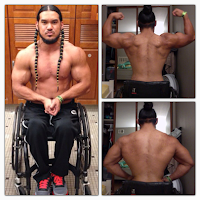
Note: Adel and Adelfo are not one and the same person. Adel is the guy behind the SuppVersity. Adelfo Cerame is the wheelchair BB who has documented his past contest preps here.
My Progress and back development this off-season

Author: Adelfo Cerame Jr., Wheelchair Pro Bodybuilder

I’m Back! "I", that's me, Adelfo Cerame and "back" means - at least for now "Just for today…" but who knows what the future has in stock for us ;-)

I know it’s been a while but I’ve just been really busy nowadays and to be honest it’s just been really tough to come up with new topics to talk about nowadays so I figure I would give my SuppVersity following an update on my off season progress as well as training and diet. 

Training: This is how I train

I’ve kept my training regimen pretty simple, focusing on compound lifts (for me that would be just your bench press and seated row), and accessory work to help me improve my main lifts, so nothing too fancy or much different from what I used to do previously (read more in Adelfo's previous guestposts). I’ve learned that I can get much more frequency and volume accomplished by keeping my lifts simple. I may only perform 4-5 exercises per training session but I get a lot accomplished volume alone, and frequency.

My main focus this off-season has been my back, so I’ve been frequently hitting my back with rows, rows, ... and rows ;-) And it's finally paying off: I’ve been really able to see the progress in my back development come up, and I really feel it’s due to the frequency and volume I’ve been training them at.

As you will see below, I have one heavy pull exercise (Pull Day 1) and one heavy push exercise (Push Day 4), and the rest of my exercises consists of higher reps/volume. I implement RPE’s (learn more here) into my training so there are no given sets on most of my exercises since the volume is auto regulated.
RPE Training = Let your Rate of Perceived Exertion be your guide: I wrote a brief description of RPE training in one of my past blogs (read it!) but if you’re interested in learning more about auto regulated training; I suggest checking out Reactive- TrainingSystems.com by Mike Tuchscherer.
The RPE (=rate of perceived exertion) determines the weight/intensity and sets I complete per exercise and will eventually determine the overall volume I do for the day.
Some more pullin' ;-)
Push Workouts
Pull Workouts
If you’re curious why I have one pull exercise on my push days is because again my focus this off season is bringing up my back, so any opportunity I can get to add frequency to my back, ill take advantage of, plus I rest in between most my training session, so I feel I get enough time to recover.

Nutrition - This is how I eat

Well, You guys’ are probably wondering if I’m still following an intermittent style fasting protocol, but nowadays I’m more on a "eat when I want" type protocol but still taking into account my caloric intake and macronutrient goals for the day.

I’ve really seen no benefit with doing an IF style protocol during my off-season especially while being on a caloric surplus. 

But me being a creature of habit, I do still tend to have my first meals around noon but not by choice but by convenience and life schedules, however if I can get a chance or feel like eating earlier in the day, I’ll eat.
    As of now my numbers look like this: So these are the ranges I’m hitting during my off-season but I usually tend to eat more as well, so if I’ve hit my numbers for the day and I find myself still wanting to eat something, then I’ll eat ;-)
  • Kcal: 2700-2800
  • Fats: 60-80g
  • Carbs: 350-400g
  • Protein: 190-220g
  • Fiber: 25-55g
It has been 6 months post contest so far and I have about 6 or so months left to go until I start preparing for my first pro debut which would be the Houston Pro next October of 2014.

That’s the show I’m aiming for but again I would have to check in with coach Alberto to evaluate my progress and see if I’ve made the improvements I needed to, to be able to compete. I’m not just looking to fill a spot on stage, I want to be competitive, so if I’m not ready, then I’ll prolong my off-season until I am ready. This has been the longest off-season so far for me.

This is actually my first "real" off season

Like I mentioned in previous blogs; I’ve never really got the opportunity to experience a true off-season just due to always prepping for shows and being sidelined for a year in 2010. This year I’ve really benefitted from this off-season so far because I’ve put my body in a great environment to build strength and grow (environment as in finding a healthy body composition that’s maintainable and that your body can agree with, and embracing a little bit more body fat in order to provide cushion for the joints to support the heavy loads I’m trying to lift). And just allowing myself a longer off-season is just giving my body time to get stronger and time to get bigger.

-- Your's Truly, Adelfo Cerame ;-)

A final note from the editor: If you want leave Adelfo a message or question in the comment area. I am pretty sure he will be happy to chime in on whatever you want to discuss - Adel

Wednesday, August 14, 2013

Sex, HIIT & Perceived Readiness: Any News on the Optimal Rest Times for Self-Paced HIIT Regimen in Men & Women?

Surrender bro, women are tougher than we'll ever be... and let's not talk about the other tactics by the means of which they trick us into doing whatever they want without us even noticing :-o
In the world of search engines for scientific papers on training and exercise science the acronym "HIIT" is currently what the word "sex" has always been on Google & co. Against that background it is actually surprising that no one else but me has taken notice of a paper on the "Sex specific  responses  to  self-paced,  high-intensity  interval  training  with  variable  recovery periods". The corresponding research was conducted by C. Matthew Laurent et al. from the School of Human Movement, Sport and Leisure Studies at the Bowling Green State University in Ohio and the paper is about to be published in an upcoming issue of the Journal of Strength and Conditioning Research (Laurent. 2013)

Men are different, women too

The results of previous experiments suggest that women are tougher than men, when it comes to steady state high intensity exercise at a self-selected pace. In their most recent study that involved 16 subjects (8 men and 8 women) between 19 and 30 years of age who had been participating in at least one session of interval training per week within the past months, Laurent et al. set out to test whether this would apply to HIIT sessions with fixed rest periods, but also variable, self-selected intensities. To this end, they had their subjects perform three bouts of HIIT.
"Each session consisted of 6, 4-minute intervals interspersed with either 1, 2, or 4 minutes of recovery. The recovery duration was counterbalanced and subjects  were  informed  of  the  specific  work-to-rest ratio  prior  to  performing  each  session.   Each  trial began  with  a  5-minute  warm-up  that  consisted  of  walking  4.8  km/h at  5%  incline." 
Suggested read: "8x Increase in PGC1-Alpha Cycling in Glycogen Depleted State" (read more)
The subjects were told to set the treadmill to the highest possible speed they felt they could maintain for 4 minutes knowing they were to perform 6 intervals.

The treadmill remained elevated at 5% incline for the duration of the whole session. Prior to each interval, subjects estimated their level of readiness using a perceived readiness scale.

Throughout and at the end of each interval, VO2(ml/kg/min), heart rate (bpm), and rate of perceived exertion (RPE) were measured, recorded and statistically processed.

At the conclusion of the fourth minute, the treadmill was slowed to 4.8 km/h for an active recovery.
"These procedures were followed identically for each of the 6 intervals and across all 3 trials. At the conclusion of the final interval of each session, subjects were disconnected from the metabolic system and sat quietly in a chair in the laboratory for approximately 15-20 minutes whereupon they provided a session RPE (SRPE) using the OMNI scale. "
All subjects were given at least 72 hours but no more than 10 days of rest between HIIT sessions, at the end of which the scientists had made the following observations:
  • Triple your energy expenditure by doing shorter shuttle runs (learn more)
    Men ran at significantly higher relative velocities (i.e., %VO2peak) during the  1-minute  recovery  trial  with  the  effect size suggesting a large difference.
  • The same velocity and effect size advantage for the strong sex was evident during the trial with 2 min rest times, as well, but in this case the difference was no longer significant.
  • Even during the 4-minute recovery trial, men ran at higher velocities but the values were not significantly different and the effect size was considerably low.
Interestingly the women still had the higher %VO2 peak values during all conditions - in other words, relative to their physical constitution, they were performing at a higher intensity than the men irrespective of the fact the latter were running faster. Interestingly the difference was only significant during the 4-min rest condition (if you look at the data in figure 1 you will realize they had to pay for that dearly).

"Apropos active rest - what's the best?"
If you take a closer look at the data in figure 1, you will realize that the 4-min-condition with a work-to-rest ratio of 4:2 (in other words, the 2min rest-condition) appears to have a slight advantage over the other conditions. While the VO2 max may be ~1% higher in the short rest condition (VO2 data not shown), this is not worth the increased exertion both men and women experienced when they ran their 4-min intervals with only 1min of active rest in-between.
Figure 1: Lactate levels, perceived readiness before the HIIT bout, rate of perceived exertion right after and 15min the self-paced HIIT bout with 1, 2 and 4min active rest between sets in male and female subjects; all data expressed relative to the mean value for the respective parameter, data calculated for men and women separately (Laurent. 2013)
As far as the 4:4 condition is concerned it is certainly remarkable that the female participants appear to totally exhaust themselves during that condition. It is difficult to determine, whether this is a result of "getting out of the groove" due to the long rest period (if you are jogging you may know that once you stop for more than a minute it's very difficult to get into the groove again), or whether that may be a result of the fact that they were pushing themselves harder when they knew there would be a long recovery period. Personally I tend to believe that it's the latter effect. Otherwise, the male participants of the study at hand should have experienced a similar negative effect of resting too long. Now, whether that's a sign of toughness or rather one of hubris is a question I'd rather not answer ;-)

(Re)read the SuppVersity HIIT Series and learn about the optimal interval:rest ratios for your personal training goals (click here)
Bottom line: Whether you can truly argue, that 4:2 is the optimal ratio is at least in my humble opinion still open - regardless of your sex by the way. So, if you are not sure what to do, try a couple of different interval:rest ratios and see how you feel. Meanwhile, I'd suggest you remember that the word "training" comes from "to train" and refers to the "sustained practice [...] in an art, profession, occupation, or procedure, with a view to proficiency in it" (Oxford English Dictionary). Proficiency in this context means that you achieve performance increases and those are not a necessary (and in most cases not even a likely) consequence of feeling like you have been run over by a train.

Once you've figured out what works best for you, stick to it! I don't care if it's 2:1 or 30s:1min, as long as it works for you and you don't have to drag yourself to the track or the gym, whenever your HIIT sessions are due, that's your personal optimum. You should still keep in mind that this optimum may change with your current performance / weight loss / hypertrophy goals and the corresponding amount of energy you consume. Previous research, for example, suggests that long(er) intervals (in the 4min range) could have a slight edge over very short ultra-intense ones, especially when your primary goal is to shed body fat (learn more in the HIIT Special Part I & Part II)

References: 
  • Laurent CM, Vervaecke LS, Kutz MR, Green JM. Sex specific responses to self-paced, high-intensity interval training with variable recovery periods. J Strength Cond Res. 2013 Jul 8. [Epub ahead of print]

Tuesday, April 16, 2013

Triphasic Nutrient Supplement W/ Caffeine, Aminos, Carbs, Creatine & All the Usual Suspects Allows For Higher Training Volume, Lowers Cortisol & Dampens Muscle Damage

Do you really need the whole pre-, intra-, post workout supp-arsenal to benefit from your workouts?
Finally, another workout supplementation study! Yeah, I know you are already suffering the side-effects of withdrawl, but it's just a couple of lines and you will feel relieve - thanks to Stephen P. Bird and his colleagues from the Charles Sturt University in Bathurst, Australia, whose latest paper is about to be published in one of the upcoming issues of Nutrition Research (Bird. 2013). And as if that was not already enough, the participants were strength trained athletes, the  physical activity and diet were standardized according to pre-recorded habits and the supplementation protocol was extensive! With pre-, intra- and post-workout supplements it was exactly what many people today seem to believe was necessary to see any gains

... but is that true? Do you really need all that stuff?

The Australian researchers probably had a similar question in their minds, when they recruited their 15 strength-trained male field and court sport athletes (mean age 21.7years; 1-RM squat 133.0kg, bench press, 94.7 and 3.1 ± 0.3 years of strength training experience) and randomized them to ingest either a placebo supplement or a supplement "stack" consisting of 15g of Musashi Reactivate Hardcore before, 30g of Musashi Elevator during and 50g of Musashi SPORTS after the workout.
Table 1: Ingredient profile of the "tri-phasic" peri-workout supplement;  the placebo contained an aspartame based flavor that matched the taste of the active supplement (based on data from Bird. 2013)
In view of the fact that this probably sounds similarly "Chinese" to you as to me, I've provided you with a tabular overview of the ingredient profile of what the scientists call a "triphasic multinutrient supplement". Basically nothing you would not find in the line-up of every major supplement company: Some carbs, EAAs, creatine, beta alanine and AAKG, caffeine and b-vitamins (not listed in table 1) before workout, carbs, EAAs and creatine intra-workout and the obligatory protein- (whey/casein mix), carb-combination garnished with some creatine and glutamine after the workout. Add in some salt, magnesium and potassium and you can even at the as of late obligatory "contains electrolytes" blend and you are good to go.

Acute effects = stat. significant, long-term physiological significance = ?

Caffeine (pre, only), creatine, EAAs, whey (post, only) and even beta alanine and AAKG, the additional carbhydrates, ... all that should do something right? Yep, you are of course right it should. After all people are paying with their hard-earned money for it!
Figure 1: Serum markers glucose, AST, CRP, CK, cortisol and testosterone before, during, right after, 30min after and 24h after the workouts with the active (SUPP) or placebo beverage (PLA); data expressed relative to group-specific pre-values (Bird. 2013)
That being said, the data in figure 1 provides at least initial relieve. There are statistically significant effects for almost all measured hormonal parameters,  if we compare the supplemented with the non-supplemented trials in this double-blind, placebo (PLA)-controlled, crossover study.

Figure 2: Supplement & blood draws (top); overview of the exercises, set x rep scheme and equipment used in the lower body workout (Bird. 2013)
The study design allowed for a 7-day washout before the "crossing" took place and those participants who had been randomized to the supplement group after an obligatory 28-day washout to clear all previously used supplements (and what not ;-) from the system had to perform the test workout (4 sets of 8 to 15 repetitions for 5 lower-body exercises; see figure 2) with/without the "triphasic nutrient supplement" on top of their 33.6 ± 1.8 kcal/kg body mass diet (macros: 3.8g/kg, 1.5g/kg carbs and protein, respectively.

The supplement, or rather the supplements, had to be ingested 15 minutes preexercise, in small, regular doses during the exercise, and the whole 300ml of their post-workout drink right after the workout. and thus according to the manufacturers suggestions.

Aside from the hormonal and inflammatory response (see figure 1) to the workout the scientists also measured the muscular performance and perceptual response during the workouts:
Figure 3: Perceptual measures of exertion & muscle soreness (Bird. 2013)
  • the total training volume was higher for SUPP (15 836 ± 518 kg⋅repetitions) compared with PLA (14 390 ± 491 kg⋅repetitions) (P <.05;d = 0.70); 
  • countermovement jump peak power (CMJ) did not differ between groups at any timepoint (P> .05;d= 0.05-0.18); in the SUPP group there was however a trend (P= .08;d= 0.32) for increased countermovement jump peak power was yet observed on the third of the four tests 30min after the workout (exact timing see figure 2, top)
  • the global rate of perceived exertion (RPE) did increase after the workout in both groups, and was higher 30min after the supplement trial (P < .01; d= 0.89)
  • the perceptual responses for muscle soreness was elevated and did not differ between treatments
    after the workouts
However, even for the statistical significant inter-group difference in msucle perceived exertion, the overall effect size is pretty small. It is therefore by no means "obvious", whether the 10% lower perceived exertion during the placebo trial which is probably a direct result of the +10% increase in total training volume, anyways, is of physiological relevance.


So what do we make of these results? On the one hand it is unquestionably true, that the peri-workout supplementation (I refuse to keep using the hilarious sciency expression "triphasic") did increase the total workout volume, It is also true that it did lower the cortisol increase and produced lower areas under the curve for creatine kinase, but it also lowered the testosterone response to the workout (that the post-workout increase in testosterone is not a legitimate predictor of muscle growth is something you should now, after countless articles on the matter, be aware of; read more about testosterone).

Whey is more insulinogenic than white bread and creatine could make you fatt True for the 1st, remotely possible for the 2nd! And still both simply work....
Much ado about nothing? No, not really. While the hormonal changes are more or less irrelevant an increase in total volue that does not entail greater muscle damage could in fact make a difference that's not just statistically, but also physiologically significant.

What I do yet doubt is that the same results could not have been achieved with a cup of oatmeal, water and protein powder 1h before the workout, a coffee right before the workout and 3-5g of creatine, two bananas and a regular whey protein afterward. All you would have to buy then is a pouch of whey and a 500g jar of creatine monohydrate, which will last you for months. Both SuppVersity supplement staples, as you know and actually among the few supps with physiologically significant effects almost every trainee can benefit from... and did I mention that they are dirt cheap and can be combined with real foods?

References:
  • Bird SP, Mabon T, Pryde M, Feebrey S, Cannon J. Triphasic multinutrient supplementation during acute resistance exercise improves session volume load and reduces muscle damage in strength-trained athletes. Nutrition Research. April 2013 [EPub ahead of print].

Wednesday, December 7, 2011

3.2g of Beta Alanine Reduce Rate of Perceived Exertion, Increase Time to Exhaustion and Ventilatory Threshold. Vegetarians, Older People and Diabetics May Benefit Most.

Image 1: If you are into running, ladies, beta alanine is for you ;-)
Those of you who make sure that they are getting their highly educative daily dose of the SuppVersity *rofl* will be aware that today's blogpost is, once again, dealing with beta alanine. Contrary to yesterday's post, which dealt with its pharmacokinetics, we are today going to have another look at what kind of real world performance outcomes the average (female!) physical culturist can expect from taking at least 3.2g of the beta amino acid per day - a dosage that has been shown in previous studies to increase intra-muscular carnosine levels by 27–39% in fast- and slow-twitch muscle fibers, respectively (Baguet. 2009). And though I do not want to spoil things, I can already tell you that the results make it quite clear why beta alanine is not the next creatine.

Somehow ergogenic, yet not really antioxidant

For the study that was conducted at the Applied Physiology Laboratory at the University of North Carolina, study that was conducted by A.E. Smith recruited 24 "recreationally active" women, of which the authors state that they "engag[ed] in 3–7 days per week of aerobic, resistance or recreational activities, but were not highly trained competitive athletes". With a mean age of 21.8 years, a height of 165cm and a body weight of 61.5kg the subjects are thusly representative of the average young woman who goes to the gym to either get or keep in shape. I am specifically emphasizing this, because - at least in the early days - beta alanine was heavily marketed as "the creatine for women" who fear the water retention people still claim was an inevitable side effect of creatine supplementation.
Image 2: If you retain water, this is not due to creatine monohydrate. Either you are taking to much (creatine loading is a thing of the past) or you have bought a product with shitloads of carbs in it - in that case, chances are its not only water you are gaining ;-)
Does creatine supplementation inevitably lead to water retention and weight gain? Just because this myth is still perpetuated, especially among female figure competitors, I thought it may be worth addressing this again: Pure creatine monohydrate without the sugar and the other bullshit you will find in many creatine supplements does not necessarily lead to increases in either total body or water weight. A study by Rawson et al. showed only recently that the consumption of 0.03g/kg creatine for six weeks did not result in statistically significant changes in body weight or water in men or women, despite significantly increased plasma creatine concentration and enhanced resistance to fatigue during repeated bouts of high-intensity contractions (Rawson. 2011).
The women were advised to simply stick to their usual routine and to refrain from taking any supplements and medications except from their 2x800mg beta alanine tablets. The latter were to be taken 3x a day... so according to Cocker, they should have consumed 2x0.8g x3/day = 4.8g/day and not, as the scientists state "3.2 g daily". Now, according to Smith et al. this was the "required dosage" all participants met. I can however not say, whether this means that the third dose was optional... and this is not the only oddity in this study, where it is well worth to look beyond the assessments and conclusions of the authors.

At the beginning and the end of the 28-day supplementation period, the women had to perform a graded oxygen consumption test (VO2max) to evaluate VO2max, time to exhaustion, ventilatory threshold and establish peak velocity (PV), as well as a "non-damaging treadmill run (oxidative stress run) for 40 min at 70% PV [peak velocity]". Before, immediately after and in the 2-6h post running window total antioxidant capacity (TAC), superoxide dismutase (SOD), 8-isoprostane (8ISO) and reduced glutathione (GSH) were measured. In addition to that, heart rate and ratings of perceived exertion were recorded during the 40 min run. The two main metrics of the study were thusly the potential anti-oxidant effects (TAC, SOD, 8ISO, GSH) and the anticipated immediate ergogenic effects (VO2Max, time to exhaustion, heart rate and perceived exertion) of beta alanine supplementation.
Figure 1: Effect of 28 days of beta alanine supplementation on maximal oxygen consumption (VO2max), time to exhaustion during a graded exercise test (VO2TTE) and ventilatory threshold (VT) and qualitative practical significance (data and caption adapted from Smith. 2011)
If you now have a look at the my graphical rehash of the scientists own evaluation of the effect beta alanine supplementation had on VO2Max, the time to exhaustion (VO2TTE) and the ventilatory threshold (VT), you will have to concede that mean improvements of 0.28%, 6.6% and 3.7%, respectively, as well as the large discrepancies among the subjects (from beneficial over negligible to harmful) do not actually speak for beta alanine.
Figure 2: Effect of beta alanine supplementation on oxidative stress markers measured as total
antioxidant capacity (TAC) and glutathione (GSH) and the qualitative practical significance
for women (data and caption adapted from Smith. 2011)
Things get even more confusing when we take a look at the antioxidant effects of beta alanine. Not only were the levels of superoxide dismutase (SOD) and 8-isoprostane (8ISO) not different between groups, and the effect of beta alanine on the total antioxidant capacity (TOC) of the subjects negligible, the scientists' summary of the effects does even suggest that, after an initial amelioration of the negative effect of treadmill running on GSH, there was some sort of a "likely harmful" rebound 6h after the 40 min exercise bout. Before you do now flush your beta alanine stores down the toilette, I suggest you first take a look at the actual (absolute) effects beta alanine supplementation had on the exercise induced changes in GSH levels:
Figure 3: Absolute GSH levels (in µM) immediately before (pre), post, 2h and 4h after treadmill running in the placebo and beta alanine supplemented women before (pre) and after (post) the 28-day supplementation period (compiled based on data from Smith. 2011)
As you can see in figure 3, there was an (unexplained) increase in GSH in the course of the 28-day supplementation period in both groups. With 2%, the latter was statistically non-significantly greater in the beta alanine group, and the "likely harmful" effect of beta alanine supplementation 6h after the end of the treadmill-run is simply the result of a smaller increase in GSH, when you compare the pre- to post-supplementation levels at the 6h mark - and I guess, you would agree that a +27% increase in GSH is not exactly something that deserves to be called "likely harmful", wouldn't you?

All-clear: Beta alanine is not ergolytic ;-)

Now that we have gotten that straight, let's get to the last (and most) significant benefit the women in the beta alanine group had from taking the supplement: a statistically significant reduction in the rate of perceived exertion during treadmill running (cf. figure 4).
Figure 4: Rates of perceived exertion during 40 min treadmill running before (pre) and after (post) 28 days of supplementation with beta alanine or placebo; small graph: relative difference post supplementation in women receiving BA vs. placebo (data calculated based on Smith. 2011)
It goes without saying that being 18% less fatigued is something that could well be worth spending the roughly 7$ for a 28-day supply on (calculation based on a dose of 3.2g per day taken over 28 days and assuming you buy your beta alanine in bulk at one of the major suppliers). This, by the way, could be particularly true if you belong to one of the following groups, who have been found to have low intra-muscular carnosine levels, to begin with:
    Image 3: Older people are only one of the three groups who are "at risk" of low carnosine levels and are thusly most likely to benefit from beta alanine supplementation.
  1. vegetarians - a 2011 study by Evaraert et al. found that "Vegetarians have a lower carnosine content of 26% in gastrocnemius compared to omnivores" (Everaert. 2011); and according to another recent study, the soleus carnosine content of vegetarians was "non-significantly" reduced by -9% after 5 weeks of sprint training, while the same protocol elicited increases of +11% in omnivores (Baguet. 2011)
  2. older people - Evaraert et al. found a linear decline (ca. -10% in 20 years) in carnosine levels with age (correlation r=-0.26; Everaert. 2011); and Stout et al. report a highly significant +29% increase in physical working capacity at the fatigue threshold in twenty-six men (n = 9) and women (n = 17) (age ± SD = 72.8 ± 11.1 yrs) who  had been supplementing with 800 mg three times per day for 90 days (Stout. 2008)
  3. type-2 diabetics - according to Gualano et al. type-2 diabetics have "significantly lower carnosine content (−45%) in gastrocnemius muscle", a relative deficiency of which the scientists argue that it "may be partially associated with defective mechanisms against oxidative, glycative and carbonyl stress in muscle." (Gualano. 2011)
After all, it does yet not really matter whether you are a type-2 diabetic, a vegetarian or simply getting older, compared to many (if not most) of the other overpriced ergogenics that are advertised all over the web, beta alanine is certainly not only one of the cheapest, but also one of the most promising candidates for the 3rd place on your list of staples, where (whey) protein and creatine should nevertheless still occupy position 1 and 2, respectively. And the fact that it did not prove to be a potent antioxidant in this study need not really be a disadvantage, after all, we still do not know whether the exercise-induced oxidative "damage" is not what actually triggers the highly desirable adaptive responses (cf. previous posts on "hormesis"), we are all looking for, when we are hitting the gym.