Showing posts with label women strength. Show all posts

Friday, December 25, 2015

Hormonal Response to Exercise, Revisited: A Consequence, not a Determinant of Your Mood, Effort & Performance
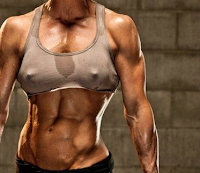
Studies in men suggest no effect of the hormonal response on training outcome - What about women? A news study provides insights that may be relevant for both female and male gymrats.
It has been a few years that I last wrote about the "hormonal ghost". Back in the day, Stuart M. Phillips published an excellent paper that debunked the myth of a mechanistic link of post-exercise increases in testosterone, growth hormone, IGF-1 and co., on the one hand, and exercise-induced strength and size gains, on the other hand. And for those for whom Phillip's review of the literature was not convincing enough, Daniel WD West's 2012, which showed none of the expected associations between exercise-induced hormone profiles (first and foremost higher post-workout testosterone levels) and the rate or significance of muscle strength and size gains in a large cohort of young men after weight training, should have been evidence enough to stop believing in "hormonal ghosts", but alas... you will probably know that "training for testosterone increases" is still en vogue.
Learn more about building muscle and strength at www.suppversity.com

Tri- or Multi-Set Training for Body Recomp.?

Alternating Squat & Blood Pressure - Productive?

Pre-Exhaustion Exhausts Your Growth Potential

Exercise not Intensity Variation for Max. Gains

Battle the Rope to Get Ripped & Strong

Study Indicates Cut the Volume Make the Gains!
That's stupid stubbornness, nothing else, right? Well, even though I don't believe in ghosts, I have to admit that a closer look at West's data will have you reject the hypothesis that the post-workout testosterone response would augment size gains, it does yet also show other hormonal changes do correlate with the changes in the study's subjects' lean mass (Figure 1, left) as well as type I (middle) and type II fiber size increases (Figure 1, middle & right).
Figure 1: Sign. associations between PWO hormone levels and lean mass, as well as fiber size increases (West. 2012).
As you can see in Figure 1, this was the case for the cortisol response and the lean mass gains and the growth hormone (GH) response and the increases in type I ('endurance') and type II ('strength') fiber size. Even though I don't believe that more than 1% of the gymrats world-wide who still believe that maximizing the post-workout "anabolic response" would help them to maximize their gains even know about these results, you could argue that these correlations fuel their beliefs - even if that's paradoxical, because - in bro-scientific terms - you'd have to maximize the catabolic response, i.e. the increase in cortisol (which could by the way simply be a measure of training intensity) in order to maximize the overall gains in muscle size, but alas...
Figure 2: Changes in anabolic and catabolic hormones in response to AM and PM HIIT and RT training (Toon. 2015).
In a series of experiments Rebecca Toone conducted for her thesis, she re-addressed the issue of the acute hormonal effects on performance with female study participants (yes, a long-term study was not part of her thesis, but I promise, the results are still noteworthy).
Higher sprint cadence (RPM) during HIIT, higher increase in DHT in the female study participants (Toon. 2015).
DHT another acute phase reactant? Even though the overall results of the study suggest that increased pre- vs. post workout changes in DHT as Toone observed the with higher RPM-numbers during HIIT sprints are not the reason, but rather the consequences of training at higher intensities, it is worth mentioning that this is the first study to observe the existence of an association between DHT and HIIT performance in women and that the results are in line with the results of previous research suggesting that DHT, not its precursor, testosterone, has a direct influence on skeletal muscle force production in vitro. 
After some preliminary testing, Toone began with another of the infamous "AM vs. PM" workout studies in which she unsurprisingly confirmed that...
"[...] it could be beneficial to perform resistance training in the afternoon preceded by interval exercise in the morning in order to stimulate a hormonal milieu that may be more conducive to stimulating muscle protein turnover" (Toon. 2015). 
If you scrutinize the data in Figure 2, you can see that this hypothesis is warranted, because of the differential response of the anabolic hormones, testosterone and IGF-1, and the stress / catabolic hormones, cortisol and prolactin, she observed in her young female subjects. Against that background it is quite interesting that Toone's last and most important experiment, in which she investigating the potential acute effects of hormones on performance, failed to demonstrate a direct correlation between changes in testosterone or other "anabolic" hormones and her subjects' performance.
"The trial consisted of a 20 min effort at a target power of 80% of the average power obtained during the maximal 20 min TT, followed by a 5 min break, before completion of a bout of repeated sprint interval cycle exercise consisting of 10 x 30 s sprinting, with 90 s recovery. The session was self-paced with real-time numerical feedback provided on elapsed time, cadence and power. Participants were given verbal encouragement at specific time-points throughout the trial. The same protocol was repeated for the second main trial one week later. Participants were permitted to drink water ad libitum throughout the trials. Trials were completed in a group setting as a group of six and a group of eight. A trial timeline schematic is displayed [in Figure 3]" (Toon. 2015).
Instead, the results of the previously described exercise test point towards affective variables, i.e. mood and effort, as the factors that mediate any link between hormonal changes and performance markers during an acute bout of high intensity cycling.
Figure 3: Design of the last and most important experiment of the study (Toone. 2015).
And guess what, the effort Toone's subjects invested into their workouts was not just a predictor of their performance, it was also positively associated with the percent change in testosterone concentration from post-sprint 4 to post-exercise (r = 0.449; P < 0.01).
Note: We are till talking about associations and correlations. That one of these, e.g. the one between the effort we put into our workouts and the preformance and hormonal response exists because of a causal link is thus in view of the results of the study at hand logical, but still hypothetical. As I am about to point out in the bottom line, future studies will have to investigate that - even though I have to admit that it will be difficult to develop an effective design for these studies.
In conjunction with the subjects' affect, which was inversely correlated with the rate of perceived exertion, which in turn showed positive correlations with cortisol, the results highlight a previously overlooked role of effort and affect when it comes to both, exercise performance and its effect on certain hormones.
Figure 4: The hormonal response is rather the consequence than the trigger of acute performance.
Or as Toone has it in her interpretation of these somewhat surprising results: The acute short-term effects of hormone concentrations on performance may be more related to mood and behaviour" than the actual type / time of exercise in the context of her study.
What does that mean? Practically speaking this would confirm what I have said about the initially cited West study in several previous SuppVersity articles. In said study, cortisol probably has no mechanistic effect on muscle size. Rather than that, the increase in cortisol could serve as a measure of how much effort the subjects put into their workouts; and this, in turn, determined their muscle gains (more effort = bigger growth stimulus = greater gains).

The meager and transient increase in testosterone after your workouts has none of the muscle building and fat shedding effects of exogenous testosterone. The latter however, can turn back the time and an aging pouch into a true best-ager | learn more.
In the study at hand, the situation appears to be similar. Mood and effort determine performance and hormonal response of the female study participants. Accordingly, there may be associations between exercise performance and certain hormones, but those are of corollary, not causative nature. In the absence of an additional experiment that would investigate the correlations and associations between mood, effort, RPE, hormones and the exercise-induced adaptation in the long run, we can still only speculate that making the workouts more fun and stimulating maximal effort would promote both, the adaptive response and the hormonal response and thus confirm that mood and effort are in fact the most relevant determinants of the outcome of your workouts | Comment!
References:
  • Phillips, Stuart M. "Strength and hypertrophy with resistance training: chasing a hormonal ghost." European journal of applied physiology 112.5 (2012): 1981-1983.
  • Toone, Rebecca. Assessing the Hormone Response to High Intensity Exercise and Identifying Associations with Performance. Diss. University of Bath, 2015.
  • West, Daniel WD, and Stuart M. Phillips. "Associations of exercise-induced hormone profiles and gains in strength and hypertrophy in a large cohort after weight training." European journal of applied physiology 112.7 (2012): 2693-2702.

Monday, November 23, 2015

Training "On Cycle", Done Right - Women See Much Better Results When Periodization is in Line W/ Menstrual Cycle

Yes, I could have exploited the ambiguity and called this article "Training 'On Cycle', Done Right - Women See Much Better Results When Periodization is in Line W/ Their Period", but let's be honest: This is a science website and that's neither scientific, nor actually funny, is it?
As a man, I have to admit to being at best well-read, yet not experienced in all things "menstrual cycle". So, while I do only know the (very different) things I've heard from (ex-)girlfriends about how they feel during the different phases, I do know that the hormonal differences in the luteal phase, with high levels of progesterone and estrogen, and the follicular phase with low progesterone and eventually increasing estrogen levels are pronounced enough to cause much more than just mood disturbances.

For many trainers, however, the estrous cycle is still a closed book. "Can you train, or not!?" Especially male trainers are not just insensitive when they ask their protégées this question, they may also be missing out on a chance to maximize their clients' training progress. That's at least what a recent 4-months study from the Umea University in Sweden (Wikström-Frisén. 2015) suggests.
Learn more about the (often ;-) small but significant difference at the SuppVersity

1g PRO per 2g CHO + Circuit T. for Women?

Is the Optimal Exercise Order Sex-Specific?

1-3mg Melatonin Shed Fat W/Out Diet & Exercise

Not Bulky! Lifting Will Make Toned & Strong.

How to Really Train Like a Woman

Sex-Differences in Fat Oxidation - Reviewed
According to Wikström-Frisén and colleagues, "high frequency periodized leg resistance training during the first two weeks of the menstrual cycle is more beneficial to optimize training, than the last two weeks" (ibid. 2015). Now, "beneficial" is obviously a very loosely defined term. When I am telling you, though, that power, strength and lean body mass gains all benefited from the right timing of the workouts (in the first two weeks of the estrous cycle), I will hopefully have every women's and every trainers' attention (even though, I guess I will lose even more of the male bros, now).
Figure 1: Relative changes in lean mass (DXA data), measures power and strength (torque) in 59 trained women in response two weeks of frequent leg-training in the first or second two weeks of their estrous cycle (Wikström-Frisén. 2015).
While all the aforementioned increases in the women who trained in the first two weeks of their estrous cycle were statistically significant (for all, but the quad torque test | +4.4% the statistical significance also survived the Benferroni corrections), the women in the group for whom the periodization scheme had a focus on the second two weeks of their menstrual cycle, saw no significant changes in lean mass and power and a significant reduction in quad strength (see Figure 1). Since the latter lost its statistical power, after Benferroni corrections, though, one could say that the changes the Swedish researchers observed in the 2nd weeks group were practically meaningless.
What about women on oral contraception? The scientists recruited 32 young women on oral contraceptives and 27 women who didn't use oral contraceptives and a re-analysis of the data in Figure 1 didn't show significant inter-group differences between the two groups. In other words, the data in Figure 1 and thus the main findings are relevant for "all" resistance training young women, irrespective of whether they're taking contraceptives, or not. The only difference is that you go by the contraceptive (CC), instead of the estrous cycle and place the high frequency training period in the first, not the last two weeks of the CC cycle.
"Meaningless changes", however, are not meaningless results. In fact, the exact opposite is the case. These results tell trainers and female trainees, alike, that abandoning their protégées / their own
  • regular non-periodized training, i.e. three leg training workouts per week that consisted of leg presses and leg curls (3x sets @ 8-10RM, 1-2 minutes rest between sets; progressive increase of weight by 2-10% whenever the subjects could perform 3x10 reps with a given weight) 
for 4-months and switching to a periodized 2-week high- vs. 2-week low-frequency training, where they would perform the same 48 workouts in either
  • high-frequency first cycles, i.e. 5 workouts per week in the first two weeks, 1 workout per week for the last two weeks of each menstrual / contraceptive cycle, or
  • high-frequency last cycles, i.e. 1 workout per week in the first two weeks, 4 workouts per week for the last two weeks of each menstrual / contraceptive cycle,
would have beneficial effects on their progress only if they increase the frequency during the early phase of the cycle. 
Figure 2: Comparison of the relative changes in the periodization group (high frequency in the first two weeks of the menstrual / CC cycle) vs. control group (three workouts per week for 4 months | Wikström-Frisén. 2015).
Ok, if you compare the periodization group to the control group which kept the regular "three workouts per week"-frequency (see Figure 2, green bars) was maintained, the "advantages" of periodizing "correctly" are not as pronounced as they are in comparison to doing it the "wrong" way. Even though, only the hamstrings appear to benefit to a large extent from periodization, though, benefits exist.

What's even more important, though, is the simple, but really important revelation (or for the few of you who have read about this before e.g. in Reis et al. (1995) "confirmation") that a woman's menstrual and similarly her contraceptive cycle must be aligned to her training schedule. Obviously, the implications will have to be further explored in future studies. Studies, of which I hope, that they will be using smarter periodization schemes which acknowledge that training only once a week is simply not enough... ;-)
SuppVersity Classic: Train Like a Woman: Common Misconceptions About Training & Eating for A Cover-Model Physique - An Interview With Sports Nutritionist & Strength Coach Orit Tsaitli | learn more
Bottom line: Before I try to put things into perspective, I should mention that the participants of the study who were recruited at local gyms, were not jut healthy, non-smokers and had regular menses, they were also experienced trainees. All of them had been doing leg presses and leg-curls for several months - in fact, on average for 3.5 years. Against that background, even non-statistical significant inter-group differences as they were observed between the periodization (5 per week, 1 per week) and the control group (3 per week) may be practically relevant, because they may help experienced trainees to break through plateaus.

With that being said, I personally think of this study as one study in a series of studies that will hopefully elucidate how women can adapt their training regimen to the repetitive changes in the hormonal milieu of their bodies.

If we are honest with ourselves, the fact that Wikström-Frisén's results come as a surprise to most of us is only further evidence of how wantonly exercise scientists and trainers, alike, have hitherto neglected the peculiarities of the female physiology and endocrinology | Comment on Facebook!
References:
  • Reis, E., U. Frick, and D. Schmidtbleicher. "Frequency variations of strength training sessions triggered by the phases of the menstrual cycle." International journal of sports medicine 16.8 (1995): 545-550.
  • Wikström-Frisén, L., C. J. Boraxbekk, and K. Henriksson-Larsén. "Effects on power, strength and lean body mass of menstrual/oral contraceptive cycle based resistance training." The Journal of sports medicine and physical fitness (2015).

Sunday, December 21, 2014

Hydrogymnastics, Weight Training or Dance? What's the Best Workout to Achieve Your 2015 Physique Goals, Girls?

Do you really need a barbell or will hopping around in a group dance course or working out in the water aka hydrogymnastic suffice to build the 2015 cover model physique that's part of your new year's resolution? A recent Portuguese + Brazilian study may hold the answer to this "important" question.
It's about time to think about a good new year's resolution; and since any resolution that's aimed at losing weight and/or building a better physique, naturally involves exercise, the latest study from the University of Trás-os-Montes and Alto Douro comes right in time (Soares Costa de Mendonça. 2014).

The study that was conducted by Rosa Maria Soares Costa de Mendonça, Adenilson Targino de Araújo Júnior from the University of Trás-os-Montes and Alto Douro in Portugal, Maria do Socorro Cirilo de Sousa from the Federal Institute of Technology Education in Brazil and Helder Miguel Fernandes from the Research Centre for Sport in Portugal was designed to investigate the possible effects of 16 weeks of practicing different physical exercise programmes (strength training, dance or hydrogymnastics) on the body composition and anthropometric dimensions of adult women.
If you don't like any of the suggestions, try doing  HIIT instead!

Never Train To Burn Calories!

Tabata = 14.2kcal /min ≠ Fat Loss

30s Intervals + 2:1 Work/Rec.

Making HIIT a Hit Part I/II

Making HIIT a Hit Part II/II

HIIT Ain't For Everyone
The sample was comprised of 89 adult women aged 25–55 (41.42 ± 9.23 years), who were used to train at least three times a week and had no history of health issues that may compromise their ability to participate in the study. . Of these, 60% were married, 27% single and 12% divorced, all residing in the northeastern part of Brazil. As the scientists point out, ...
"[t]hese women were selected using a non probabilistic manner in specific locations, such as fitness clubs, hydrogymnastic gyms and a public municipal institution.
The sample was randomly divided into four groups, of which one was designed as the control group consisting of individuals that were sedentary (CG) (n = 25) and three were characterised as experimental groups:
  • strength training (SG) (n = 25), in which the ladies trained three times per week under the supervision of a qualified trainer and did 3 sets of 8–12 repetitions (weights were progressively increased) with a 2–3 min rest period on each of the 50–60 workouts in which all the major muscle groups of the upper and lower limbs were exercised with the use of either machines with weights, free weights or resistance equipment,
  • dance (DG) (n = 18), which the women trained three times per week at a moderate to vigorous intensity, which was defined as 60 to 85% of the maximum heart rate as identified by the calculation 220 – age for 50 to 60 minutes workouts involving activities activating all the major muscle groups in a continuous manner using basic steps and a minimum of three rhythmic variations of popular dance styles and aerobics per session with songs of a rhythmic cadence of 100 to 160 beats per minute, and
  • hydrogymnastics (HG) (n = 21), in which the women trained with a frequency of three days per week at moderate to vigorous intensity, defined as 60 to 85% of the maximum heart rate using exercises that involved the major muscle groups of the upper and lower limbs with a focus on cardiorespiratory exercises, followed by muscular endurance exercises using equipment such as shin pads designed for hydrogymnastics, dumbbells, bars, plates, floating devices and pool edges with each exercise taking from 2 to 3 min to complete and the whole session lasting 45 to 55 min.
All workouts were designed according to the exercise routines from the ACSM guidelines (Garber. 2011) and the adherence to the exercise prescription was monitored by trained personnel. The workout duration and frequency were more or less identical and even the intensity was similar.
Figure 1: Changes in anthropometric parameters after 16 weeks of training (Soares Costa de Mendonça. 2014).
As you can see all training regimen lead to measurable improvements in the anthropometric parameters. Of the three different exercise regimen the "exotic", i.e. the hydrogymnastics training, was yet on overall the most effective "belly fat reducer" among the three training protocols.
Figure 2: Changes in body composition (calculated based on caliper data) after 16 weeks of hydrogymnastics, weight training, dance or idleness (Soares Costa de Mendonça. 2014).
Things look a bit different, when we take the body composition data the scientists calculated based on the skinfold measures into account: Here the strength training has a slight, but not necessarily significant edge over the hydrogymnastics (keep in mind that the efficacy of hydrogymnasticsmay partly be due to a novelty effect, i.e. new exercise = greater response | see fat mass loss after 8 vs. 16 weeks). Every ladies favorite, the group based dance exercise is yet - once again - trailing third.
Don't forget: Female Athletes' Body Composition Suffers From Chronic Energy Deficits | learn more
Bottom line: While it appears to be clear that (a) starting your next year as a couch potato is going to increase your waist line and body fat levels significantly (remember the ladies in the control group of the study at hand switched from training regularly to being sedentary for 16 weeks), it is not clear if lifting weights or doing hydrogymnastics, which involved some "weight training", as well is the better 2015 body recomposition exercise for women.

What appears to be clear, though, is that the highly popular dance courses are the least effective 2015 exercise protocol to follow, when your goal is to improve your body composition without dieting | Comment on Facebook!
References:
  • Garber, Carol Ewing, et al. "American College of Sports Medicine position stand. Quantity and quality of exercise for developing and maintaining cardiorespiratory, musculoskeletal, and neuromotor fitness in apparently healthy adults: guidance for prescribing exercise." Medicine and science in sports and exercise 43.7 (2011): 1334-1359.
  • Soares Costa de Mendonça, Rosa Maria, et al. "The Effects of Different Exercise Programmes on Female Body Composition." Journal of Human Kinetics 43.1 (2014): 67-78.

Saturday, October 18, 2014

Train Like a Woman: Common Misconceptions About Training & Eating for A Cover-Model Physique - An Interview With Sports Nutritionist & Strength Coach Orit Tsaitlin

Do you have to train like a woman (whatever that may be), Ladies, if you want to develop the cover model physique Orit Tsaitlin already has?
No, you're not mistaken. Today's SuppVersity article is not a review of the latest science, it's in fact an interview. An interview with Sports Nutritionist & Strength Coach (CISSN, ISSA, MBA, B.Sc.) Orit Tsaitlin.
It's not just that the mantra, "Nutrition Strategy and Body Transformation - Where Fitness and Science meet", on the frontpage of Orit's website that sounds pretty similar to the SuppVersity slogan "Where Bro- & Proscience Unite in the Spirit of True Wisdom", but also some of Orit's post on the SuppVersity Facebook Page, as well as a couple of short chats we had that inspired me to do a short interview with her. An interview that revolves around the useful- or rather uselessness of the average fitness magazine and the nuanced differences between training and nutrition principles for men and women.
By using HIIT you can achieve similar results as in the study at hand

1g PRO per 2g CHO + Circuit T. for Women?

Is the Optimal Exercise Order Sex-Specific?

Coffee, Tea, Cacao, ... & Breast Cancer

Not Bulky! Lifting Will Make Toned & Strong.

SV-Special: First Dates How do They Work?

Sex-Differences in Fat Oxidation - Reviewed
Q: A recent study has shown that the "dietary advice for muscularity, leanness and weight control" in Men's Health magazines – as scientific as it may seem- "leaves much to be desired" (Cook. 2014). As a personal trainer who works with both male and female clients, what do you feel are the consequences for men and women who are looking for help to improve the way they look, feel and perform?

A: Its actually quite amusing to read the articles in fitness magazines… Since I was 18 years old (now 32), nothing has changed, I believe. The same content, pictures of beautiful bodies and nothing really helpful to the the average person who only wants a simple roadmap to finally feel and look good. If I could be an editor of Fitness Mag (sorry, when I will be - determined yes?) I would put a lot more emphasis on how much work, nutritional discipline and sacrifice those athletes in the pictures are making to achieve their looks and performance.

Figure 1: "Who succeeds in maintaining weight loss?" A conceptual review of factors associated with weight loss maintenance and weight regain shows that you need the right strategies and psy- chological approach, not tips from Men's Health & Co. to keep the weight off (Elfhag. 2005)
Regarding the nutritional advices in those magazines, the audience must understand that MH and other magazines are no experts to individual metabolism and body. Unfortunately, there are tons of nutritional advices in those articles but the most important ones - that you have to eat a specific quantity of food which matches your lifestyle or that micronutrients (vitamins ,minerals) should be taken only on doctor's prescription - are not.

And let's not forget the paradoxical advice "The body needs protein which is in fish, chicken, meat... so buy our BCAA".

As a trainer and sports nutritionist, I emphasize that people must stop train their eyes, ears and need to start listen to their body's signals and to train the most important things to reach the body transformation results - will-power and consistency.

Q: Speaking of fitness and lifestyle magazines. If I look at the women's magazines, I cannot avoid the impression that the previously mentioned fitness and lifestyle magazines for men are still a comparatively good source of information.Why do you think, women's magazines are still perpetuating long overcome ideas of the ways women have to train?

A: I agree with you that there are some men's fitness magazines that you can find good information regarding training techniques from which both genders can learn.

SuppVersity Facebook News: Looking good naked provides greater incentive for healthy eating (increasing fruit and vegetable intake) than health improvements; the same goes for the headlines of fitness mag articles  | learn more.
As for women magazines… In my experience with women clients and being a woman myself, we are more concerned with body issues than men and I totally understand it. It is a great feeling to love the image that you see in the mirror and receive compliments. Unfortunately, most women want everything now.

I mean most of us don’t have the patience to wait for things to happen in their own pace. Women fitness magazines know this and are doing a great job in translating it to money. My point is that articles with the headers like ‘’10 min to your best body” , “15 min to see those abs” or “1 month squat challenge’’ will definitely reach the women audience.

In contrast to really relevant articles with headlines such as "The correct deadlift form" or "The importance of progressive overload", which don’t sell perfect and easy body fantasy probably won’t make it to the woman reading list. In this industry each trainer, athlete or nutritionist knows what it takes to get to the top or, maybe, not to the top, but to get meaningful results and as soon the audience will understand that there are no shortcuts to any place worth going, the women fitness mag will start give a proper stage to the right articles with a more meaningful content regarding exercise and nutrition. Until then I’m going to make 80 squats per day for one month which will give me the J.LO. booty.

Q: Is there a top 5 of "false believes" your female clients have? If so what are they and in how far are they holding them back from making the progress they deserve? 

A: There certainly is, and although the order may vary from individual to individual, this is what I see / hear the most:
  1. Not falling for any of the common misconceptions on the left, i.e. the "calories don't count" myth, the "I will take the weekend off of my healthy lifestyle" mistake, the "I'll just burn it off" misconception, the "it just takes three months" idiocy, and the "I will just do what she does" misunderstanding, is certainly part of Orit's success.
    Calories don’t count - Sorry they do and you can not argue with the energy conservation law. 
  2. The weekends are off from good food choices and quantities - The weekends are meant for relaxation and other activities, except from working. If you want to achieve those results in matter of months and not years, stop making 48 hours food celebrations...those can cancel all the progress that was made through the week.
  3. If they ate more than usual they can burn it in exercise - If you ate more than you should, the only thing that you can do about it is to take responsibility and learn from that experience for the next day.
  4. Three months transformations are for everyone - No! Those are for people who are already training with weights, have average body fat % and have healthy relationship with food.
  5. The "I want her body"-mindset’ If you want her body start working like her in the gym and in nutrition department the other 23 hours. I promise you she doesn’t spend a moment of her time on things that don’t matter.
I guess you can make a top-10 out of it, but as I initially pointed out, these are my personal top five of "success ruining" misconceptions.

Q: Would you agree, when I say "There are no fundamental differences between the ways men and women have to train to develop a cover-model physique?" This would obviously imply that there are nuances, where the training will differ. What would you say are these nuances?

Read the SuppVersity review of sex-differences in fatty acid oxidation  | more
A: Yes, I agree with you that there are no fundamental differences in the training programming between the genders. The main nuances that will be different are regarding the fact that men lose fat more easily than women, so maybe the frequency of different types of training weights / HIT / LISS will differ.

Which brings up another nuance that is related to "weak areas" and ideal proportions. I like to build my training programs with the goal to build the perfect proportions to the client, which are different, of course, between the genders.

Q: Speaking of cover model physique. You certainly have one. What would you say are the 10 pillars of your current nutrition and exercise regimen?

A: Thank you. I live by 4 rules which I call my 4elements4life. These elements are:
  • SuppVersity Suggested: Sean Casey's interview with Orit in the August-September CasePerformance Newsletter
    Nutrition - 80% of my nutrition is based on whole foods, with the 20% I go crazy - mainly with the croissant (-: and of course I know the right food quantities for my daily energy, PR’s setting and body fat levels.
  • Strength - I do my best in being strong in my training sessions 3-4 times per week at the gym and in the real life. Mental strength will beat everything.
  • Determination - Life taught me always to get up after you fall, set the most ambitious goals and always look forward. If I don’t know something I will learn. If I’m not good at something I will ask for help and If I’m tired….I remind myself - Be determined!!! 
  • Change - Most of the things in my life I accomplished on my own. Nothing was easy, believe me, and to succeed I had to change my mindset, character and search for mental qualities that I didn’t knew I had. "Change your thoughts and you change the world"? 99% true. Because at the end of the day the only world that you need to change is your own.
I guess some trainees will rank the individual aspects differently, but in general all four elements should be among the "pillars of a sensible nutrition and exercise regimen", you asked for.

Q: Is there anything you'd have to change if you were a guy (except from increasing your energy intake to feed the sex-dependent increase in lean mass)?

A: I would train with more emphasis on building lean mass in my quads - more isolation work in addition to the complex movements that I am already doing and may be more training volume in the Chest area. Other than that I’m sorry to tell you, but I train like other men...OMG So I will become a man soon?? (-:

Q: Last question, I promise ;-) Personally, I believe that people don't realize that the way they train and eat must adapt to the changes their body undergoes. Is this an idea you would subscribe to, and if so, what would you say are commonly overlooked tweaks both men and women have to make to their diet and exercise regimen as they progress from chubby slob to fitness maniac?

A: In my personal and professional experience, as the body goes through physical transformation there are stages. In each stage, which is very individual, you must adapt the nutrition and the exercise regimen. I don’t talk about changing programs every week, but when you see that something stopped working or not working as you want it to be, ask yourself what happened?

If you are successful (e.g. with losing weight) your body, dietary & exercise requirements and your goals will change. Sticking to the same approach "forever" would thus be madness | learn more
But wait...being a daughter of a chess player, I must tell you that the #1 thing that you need to do before taking the next step is to think (in every aspect of your life..:-), but in regard to fitness my rule of thumb is: "Do not change nothing until you have evaluated all the variables and your adherence." Our body is great in losing fat and growing muscles but from time to time its demands are changing and you must learn to listen and give it the right tools.

It is not easy to continue when you reach a plateau and it is hard to trust another person (nutritionist or trainer) who tells you to be patient and trust the process.

Trust the process and most important - remember to enjoy the journey. Do not go to the gym in the mindset to lose weight, do not eat food and think this will burn my fat faster. The secret to success is doing those things consistently each day and really give all you got. When you will finally have realized that the only person that you have to prove something to is you, you are ready to develop the physique of a cover model and the mentality of warrior.
Don't send marriage proposals, guys. As far as I know Orit is already spoken for ;-) Which obviously doesn't mean that you cannot benefit from her advise on training and nutrition.
Bottom Line: While I would hope that most of you were only mildly surprised to hear that the sex-differences difference between men and women are significantly more pronounced in the mirror than they are in the gym or in the kitchen (no, this is not sexist comment, but a reference to the fact that men and women don't have to eat fundamentally different either), I suspect that some of you are still all-caught up in the cardio for shaping, weight lifting for bulking ideology.

If that's you, and you've decided you want to make a change, this would be a good reason to reach out to Orit Tsaitlin with your questions. You can do so by either posting short questions on facebook for me or Orit to answer them; or you can contact Orit directly @ 4elements4life | Nutrition Strategy and Body Transformation.
References:
  • Appleton KM. "Increased fruit selection and consumption following an appearance-based vs a health-based health promotion poster." Proceedings of the Nutrition Society, 73, E58 (2014). doi:10.1017/S0029665114000871.
  • Cook TM, Russell JM, Barker ME. Dietary advice for muscularity, leanness and weight control in Men's Health magazine: a content analysis. BMC Public Health. 2014 Oct 11;14(1):1062. [Epub ahead of print] 
  • Elfhag, K., and S. Rössner. "Who succeeds in maintaining weight loss? A conceptual review of factors associated with weight loss maintenance and weight regain." Obesity reviews 6.1 (2005): 67-85.

Tuesday, March 18, 2014

Tai Chi & Circuit Training Have Both Beneficial Effects on BP of Middle-Aged Women, But Only "True Exercise" Will Cut 6.5% Body Fat While Increasing Lean Mass by 1.8%

It's a beautiful sight (and site) - that's for sure, but compared to "true" exercise doing Thai Chi in the bay is not exactly going to yield live-changing results.
Ok, I have to admit, I am a dopamine junkie, and probably that's because I suck at everything that's slow and takes time... but enough of these personal details. After looking at the study outcomes you will certainly agree: True exercise - in this case in the form of circuit training - will always prevail!

But let's tackle one thing after the other. The study we are looking at was conducted at the Chang Gung Memorial Hospital at Chia Yi and Chang Gung University (wherever that may be.... well, obviously in China). The participants were 180 women (aged 45–75 years) who were divided into a circuit exercise group, Tai Chi group and a control group.

What did the women do?

Well, actually I would first like to point out that there was one thing, the women did not do and that's restricting their food intake. The reason I mention this is that there are dozens, ... no, actually there are hundreds of trials where working out alone had beneficial effects on blood pressure, blood glucose management and / or blood lipids, but did not do what most people are eventually secretly hoping for, whenever they talk about living healthier: It did not induce any changes in body composition.
I like to make fun of it, but the benefits of Tai Chi are beyond doubt. In a 2009 study, scientists from the Universiti Kebangsaan Malaysia confirmed that Tai Chi can (just like "real exercise" ;-) stimulate endogenous antioxidant enzymes and reduce the oxidative damage to proteins, fats and your DNA strands (Goon. 2009).
In the study at hand, in the course of which the subjects participated in 60 min of exercise three times per week for 12 weeks. This was different - at least in those women who actually "exercised", i.e. those who had been randomized to the Circuit Training group and had to endure the following exercise program:
  • The exercise program was 1 h of circuit training, three times per week for 12 weeks, and included aerobic training, resistance training and stretching exercise (20 min per intervention).  
  • Aerobic exercises consisted of any two of the following modalities for 10 min each: treadmill, stationary bicycle, stair climber or elliptical machine exercise. The intensity of the aerobic exercise was set as 60–80% of maximal heart rate. 
  • Two sets of six different resistance exercises were completed through the combined use of hydraulic resistance training machines (side bending machine; biceps curl machine, leg extension machine, seated dip machine, pec dec fly machine, shoulder press machine, hip abductor/adductor machine, chest press machine and leg press machine). The intensity of resistance training was set at 60–80% of one-repetition maximum (RM). To minimize fatigue, the exercises were alternated between the upper and lower body. There was a rest interval between sets of 40 s, but no pauses between repetitions. 
The exercise session were guided and supervised by trained fitness instructors and the researchers - so cheating was not allowed. The latter was probably also the case in the The Tai Chi group that practiced Yang style (watch the next best video I could find) with the same frequency, but with intensity of 50–60% of work.
Figure 1: Changes in total muscle, total lean mass, bone mineral content, body fat and basal metabolic rate in 180 middle-aged women (aged 45–75 years) according to training type (Hsu. 2014)
Based on the introduction you will probably already have expected what you see in Figure 1, the circuit exercise group showed a significant decrease in body mass index, systolic blood pressure and body fat mass, and an increase in total body muscle mass, lean body mass, bone mineral content and basal metabolic rate. The Tai Chi group recorded nothing but a decrease in systolic blood pressure.

In other words, the increase in basal metabolic rate (1.3±3.0%), total body muscle mass (1.8±4.3%), lean body mass (1.9±4.3%) and bone mineral content (1.8±4.2%), and decreases in body mass index (–2.2±7.8%), body fat (–6.5±10.7%) and diastolic pressure (–1.2±9.4%) were significantly greater in the circuit exercicise group... malicious gossip has it that all of these changes were pathetic in the Tai Chi group, but from a science perspective this is obviously not true. From a science perspective, there simply were no changes in basal metabolic rate, total body muscle mass, lean body mass, bone mineral content, body mass index and body fat ;-)
No, I am serious. If you are lucky and mediation is for you - do it! Yet not instead, but in addition to real exercise.
So what's the verdict then? Tai Chi sucks? I guess I have been teasing Tai Chi long enough. I don't doubt it's benefits as a form of meditative exercise and the improvements in diastolic blood pressure Hsu et al. observed in the study at hand confirms that this is more than a psychological benefit.

The real bottom line of the study at hand is thus do real exercise first and make some additional room in your schedule for Tai Chi or other forms of mediation (see my post on the anti-fatigue effect of Qui Gong | read more), if possible. Your mind and body will be greatful... irrespective of whether you're a middle aged woman or a young male athlete, by the way.
References:
  • Goon, J. A., et al. "Effect of Tai Chi exercise on DNA damage, antioxidant enzymes, and oxidative stress in middle-age adults." Journal of physical activity & health 6.1 (2009).
  • Lan, Ching, et al. "The aerobic capacity and ventilatory efficiency during exercise in qigong and tai chi chuan practitioners." The American journal of Chinese medicine 32.01 (2004): 141-150.