Showing posts with label b-hydroxy-b-methylbutyrate. Show all posts

Monday, July 29, 2013

HMB Increases Lean Mass Loss (+22%) + Hampers Fat Loss (-18%) from Diet + Overtraining. HED of ~6g/Day Does Yet Retain Muscle Strength & Fiber Size in Fast Twitch Muscles
Dr. Jekyll & Mr. Hyde - Is HMB have another janus-faced supplement ?
I know "mice are no little men", ... I don't have to be reminded of that. Thank you. So, if you are not interested in today's SuppVersity article, just come back tomorrow for another article without our hairy friends in it... You are still here? Ok, then let's see what the researchers at the Florida State University have to tell us about the effects of HMB supplementation on trained vs.  overtrained and energy deprived rodents. Even though, the significance of the results for mammals with less body hair such as human beings is not clear, we may still expect similar trends, yet not identical numbers on the weight, muscle and fat loss, as well as parameters that were assessed in the study at hand.

Some details on the experimental protocol

The scientists started out with a total of 61 animals that were initially divided into three groups. The animals in the groups were either sedentary, had to exercise for 1h (endurance) 3x/week or followed the same exercise protocol, yet with an addition of 0.5g/kg body of HMB in their diets (the human equivalent dose would be 6-7g/day depending on your body weight).

After a four-week run-in phase there was an additional differentiation for the non-sedentary rats which leaves us with the following four groups:
    Table 1: Ingredients of the diets in the four groups.(Parks. 2013)
  • ALT: ad libitum fed fed + exercise (1h/d for 3d/wk)
  • ALTH: same as ALT + HMB (0.5 g/kg BW/day)
  • C: 30% energy restriction + exercise (6h/d for 6d/wk)
  • CH: same as C + HMB (0.5 g/kg BW/day)
So, in essence, we are dealing with a comparison of the effects of  HMB in conjunction with exercise and an ad libitum diet (=as much as the mice wanted to eat) vs. its effects as a supplement given as an adjunct to a highly catabolic overtraining + under-eating scenario, as you know it from the Athlete's Triad Series.

Without giving away too much, I can say that the results were not what you'd probably expect

 
As you can see in figure 1 part of the results are probably not like most people would expect them to be. While the provision of HMB did work its body recompositioning magic in the rodents that could eat as much as they wanted, it compromised the fat loss and increased the total loss of lean body mass in the rodents that were fed the -30% calorically reduced diet.
Figure 1: Changes in body composition (left), strength & motor function (right). Note that the effects of HMB depend on the energy content of the baseline diet (Park. 2013)
This result is particularly surprising in view of the fact that the caloric reduction was achieved by cutting back on sucrose and corn starch, wile the protein intake remained identical, all the time (see table 1), so that the purported "muscle building effects" of HMB should have had enough available substrate to produce at least an ameliorative effect on the loss of lean mass that is a necessary consequence of undernutrition + overtraining.
Figure 2: Dr. Jeckyll & Mr. Hyde effects of HMB ingestion during a caloric deficit; gastrocnemius CSA on the left, mTOR and p-AKT levels on the right of the central illustration (based on data from Park. 2013)
That the exact opposite was the case, i.e. that the provision of supplemental HMB blocked the fat loss and increased the loss in total lean mass is strange. After all, these highly undesirable effects took place in the presence of significantly reduced levels of the "catabolic" signalling proteins MuRF-1 & atrogin-1. The actual culprit here, may yet be that the provision of supplemental HMB to the overtrained and nutritionally deprived CH group also blunted the increased activity of the pro-anabolic proteins p-AKT and mTOR  in both fast- and slow-twitch muscle fibers (with a greater effect in slow twitch fibers, thoug; see figure 2, red). This effect may in fact have negated the decrease in protein loss, of which we can only assume that it did occur in response to the downregulation of the respecting signalling proteins, atrogin-1 and MuRF-1.With less being protein being catabolized but even less being pumped back in, this would leave us with a net protein loss that would explain the loss of lean mass - specifically in the soleus muscle which contains predominatnly slow-twitch fibers.

Devils advocate: "Why are the potential downsides not mentioned in the abstract?"

In view of the previously described observations, and the undeniable negative effect of HMB in the overtraining + undereating scenario (CH group), I'd like to disagree with the researchers' imho unwarranted hypothesis that
"[...]net protein synthesis may have been greater with HMB during the catabolic condition due to its greater inhibitory effect on the protein degradation pathway" (Park. 2013)
It's a neat ad-hoc hypothesis which is yet not, as the context would suggest, "based on [the scientists'] mRNA data", of which I already told you that both AKT and mTOR are lower in the gastrocnemius and soleus (fast & slow twitch) muscle of the HMB rodents in the CH group. And, this is certainly more important it stands in contrast with the overall effects on lean mass - so if anything, this argument could be made for the gastrocnemius, only. The overall net protein synthesis on the other hand, must clearly have been lower and not as Park et al. suggest higher.

Metabolic Technologies Inc. has not just licensed the paten for HMB, they are also a sponsor of the study at hand. Nothing bad, in general, but whenever these sponsorships coincide with not mentioning potential downsides in the abstract & conclusion of a paper, it reminds me of the usefulness of some healthy skepticism.
With data only from the soleus (7% greater mass loss vs. C group) and gastrocnemius muscle (11% greater mass retention vs C group) and an overall greater loss of lean mass in the HMB supplemented over-trained + starved rodents, it is however difficult to judge what exactly the rodents lost here. It could be organ mass or muscle mass from muscles that were not acutely working during the running exercises. In the end it may not even matter, because you would obviously want to avoid both, the loss of organ and muscle mass. So, the way the researchers ignore this observation in their abstract, where they state rightly state  that "HMB improves body composition and sensorimotor function during normal training", but follow that up with an at least questionable statement about how it also "attenuates muscle mass [...] loss during catabolic conditions" (Park. 2013) is odd.

Playing advocatus diaboli (lat. for "devil's advocate), I could argue this was a concession to Metabolic Technologies, Inc. who do not just happen to have the exclusive license for the patent on HMB (learn more), but are also among the sponsors of the study.

The beneficial effects of HMB that have been observed in previous human studies never dealt with a scenario like the one in the study at hand. The training load was usually low or easily manageable and the food intake sufficient just as it was in a recent study that was conducted on elite canoeists (read more)
Bottom line: The study at hand does support the generally beneficial findings that have been reported from human studies, conducted in realistic, and not so realistic training environments. In a calorically restricted scenario, however, the seemingly fiber-type specific effects of HMB on strength are the only plus and there is little evidence for "anti-cabatolic" effects in the original, broader sense of the word.

Based on the study at hand, of which we will obviously have to see, whether its results can be replicated in human beings, it does therefore not appear advisable to use HMB on a highly restrictive diet, if you do not happen to compete in weight classes and are more concerned about a loss of strength than negative effects a highly restrictive dietary regimen could have on your body composition.

It should go without saying, though that the overtraining + undereating approach to cutting body fat is a no-go with or without HMB, so in essence, all you need to do is to avoid following this path towards misery and you don't have to care much about the relevance of the results of this study.


References:
  • Park BS, Henning PC, Grant SC, Lee WJ, Lee SR, Arjmandi BH, Kim JS. HMB attenuates muscle loss during sustained energy deficit induced by calorie restriction and endurance exercise. Metabolism. 2013 Jul 19. doi:pii: S0026-0495(13)00186-8.

Wednesday, November 23, 2011

HMB Exhibits Differential Effects on ATP and Glycogen Content of Fast & Slow Twitch Fibers and Maximizes Tetanic Force Development in Rodent Study

Image 1: This is where HMB could actually make a difference, the two more reps, the one more sprint, which after weeks and months of training can decide over victory or defeat.
Sometimes, or I should say, time and again (!), it amazes me how the same people who are willing to invest hundreds of bucks in a supplement, which (according to the patent holder) "has been shown in scientitfic studies" (which were conducted by the researcher and a buddy of his at a remote lab, only to file the patent) to "increase testosterone by up to 147.34%", keep telling me that they "would never waste their hard earned money on supplements like HMB..." hello? Am I missing something, here? I mean, right; HMB does not produce the steroid-like effects the same sort of shady businessmen who are now promoting a new natural testosterone booster as legal alternative to Anavar on a monthly base once claimed it would have, but in all  honesty, the scientific research on HMB is by far more promising than the mostly non-existent research on 99% of the "legal anabolics" out there.

HMB works, we just don't know exactly how and for whom

As Dr. Connelly pointed out on the last BodyRX Show (highly recommended, especially for Layne's intellectual exchange with Dr. Jeff Volek), it stands out of question that HMB works. There are in fact more than a dozen of studies which show that supplementation with adequate amounts of this leucine metabolite has anti-catabolic effects in various conditions of skeletal muscle atrophy (Nissen. 2003; Smith. 2005). What  is still debatable, though is whether and to which extent athletes, in general, and bodybuilders, in particular can benefit from these effects. In view of the increasing awareness of the importance of leucine, the metabolic precursor of b-hydroxy-b-methylbutyrate (HMB), most athletes in this subgroup probably consume somwhere between 20-30g of leucine from the 300g of protein they are feeding themselves in the form of protein shakes and lean meats alone (with reference to the data that is presented in figure 1 it is noteworthy that the comparison Nissen made is not "fair", because the many of the HMB studies were conducted with "sick" people, while the majority of studies on protein supplements used either healthy people or athletes). With an average conversion rate of ~5% (of dietary leucine), we would have to estimate their daily HMB "production" to roughly 1.0-1.5g, which is interestingly at the lower range of what has been shown to ameliorate muscle wasting in cancer cachexia studies (Eley. 2007; Kovarik. 2010).
Figure 1: Calculated effect sizes of creatine, HMB, chromium, androstendione, DHEA and protein supplements on strength and lean mass gains (adapted from meta-review by Nissen et al.; Nissen. 2003)
And even if we discard the question of whether or not additional HMB is really necessary on a high protein diet and whether or not respective dietary differences could explain the negative results from some, yet by no means all, trials with professional athletes, we must still admit that even in those cases where it does work, we (i.e. scientists) do not really understand how HMB does its anti-proteolytic magic. The results of a recently published study from scientists from the Institute of Biomedical Science at the University of Sao Paulo, could thusly be of particular importance, as this is - at least to my mind - the first study to investigate the effects HMB supplementation had on ATP and glycogen levels, citrate synthase and changes in the contractive properties of individual muscle fibers (Pinheiro. 2011).
Figure 2: Changes (vs. placebo) in ATP and glycogen content, as well as citrate synthesis in red and white portion of rat gastrocnemius muscle after 4 week supplementation with 320mg/kg HMB (data adapted from Pinheiro. 2011)
The data in figure 2 shows, that after 4 weeks of daily supplementation with 320mg/kg HMB (in the study the usual calcium salt, you can buy in bulk on the Internet was used), the ATP and glycogen levels in the gastrocnemius muscle of the rats were profoundly elevated. In that, it is particularly interesting that the leucine metabolite had differential effects on the slow-twitch oxidative red portion of the muscle and the fast-twitch glycolytic white portion: In the slow twitch fibers the increase in ATP is 10x higher than it is in the fast twitch fibers, where the +400% increase in glycogen content should yet provide a similarly extensive buffer of readily (yet not immediately) available energy. Moreover, the increase in citrate synthesis (+67%) in the slow twitch fibers suggests that part of this effect was mediated by an "increased lipid availability due to increased lipolysis", or, put simply, by an increased oxidation of fatty acids to generate more ATP.
Figure 3: Tetanic force production (normalized to muscle weight) in rats receiving 320mg/kg HMB or placebo for 4-weeks; successive tetanic contractions were evoked at 100 Hz each 10 s of interval (data adapted from Pinheiro. 2011)
These increase in both readily available energy stores and the ability to replenish the former via fatty acid oxidation, is - according to Pinheiro et al. - also the underlying reason for the "increase in resistance to fatique" the scientists observed when they subjected the rat muscle to electrical stimulation in order to evaluate the tetanic (=constantly contracting) force production (cf. figure 3). Contrary to the twitch force, which was identical in supplemented and non-supplemented rats, the tetanic force production (normalized for either muscle weight or muscle cross-sectional area) increased by +17% (p<0.05; meaning that the chance that this was mere coincidence is <5%).

Fine!? Now, tell me: Is HMB worth it?

In view of the fact that neither the muscle size (cross-sectional area) nor the lean mass of the rodents in the HMB group differed from their placebo supplemented peers (btw. the animals were not "trained" in the course of the 4-week study), we must conclude that the effects of HMB, similar to those of creatine, are not what you would call "immediately anabolic". In a real world training scenario the metabolic advantage (increased ATP stores, increased glycogen stores and increased oxidative capacity) the rats in the HMB group gained over the 4-week study period, would allow trainees to do those 1-2 reps more which in weeks and months would then translate into this one additional pound of muscle or the 10th of a second that can make the difference between victory or defeat - whether those 1-2 reps are worth the roughly 64$ it would cost to copy the supplementation regimen used in the study (320mg/kg in rats would equate to 53mg/kg per day for humans), does yet depend on who you are, what you want to achieve and how much money you have to spend... and if you do not have your regular diet and training in check, don't even think of HMB (let alone one of those "test boosters" ;-)

Wednesday, March 9, 2011

More Conflicting Evidence on Leucine Metabolite: HMB Makes Volleyballers Stronger.

The leucine metabolite HMB, i.e. β-Hydroxy-β-Methylbutyric acid, is unquestionable the comeback kid of the supplement industry. "It works!", "It's useless!", ... every now and then a new study supports one side of the debate. A group of international scientists does now present a study, which would support the use of the expensive, yet readily available amino acid.

Portal et al. (Portal. 2011) investigated the effect of 3g HMB/day "on body composition, muscle strength, anaerobic and aerobic capacity, anabolic/catabolic hormones and inflammatory mediators in elite, national team level adolescent volleyball players (13.5–18 years, 14 males, 14 females, Tanner stage 4–5) during the first 7 weeks of the training season". The results were unequivocal, yet not overtly impressive:
HMB led to a significant greater increase in FFM by skinfold thickness (56.4 ± 10.2 to 56.3 ± 8.6 vs. 59.3 ±  11.3 to 61.6 ± 11.3 kg in the control and HMB group, respectively, p < 0.001). HMB led to a significant greater increase in both dominant and non-dominant knee flexion isokinetic force/FFM, measured at fast (180°/sec) and slow (60°/sec) angle speeds, but had no significant effect on knee extension and elbow flexion and extension. HMB led to a significant greater increase in peak and mean anaerobic power determined by the Wingate anaerobic test (peak power: 15.5 ± 1.6 to 16.2 ± 1.2 vs. 15.4 ± 1.6 to 17.2 ± 1.2 watts/FFM, mean power: 10.6 ± 0.9 to 10.8 ± 1.1 vs. 10.7 ± 0.8 to 11.8 ± 1.0 watts/FFM in control and HMB group, respectively, p < 0.01), with no effect on fatigue index.
With no measurable effect on aerobic fitness, anabolic hormone levels or inflammatory mediators, the use of HMB appears to be advisable only in power and strength athletes.

If you are a bodybuilder on a high protein diet, I would however doubt that you would see any benefits from additional HMB. A diet rich in quality protein (high BCAA and particularly leucine content) should provide you with adequate amounts of leucine to keep endogenous HMB levels elevated.

Saturday, January 22, 2011

Beta-Hydroxy-Beta Methylbutyrate Strikes Back: HMB Increases GH and IGF-1 at the Expense of Insulin Resistance

"HMB" - do you remember these three letters? If you have been around the supplement world in the early 2000s, you probably will. Beta-hydroxy-beta methylbutyrate (HMβ) is a metabolite of leucine which has been advertised to enhance exercise performance, reduce fatigue and promote muscle gains. Nothing of that has been substantiated within larger human studies, though; and thus HMB a former star among the amino acid supplements has almost been forgotten.

Now, a recent study from Brazil (Gerlinger-Romero. 2011) provides data suggesting that HMB may in effect raise the content of pituitary GH mRNA and growth hormone [GH], as well as hepatic IGF-I mRNA and serum IGF-I concentrations.
It was observed that the HMβ treatment induced an increase in GH mRNA by 65% (P < 0.001) and in GH content by 20% (P < 0.05) compared to control group. The IGF-I mRNA expression in liver, as well as the serum IGF-I concentration was also significantly increased in the HMβ-treated animals.
There are some downsides to these results, however. Firstly, this is another rodent study, so we do not know how the results of this 4 week intervention would translate to human beings. At least, other than in previous investigations, the amount of HMB, 320mg/kg body weight, which is equivalent to roughly 52mg/kg body weight in a human being, would be affordable, but ...
Figure 1: Effect of the HMβ-treatment on Insulin concentrations.
Data are expressed as mean ± SEM. *P < 0.05; n = 9–16 animals per group
(Gerlinger-Romero. 2011)
... and here comes secondly, the rats became hyperinsulinemic (cf. figure 1), or in other words HMB supplementation induced insulin resistance. With the latter being at the heart of the metabolic syndrome I would think twice before attempting to boost my growth hormone level with an amino acid metabolite that will compromise my body's insulin management.

Wednesday, September 1, 2010

Study Indicates Uselessness of HMB-Supplementation

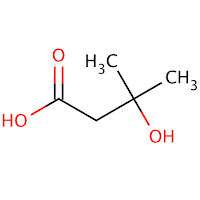
Figure 1: Molecular structure of
HMB (HMDB v2.5)
In view of the fact that the educated gymrat will already have known this for years, it is hardly worth being cited that scientists (Slater. 2010) provide further evidence for the ineffectiveness of oral HMB supplementation in the latest issue of the International Journal of Sports Nutrition & Exercise Metabolism. None of the variables the scientists measured (body mass, body composition - using dual energy x-ray absorptiometry, and 3-repetition maximum isoinertial strength, markers of muscle damage and muscle protein turnover), was influenced by supplementing 3g HMB per day:
While the training and dietary intervention of the investigation resulted in significant strength gains (p < .001) and an increase in total lean mass (p = .01), HMB administration had no influence on these variables. Likewise, biochemical markers of muscle protein turnover and muscle damage were also unaffected by HMB supplementation.
In view of the fact that the dosage used in this study was well above that of what most supplements, which usually include HMB amont other ingredients, offer, it does not make sense to watch for the acronym HMB on the label of a new supp to decide whether or not to buy it.

Tuesday, July 27, 2010

Getting Old? Try Some HMB Against Loss of Lean Body Mass

While the effectiveness of the leucine metabolite b-hydroxy-b-methylbutyrate (HMB) in athletes is debatable, its usefulness in geriatric scenarios becomes more and more obvious. On July, 2 2010, Kim et.al. (Kim. 2010) presented the results of a study investigating the effect of HMB (0.46 g/kg/d, similar to 6 g/d in humans) to old rats for 16 wks prior to being sacrificed. The beneficial effects on the retention of lean body mass speak for themselves:
"The LBM decline from 60 to 102 wks was only observed in the Non-HMB group (p<0.05). There was a main group x time effect (p<0.01) in the lean/total body mass (LBM/TBM) ratio, indicating an improved ratio only in the HMB group between 86 and 102 wks (+35%). A group x time effect in fat mass (FM, g) revealed a significant loss in FM (-55%) only in the HMB group between 86 and 102 wks (p<0.01)." (Kim. 2010)
The reason why I mention these results on a blog directed mainly to athletes and younger people is that I want to raise your awareness of the fact that most of the studies (often cited in advertisements, as well) that show beneficial effects of HMB (and there is quite a hand-full) were either done on old or sick animals. They are thus of little significance for a bodybuilder on a protein-supplemented high calorie diet. Until now evidence for beneficial effects of HMB-supplementation in this group of people is lacking. So save you money and buy some quality whey proteinBCAAs or even better EAAs instead.